Watch how work usually gets onto a team’s board and you’ll notice there was never really a decision. A client emails, someone drags a card into the queue. A manager mentions an idea in passing, another card appears. A teammate spots a bug and adds it themselves. Each individual move seems reasonable, but stitched together they mean the same thing: your board is being filled by whoever happened to speak most recently, and nobody ever stepped back to ask whether this was the right work to take on right now.
There’s a small, almost boring ritual that fixes this, and it’s one of the most underrated meetings in kanban. It’s called replenishment: a short, regular gathering whose only job is to decide what work moves from the waiting pile into the committed queue. Not to plan the whole quarter, not to status-check every card – just to answer one question well: given everything we could do next, what should we actually pull in? Get that one decision right on a rhythm, and a surprising amount of chaos disappears.

The problem with letting work leak onto the board
When new work arrives continuously and gets committed on the spot, a few predictable things go wrong. Priorities drift, because the card that got added is rarely the most important one available – it’s just the one whose sender was loudest. The board slowly overfills, because it’s easy to say yes to one more card in the moment and hard to see the accumulating weight. And the team loses any shared sense of what they’re collectively working toward, because the queue was assembled by a dozen separate, unspoken choices.
A replenishment meeting replaces all of that drip-feeding with a single, visible decision point. Work still arrives whenever it arrives – it just waits in the backlog until the next replenishment, where the team looks at the whole set at once and chooses deliberately. That one change, from committing continuously to committing on a cadence, is what turns a reactive board into a considered one.

Commitment is the whole point
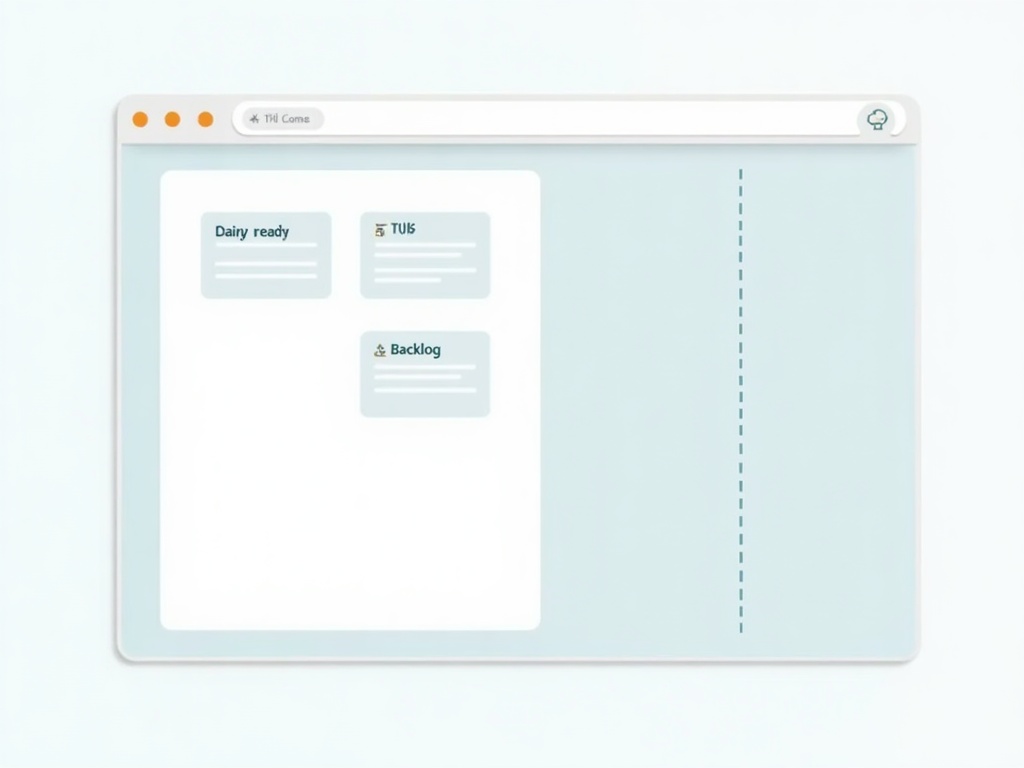
The heart of replenishment is something kanban calls the commitment point: the line a card crosses when the team agrees, out loud, to actually do it. On most boards that’s the boundary between a loose backlog and a “Ready” or “To Do” column. Before the line, a card is just a candidate – it can be reprioritised, reshaped, or dropped with no cost. After the line, the team has said “yes, we’re doing this next,” and everyone can rely on that.
Keeping that boundary meaningful is what makes the rest of your board trustworthy. It’s the natural companion to a proper pull system: work isn’t pushed onto people the moment it shows up, it’s pulled across the commitment line only when the team chooses to take it. Everything upstream of the line stays cheap to change; everything downstream is a promise the team intends to keep.
Refill to a level, don’t stuff it full
The instinct at a replenishment meeting is to load up – to pull in as much as you can while everyone’s in the room. Resist it. The goal isn’t a full queue; it’s a queue with just enough in it to keep the team fed until the next replenishment. Think of it like topping up a small tank rather than filling every container in sight. A common target is a Ready column holding only a couple of cards per person – enough that nobody runs dry, few enough that the queue never becomes its own backlog.
This is where your work-in-progress limits do their quiet work. If the board is already at its limit, replenishment might be a very short meeting: there’s simply no room to commit anything new, and that’s useful information, not a failure. Refilling to a level rather than to the ceiling is what keeps flow smooth – an overstuffed queue doesn’t get finished faster, it just ages, and stale commitments are their own kind of debt.

Do a little shaping before you commit
Replenishment is also the natural moment to make sure what you’re pulling in is actually ready to be worked. A card that’s still vague, or so large it can’t be finished in a reasonable time, isn’t a commitment – it’s a wish. Before it crosses the line, take a minute to confirm it’s understood well enough to start and right-sized so it can flow instead of clogging a column for two weeks.
You don’t need heavy estimation or a lengthy grooming session. A quick check is enough: Do we understand what “done” means for this? Is it small enough to move? Is anything obviously going to block it? If a card fails those questions, it stays in the backlog and gets clarified before next time, rather than becoming a committed card that immediately stalls. A few minutes of shaping at the commitment point saves hours of confusion downstream.
Keep it short, regular, and light
The power of replenishment comes from its rhythm, not its length. Pick a cadence that matches how fast your team finishes work – weekly suits most small teams, twice a week if your cards move quickly, and pull-based “refill whenever Ready drops to one card” if you’d rather trigger it by the board than the calendar. Whatever you choose, keep the meeting tight: fifteen to twenty minutes is plenty, because you’re making one kind of decision, not reviewing everything.
Invite the people who can genuinely make the call – usually whoever understands the priorities (an owner, a lead, or the person closest to the customer) plus one or two who’ll do the work and can flag what’s realistic. This isn’t a status meeting and it isn’t your daily check-in; its single job is choosing what to commit to next. Guard that focus and people will actually look forward to it.

The quiet payoff
Once replenishment becomes a habit, the difference shows up as a kind of calm. New requests stop triggering little panics, because everyone knows there’s a regular, fair moment when they’ll be weighed against everything else. The board stays full enough to keep the team busy but never so overloaded that work just piles up and ages. And for the first time, the queue reflects an actual choice – this work, now, on purpose – instead of the accumulated residue of whoever asked last.
That’s the whole trade: give up the false comfort of committing to things the instant they arrive, and get back a board that fills up deliberately. Set a standing fifteen-minute slot, draw a clear commitment line on your board between what’s waiting and what’s agreed, and refill to a comfortable level each time rather than to the brim. If your board is digital, a simple kanban tool with a distinct Ready column makes the commitment point obvious at a glance – and the next time work comes knocking, you’ll have a calm, honest place to decide whether it really earns a spot next, or waits its turn.
Sources & further reading: