Every event looks simple from a distance. “We’ll host a client open house” or “let’s run a workshop” sounds like a single line on a to-do list. Then you start, and it fractures into a hundred small tasks: book the venue, confirm the caterer, send invitations, chase RSVPs, order signage, line up a speaker, test the microphone, arrange parking, print name badges. Each one has its own deadline, and unlike most work, an event has a date that cannot move. Miss the caterer’s cut-off and there’s no food — there is no “we’ll finish it next sprint.” That unforgiving deadline is exactly why scattered spreadsheets, email threads, and sticky notes fail you here. A kanban board, by contrast, turns the whole chaotic thing into one calm picture you can actually trust.
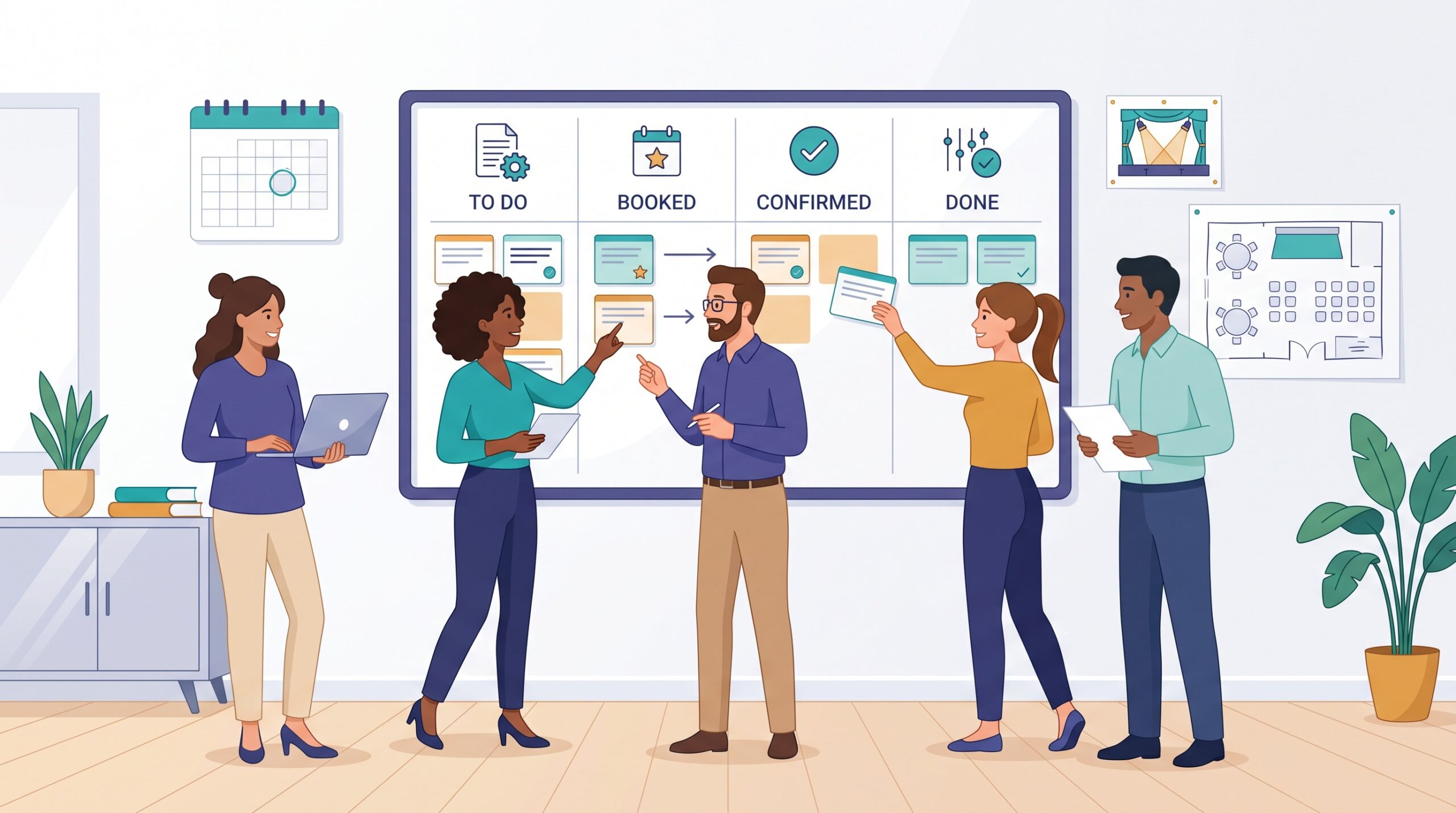
Why an event is the perfect thing to put on a board
An event is a project with a hard finish line, dozens of interdependent pieces, and usually more than one person touching it. That’s precisely the situation a board was built for. The value isn’t decoration — it’s that every outstanding task becomes visible in one place, so nothing lives only in someone’s head or buried in a reply-all chain. When your partner asks “did the flowers get confirmed?” you don’t dig through your inbox; you glance at the board. The single biggest cause of event-day disasters isn’t bad luck, it’s a dropped detail nobody realized was dropped. A board is the cheapest insurance you can buy against that.
Build the board backward from the date
Most boards flow To Do → Doing → Done. For an event, it helps to shape the columns around the lifecycle of a commitment instead: Backlog (everything that might need doing), To Book (decided, not yet actioned), Booked / Pending (requested, awaiting confirmation), Confirmed (locked in writing), and Done. That “Booked / Pending” column matters more than it looks — it’s where the caterer you emailed but who hasn’t replied sits, glowing at you until it’s genuinely confirmed. Then set your real deadlines working backward from the event date, because the date is the one fact that will never bend. Invitations three weeks out, final headcount to the caterer one week out, signage ordered ten days out. Treating each card’s deadline the right way keeps the countdown honest instead of letting everything bunch up in the terrifying final week.
Group the madness into swimlanes
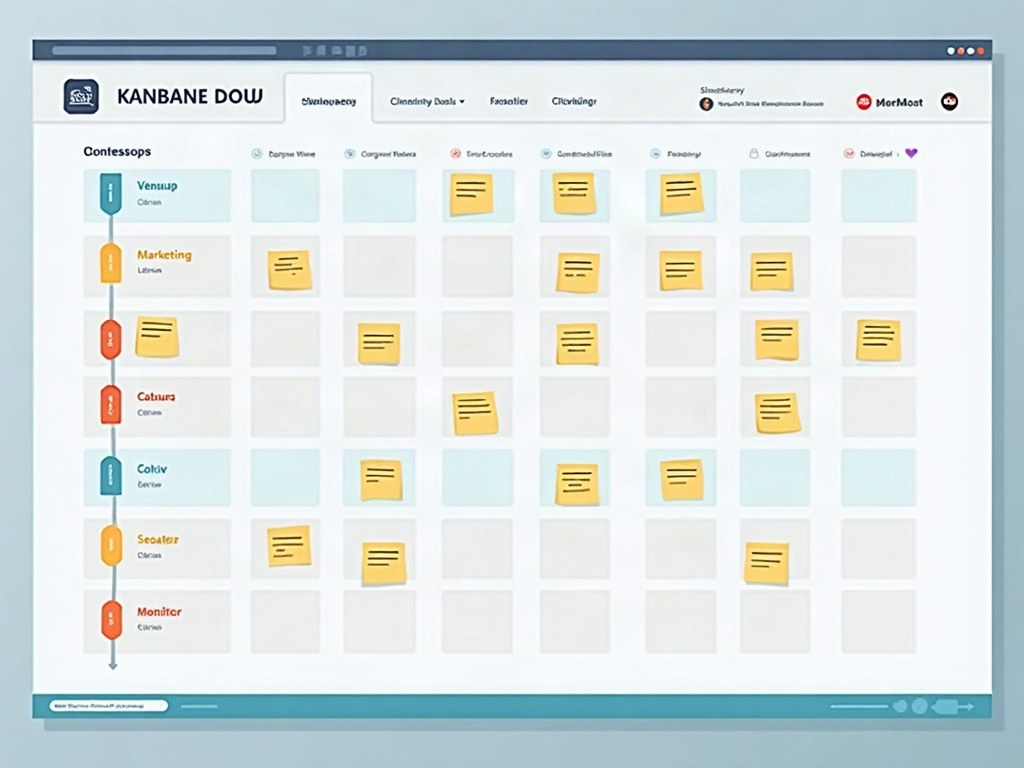
Fifty cards in one column is just a prettier version of overwhelm. The fix is swimlanes — horizontal bands that split the board by workstream: Venue, Catering, Marketing & Invites, Program & Speakers, Logistics & Day-Of. Now the same board reads two ways at once: top to bottom tells you what kind of work it is, left to right tells you how far along it is. You can instantly see that Catering is cruising while Marketing hasn’t moved all week. This is the same move that turns a marketing calendar from idea to published — grouping related work so each stream has a clear owner and nothing hides in the crowd. For a bigger event, a lane per workstream is the difference between a board you scan in ten seconds and one you avoid looking at.
Put a name on every card
Events fail in the gaps between people. “I thought you were ordering the chairs” is the single most expensive sentence in event planning. So make it a rule that every card has exactly one owner — not a committee, a person. A shared task is a task nobody actually owns, and on a date-driven project that’s fatal. This isn’t about blame; it’s about clarity. The owner’s job isn’t necessarily to do the whole thing themselves, but to make sure it crosses the line. The same logic applies to who is even available to carry the load: before you assign the day-of roles, it’s worth planning around who is actually there, because the volunteer who’s away the week before isn’t the person to own the final confirmation calls.
Map what blocks what
Some event tasks can happen in any order. Many cannot. You can’t print the program until the speaker list is final; you can’t order the custom banner until the logo artwork is approved; you can’t send the final headcount until RSVPs close. These are dependencies, and ignoring them is how teams end up paying rush fees or simply running out of runway. A simple blocked indicator — a red label, a dedicated “Blocked” marker, a note naming what it’s waiting on — makes the chain visible. When the blocking card finally moves to Confirmed, you know exactly what’s now free to start. Spotting these early also stops the quiet expansion of a “simple” event into a monster; the same discipline that helps you catch work that quietly grows keeps “just a small gathering” from ballooning into a production nobody budgeted for.
Turn the board into a day-of run sheet
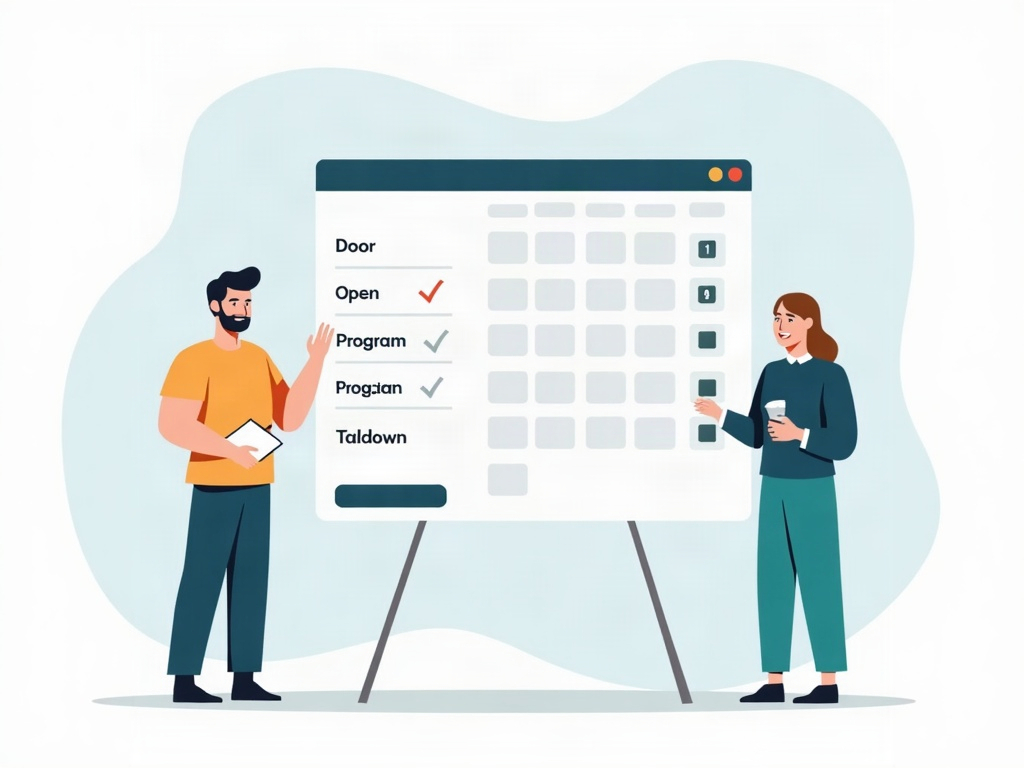
In the final stretch, your board quietly changes jobs. The planning cards are mostly in Done, and what you need now is a minute-by-minute script for the day itself. Add a “Day-Of” lane — or spin up a tiny second board — with cards for each block of the day: arrive and unlock, set up chairs and signage, sound check, doors open, welcome, program, teardown, final venue walkthrough. Give each a time and an owner. The payoff is enormous: on the day, you are not the single point of failure answering forty questions. Anyone on the team can look at the run sheet and know what happens next and who’s handling it. The planning board got you to the door; the run sheet carries you through it.
The takeaway
An event is a deadline you can’t negotiate with, wrapped around a hundred small tasks that each want to be forgotten. A kanban board meets that head-on: columns that track a commitment from idea to confirmed, deadlines set backward from the one date that matters, swimlanes that keep each workstream honest, a single owner on every card, and clear markers for what’s blocking what. Run it that way and the week before stops being a panic and becomes a quiet walk through a board that’s almost entirely green. It’s the same reliability that makes a recurring checklist-driven process never slip — applied to the one project where slipping is not an option. If you want a place to make your next event visible from the first idea to the final teardown, a simple kanban board is the calmest way to hold all the moving parts in one view.