Open your backlog and be honest for a second. How many of those cards are you actually going to do? There is the redesign idea from March, the podcast you were definitely going to launch, three half-formed notes that just say “look into this,” and a task so old you can no longer remember what it means. Somewhere in there are the two or three things that genuinely matter this week, buried under everything else. That is not a backlog. That is a graveyard, and you are the one who has to keep walking past it.
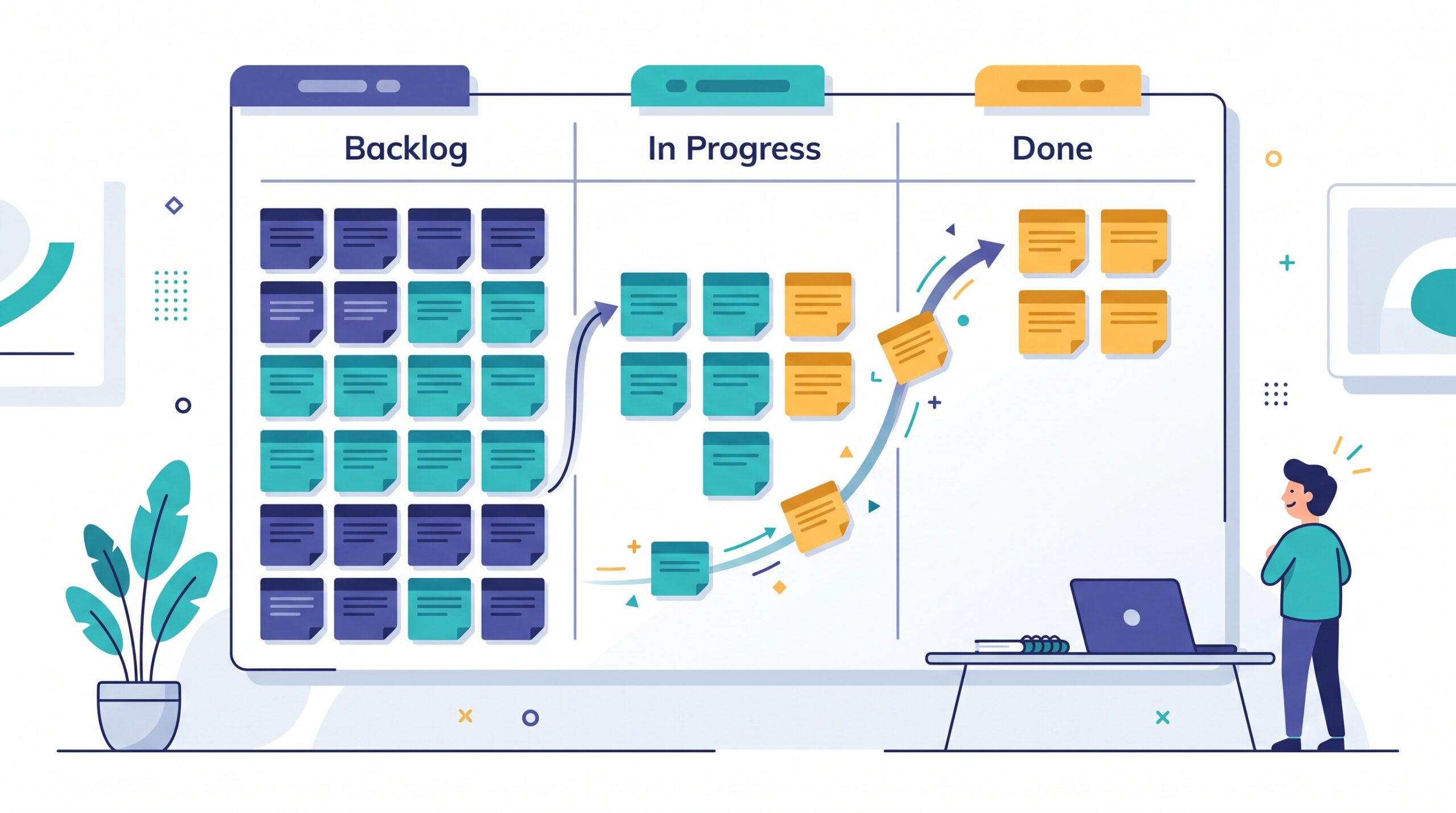
A backlog is supposed to be the calm, trusted place you pull your next piece of work from. When it is done well, deciding what to do next takes ten seconds because the most important thing is sitting right at the top. When it is done badly, it becomes a source of low-grade guilt you avoid opening. The good news is that fixing it is not complicated. It is a handful of small habits, and this article walks through each one.
A backlog is a shortlist, not a landfill
The first mental shift is the most important one. Your backlog is not a place to store every idea you have ever had. It is a shortlist of work you have genuinely committed to doing soon-ish, ordered so the top is always the next thing worth starting.
The moment you treat it as a landfill, it stops working. A hundred cards is not more thorough than fifteen; it is just harder to read. You cannot prioritize a hundred things, you cannot even hold them in your head, so in practice you ignore the whole column and work from memory or from whoever emailed you last. A tight backlog you actually trust beats an exhaustive one you avoid, every single time.
Triage every new card as it lands
Most backlog bloat comes from a single bad habit: catching every idea and dropping it straight into the pile with no decision attached. The fix is to make a quick call the moment something new shows up.

When a new task or idea arrives, sort it into one of three buckets. First, do it now-ish: it is real, it matters, it goes into the backlog in roughly the right position. Second, maybe someday: it is interesting but not committed, so it goes to a separate “Someday” list or a parking-lot card, not the working backlog. Third, no: it is a nice thought you are never realistically going to act on, so you let it go right there. That third bucket is the one people skip, and it is the one that keeps the whole system light.
This takes about five seconds per item, and it saves you from the far more painful job of untangling a two-hundred-card mess later. If you are not sure whether something is a “now-ish” or a “someday,” it is almost always a someday.
Prune ruthlessly, and trust the dust
Even with good triage, backlogs drift. Priorities change, projects finish, and yesterday’s urgent idea quietly stops mattering. So every so often you have to go in and cut.

Here is a simple test: scroll to the bottom of your backlog, where the oldest cards live. If a card has been sitting there for a month or two without moving, ask one blunt question: if this were truly important, would it really still be untouched at the bottom? Almost always the honest answer is no. The card is not important, it is just old. Delete it. You are not losing anything, because if the idea genuinely matters it will come back, and this time it will earn a real spot.
Deleting cards can feel like admitting failure, but it is the opposite. A card you archive is a decision you have finally made. Every one you remove makes the ones that remain easier to see. Aim to leave a review session with fewer cards than you started with more often than not.
Only order the top of the list
People burn enormous energy trying to perfectly rank an entire backlog, dragging card thirty above card thirty-one as if it matters. It does not. You will never get to card thirty this week, and by the time you do, the order will have changed anyway.

Order only the top of the backlog with any care, maybe the next five to ten cards. That is the zone you will actually pull from before your next review, so that is the zone worth getting right. Below that, rough grouping is plenty. This one habit removes most of the friction people feel around prioritizing, because you stop trying to solve a problem you do not have yet. The rule is simple: the top card should always be the thing you would genuinely start next if you had a free hour right now.
Keep the backlog and the doing separate
A backlog only stays calm if it is clearly a waiting room, not the workshop. The cards in it are candidates, not commitments in progress. The doing happens in your active columns, and ideally you keep a firm limit on how many cards are in progress at once so work actually finishes instead of piling up half-done.
That separation is what makes the backlog safe to be big-ish without being stressful. Nothing in the backlog is nagging you to act, because you have agreed with yourself that you only pull from it when you have capacity. On a KanbanBlocks board this is just your leftmost column feeding into the rest: cards wait there patiently until you drag the top one into In Progress, and the backlog never pretends to be a set of things you are currently juggling.
The ten-minute weekly groom
All of this holds together with one small recurring habit. Once a week, spend ten minutes tidying the backlog. It is the cheapest, highest-return ritual in the whole system.

Run the same short pass each time. Skim the new cards from the week and triage anything you dropped in without thinking. Scroll to the bottom and delete or archive whatever has gone stale. Reorder the top five to ten so Monday-you starts on the right thing. Then close it and get on with your week. That is the entire routine. Ten minutes, and the backlog stays a place you trust rather than a pile you dread.
A few takeaways to try this week
A healthy backlog is not about capturing everything. It is about being honest about the small number of things that actually deserve your next hour. To get there:
- Treat the backlog as a shortlist, not a landfill. Fewer, better cards win.
- Triage every new idea on arrival into now-ish, someday, or no, and use that “no” freely.
- Prune the oldest cards regularly. If it has sat untouched for a month, it can go.
- Only carefully order the top five to ten cards. Rough grouping is fine below that.
- Keep the backlog separate from work in progress, and run a ten-minute weekly groom.
Do that, and opening your board stops feeling like visiting a graveyard and starts feeling like reaching for the next right thing. If you want somewhere simple to keep that shortlist honest, a clean kanban board with a single backlog column is all it really takes.