You know the task. It has been sitting on your list for two days, maybe five. It is not even that hard — you have done things like it a hundred times. And yet every time your eyes land on it, something in you quietly says not right now, and you tidy your desk, or check a message, or make another coffee. The work is not the problem. Starting is the problem.
This is the least talked-about truth in productivity: almost all of the friction lives in the first ninety seconds. Once you are actually moving, the task is usually fine, sometimes even satisfying. The trick, then, is not to force yourself to do the whole thing. It is to build a tiny bridge from not-started to started — a first step so small that the part of your brain looking for a reason to bail simply cannot find one. That first step has a name worth borrowing: the bridge task.
Why starting is the hard part
When you look at a big, vague task, your brain does not see one job. It sees a fog of unknown steps, possible mistakes, and effort with no clear end. That fog is uncomfortable, and the fastest way to make the discomfort go away is to look at something else. That is procrastination in one sentence: not laziness, but avoidance of an unpleasant feeling. The task itself is never really the enemy; the anticipation of it is.
Which means the goal is not more willpower. It is less activation energy. You want to shrink the very first action until it costs almost nothing to begin, because momentum is generous — it will carry you far further than motivation ever does. The bridge task is simply the smallest possible action that counts as starting.
What a bridge task actually looks like
A bridge task is the two-minute version of the first step, and only the first step. Not “write the proposal,” but “open a blank doc and type the client’s name at the top.” Not “do the quarterly numbers,” but “open last quarter’s file and save a copy with this quarter’s name.” Not “clean the workshop,” but “put three things back where they belong.”
Notice what these have in common. Each one is concrete, physical, and almost insultingly easy. There is no judgement waiting at the end of it, no way to do it wrong, and no fog. You are not committing to finishing. You are only committing to touching the work. Nine times out of ten, touching it is enough — once the doc is open and your name is on it, writing the next sentence is far easier than opening the doc was.

Let your board hold the first step for you
Here is where a kanban board turns a nice idea into a reliable habit. The reason a big card is so easy to avoid is that it hides its first step. A card that just says “Website refresh” gives you nowhere to put your hands. So do the work of splitting it before you need to start, not in the moment you are already resisting. Break the intimidating card into board-sized pieces, the quiet skill behind breaking a big project into board-sized tasks, and make the very first card a genuine bridge task.
When your board is set up this way, starting is no longer a negotiation with yourself. You are not staring down a mountain labelled “Website refresh.” You are looking at a small, friendly card that says “list the five pages that need new photos,” and that you can do. The board has already done the hard thinking, so your tired afternoon self does not have to.
Pull one card, not the whole board
The second thing a board does is narrow your focus to exactly one thing. A to-do list shows you everything at once, which is its own quiet source of dread. A board lets you pull a single card into Doing and, for a while, pretend the rest does not exist. That act of pulling — choosing one card and moving it — is itself a bridge. It is a small physical decision that says this is what I am doing now, and it works best when it is genuinely your choice to make, which is the whole point of letting the team pull work rather than having it pushed onto them.
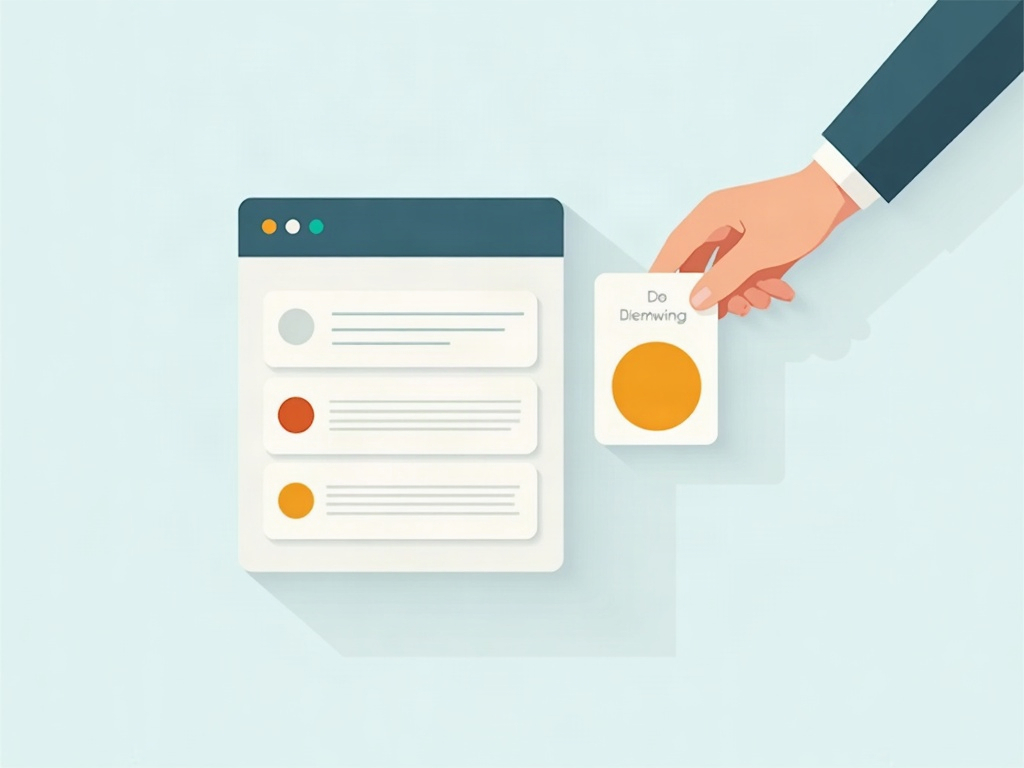
Keep a strict limit on how many cards live in Doing — ideally one, at most two. The moment three or four things are “in progress,” you are not starting anything; you are hovering over all of it. One card in Doing is a promise you can actually keep, and finishing it gives you the small hit of completion that makes pulling the next one feel good instead of heavy.
Motivation follows action, not the other way around
Most people wait to feel ready. They believe the sequence is: first the motivation, then the work. It is almost always the reverse. You do a tiny, unthreatening thing, your brain notices it was not so bad, and then the willingness shows up. Action is the cause and motivation is the effect. The bridge task exploits this shamelessly — it gets you to act before you feel like it, so the feeling has a chance to arrive.

This is also why the first card on any project should never be the scary one. If you open a new piece of work with its hardest, most ambiguous task, you are betting the whole start on your worst odds. Lead with something small and winnable, let the momentum build, and by the time you reach the hard card you are already moving — which, not coincidentally, is easier to sustain when you are not constantly bouncing between things, since the real cost of context-switching is almost always bigger than it feels.
Set tomorrow’s bridge before you leave today
The single highest-leverage habit here takes about sixty seconds. At the end of your working day, before you close the board, decide the one card you will pull first tomorrow and make sure it is a true bridge task — tiny, concrete, no thinking required. Leave it sitting at the top of your To Do column, obvious and ready.

Do this and you remove the worst decision of the day from the worst possible moment. Morning-you, or Monday-you, does not have to choose what to start or work up the nerve to begin. The choice is already made and the step is already small. You just pull the card. Pair it with a light weekly tidy — the kind of thirty-minute reset that keeps a small business organized — and you will find that the tasks you used to circle for days simply get started, quietly, one small plank at a time. That is the whole method: stop trying to feel like it, and build a bridge short enough that you cross it before you notice.
Sources & further reading: