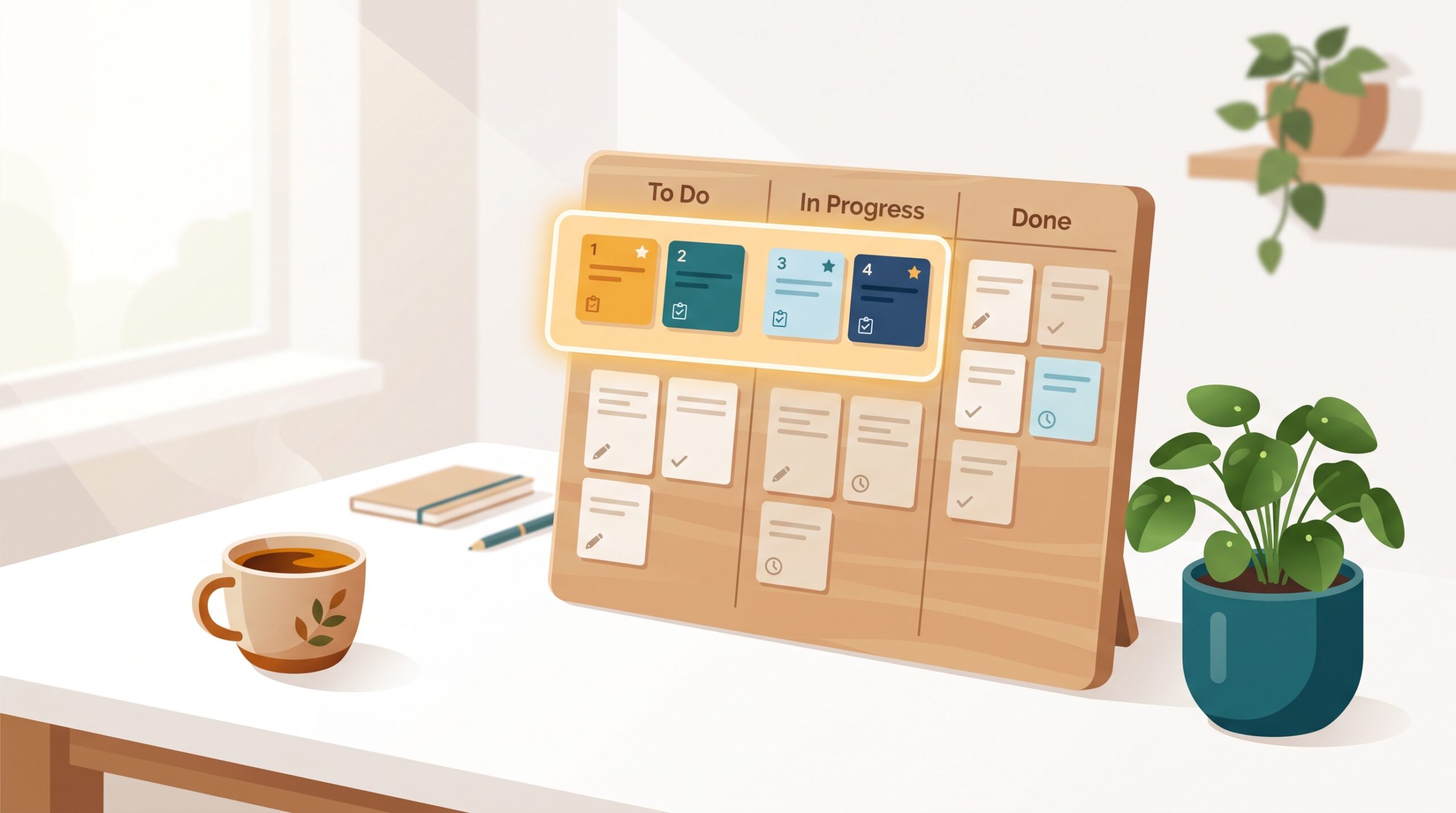
Almost no small business falls apart in a single dramatic moment. It drifts. A follow-up slips, then another. The board fills with cards nobody has looked at in ten days. The invoice you meant to chase is still sitting in a mental note. By the time it feels like chaos, there was never one decision to blame — just twenty small things that quietly stopped being tracked. The cheapest defense against that drift is not a new app or a longer to-do list. It’s a habit: thirty minutes, same time every Friday, spent resetting the week before it resets you.

Why a Weekly Reset Beats Working Harder
The instinct when things feel disorganized is to push harder — more hours, more hustle, catch up over the weekend. But disorganization isn’t a shortage of effort; it’s a shortage of review. Work comes in faster than anyone stops to sort it, so the pile grows in the background while you’re busy being productive. That’s the same trap behind feeling busy all week yet shipping very little: motion without a moment to take stock.
A weekly reset is that moment, deliberately scheduled so it can’t get skipped. It doesn’t add work — it takes the invisible mess that’s been accumulating and makes it visible for half an hour, while it’s still small enough to handle. Do it consistently and you never face the dreaded “where did everything go” Monday, because nothing ever got a full week to hide.
Step One: Clear the Finished Work
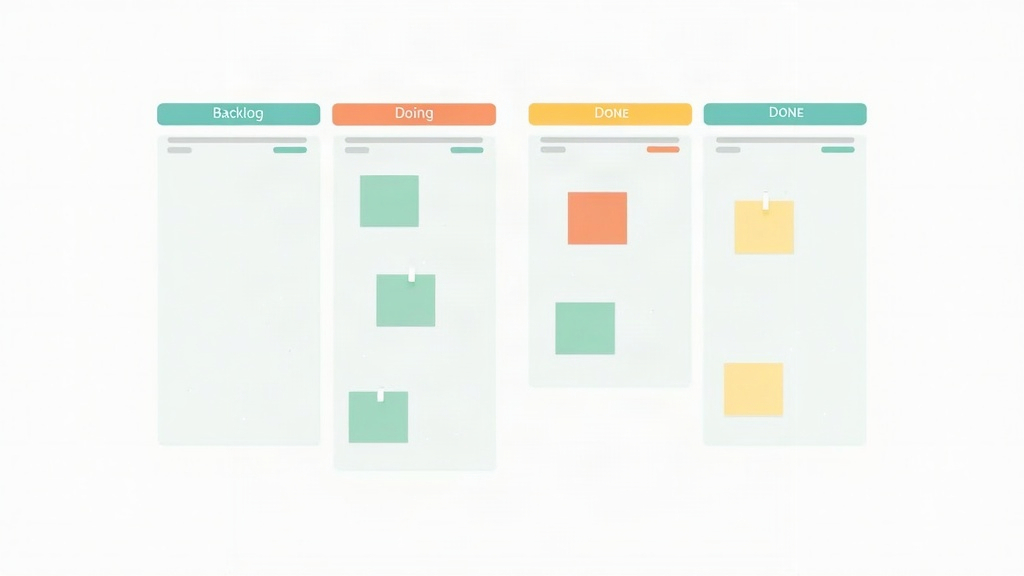
Start with the satisfying part. Go through everything that got done this week and actually close it out — move the cards to done, archive them, tick them off, whatever your system uses. This sounds trivial, but finished work that never gets marked finished is a real problem: it clutters the board, hides what’s actually still live, and robs you of the quiet motivation that comes from seeing a week’s worth of completed things in one place.
Clearing done work also forces a small honesty check. A card you thought was finished but can’t quite close — because a last email is unsent or a file isn’t delivered — isn’t done. It’s a loose end wearing a disguise, and catching it now is exactly the point. If your team has a shared idea of what “finished” means, this step goes fast; if it doesn’t, a simple definition of done is the single upgrade that makes every future reset quicker.
Step Two: Round Up the Loose Ends
Now go hunting for the things that live nowhere. The reply you promised someone. The receipt you need to file. The idea you had in the car. Small-business chaos is mostly made of these orphan tasks — real commitments that never made it onto any board, so they float in your head and leak out as that low background anxiety of forgetting something.
Give them thirty seconds each: capture it as a card, do it immediately if it takes under two minutes, or consciously decide it doesn’t matter and let it go. The magic isn’t in doing them all — it’s in getting them out of your head and into the system, where next week’s you can see them. This is the same discipline as batching your five-minute jobs instead of letting them ambush you one at a time: collect the small stuff on your terms, once, rather than reacting to it all week.
Step Three: Look at What’s Actually Moving
With the board cleared and the loose ends captured, take one honest look at the work still in progress. Is anything stuck? A card that’s been in “doing” for two weeks isn’t in progress — it’s blocked, forgotten, or too big, and Friday is when you notice before it becomes Monday’s fire. You’re not solving it now; you’re flagging it so it starts next week with attention instead of getting buried again.
This is also the moment to glance at how much your team actually finished versus how much you started. You don’t need fancy metrics — just a felt sense of whether work is flowing or piling up. Over a few weeks that glance becomes a genuine read on capacity, the same signal a measure like throughput gives you more formally. Most owners are quietly starting far more than they can finish; the weekly look is what makes that pattern impossible to ignore.

Step Four: Set Up Next Week Before You Leave
End by pointing the board at the week ahead. Pull the two or three things that genuinely matter most to the top, where you’ll see them first thing Monday. Don’t plan every hour — plans that detailed never survive a real week. Just make the first decision now, while you have context, so Monday-morning you doesn’t open the laptop to a wall of undifferentiated tasks and waste the freshest hour of the week deciding where to start.
That’s the whole trick of the reset: it moves the deciding to Friday, when you’re winding down and can see the week clearly, and away from Monday, when you’re fresh but blind. A board with three priorities already marked is a running start. A board that’s just a pile is a cold one.
Make It a Ritual, Not a Chore
The reset only works if it actually happens, so lower the bar until it’s unskippable. Same time every week — late Friday afternoon is ideal, when you’re too spent for deep work but fine for tidying. Set a real appointment for it. Keep it to thirty minutes with a timer so it never balloons into dreaded overhead. Some people add a small reward: the good coffee, the end-of-week playlist, the thing that makes you almost look forward to it.
Do it four weeks running and you’ll feel the difference most on the weekend, not the weekday — because the quiet worry that you’ve forgotten something has nowhere left to hide. Everything that matters is on the board, the finished work is closed, and next week already has a shape. That’s the real return on thirty minutes: not a more crowded system, but a calmer head. Start this Friday, keep the list short, and let a simple board carry the memory so you don’t have to.