Ask almost any small-business owner how their team is doing and you will hear the same word: busy. Everyone is slammed. Calendars are full, message threads never stop, and every person seems to have five things on the go at once. And yet, when you look at what actually shipped this week – what reached a client, went live, or got signed off – the list is oddly short. The activity is real. The output isn’t matching it.
The gap between how busy a team feels and how much it finishes almost always traces back to one quiet culprit: context-switching. It is the cost of asking people to juggle several open tasks at the same time, hopping between them all day. It rarely shows up on any report, because every individual switch feels tiny. But add them up across a week and a team, and switching quietly becomes the most expensive thing you do.

What a single switch actually costs
Here is the part that surprises people. The cost of switching is not the few seconds it takes to open a different file or tab. It is the reload. Every time you leave a task half-done and jump to another, you drop the mental picture you had built – where you were, what you were about to do next, the small decisions you were holding in your head. When you come back, you have to rebuild all of it before you can make any real progress. That rebuild is slow, and it is invisible.
So a five-minute “quick” interruption is rarely five minutes. It is five minutes plus the ten or fifteen it takes to climb back into where you were. Do that six or seven times a day – a message here, a can-you-just there, a switch to the other project because it feels urgent – and a huge slice of the day evaporates into reloading rather than doing. Nobody was slacking. They were switching.
Why busy and productive drift apart
Busy measures how much you are doing. Productive measures how much you are finishing. Context-switching drives a wedge between them, because switching is itself a kind of activity – it feels like work, and it fills the day, but it moves nothing to done. A team that is constantly switching can be completely exhausted and still have very little to show for it, which is a demoralising place to be.
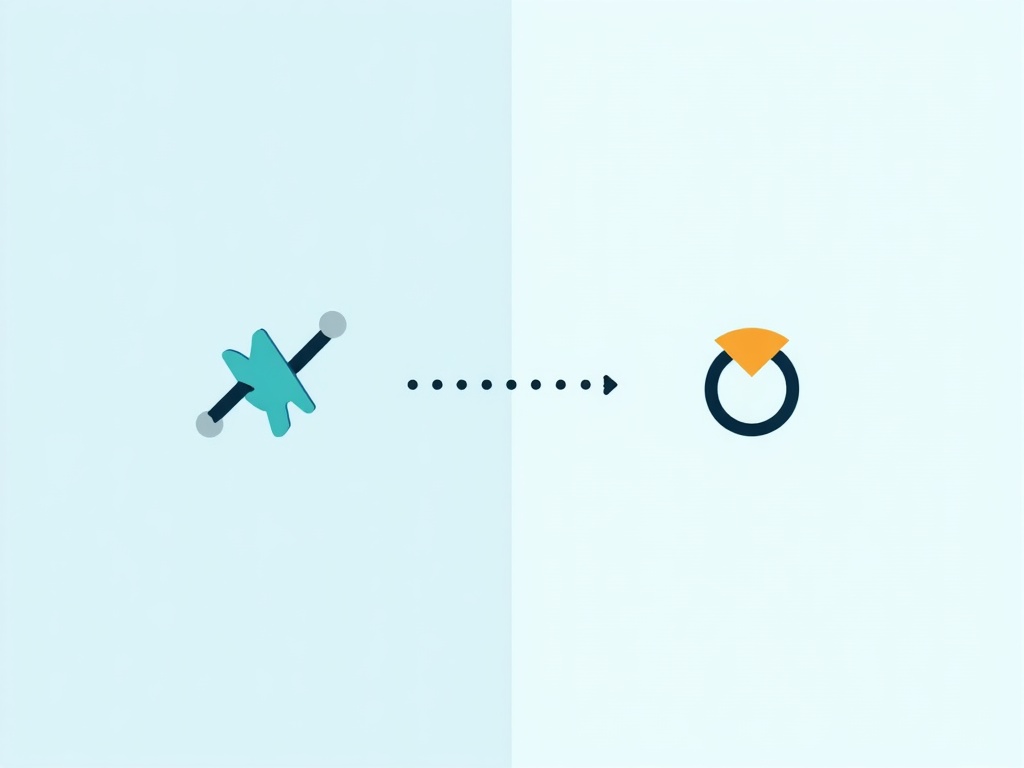
Worse, switching tends to feed on itself. When lots of things are half-finished, each one keeps generating little pings – a question, a follow-up, a nudge – that pull people back in and trigger yet another switch. The more you start, the more open loops you carry, and the more interrupted everyone becomes. It is a spiral, and “just work harder” only spins it faster.
The board usually tells on you first
The good news is that this problem is visible if you know where to look. Put your team’s work on a simple kanban board – backlog, in progress, done – and the symptom jumps out immediately: a bloated in-progress column and a thin done column. Ten, fifteen, twenty cards all “being worked on” at once is not a picture of a productive team. It is a picture of a team switching constantly, because no human works twenty things in parallel – they rotate through them, paying the reload tax on every lap.
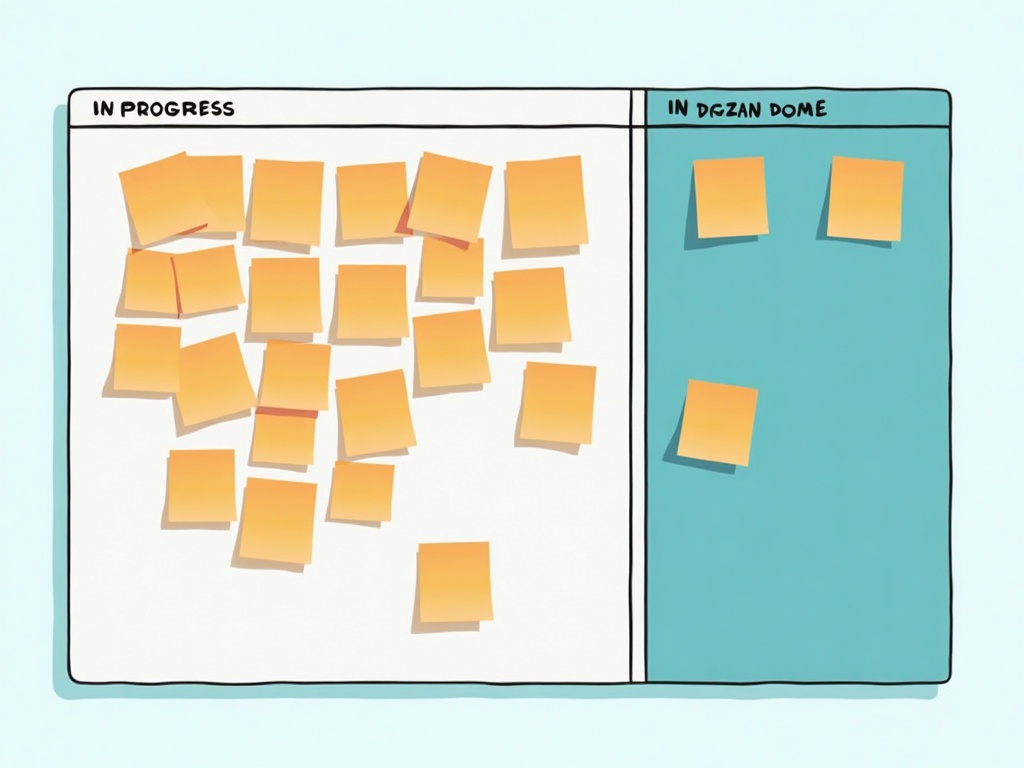
This is exactly the problem that work-in-progress limits exist to solve. A WIP limit is just a cap on how many cards can sit in a column at once – say, no more than two active items per person. It sounds restrictive, and that is the point. When the column is full, you cannot start something new until you finish something first. The limit physically prevents the pile-up of half-done work that generates all the switching in the first place.
Finishing one thing beats starting three
The instinct when everything feels urgent is to start everything, so that every plate is at least spinning. It backfires. Three tasks worked in parallel all finish late, because each one keeps getting set down and picked back up. The same three tasks worked one at a time – really finishing the first before touching the second – deliver the first result far sooner and usually finish the whole set earlier too, because you never pay the reload tax.
This is the heart of a pull-based way of working: you take on the next thing only when you have genuinely finished the last, rather than having work pushed onto an already-full plate. “Stop starting, start finishing” sounds like a slogan, but it is really just the mathematics of switching. Every new thing you start before finishing the current one adds an open loop that will cost you later.
Protecting focus, one person at a time
WIP limits fix the team-level pile-up, but individuals need protection too, because most switching is triggered by interruptions rather than by choice. The fix is to make focus the default and interruption the exception. Batch the pings: check messages at set times instead of the instant they arrive. Carve out a protected block or two each day where notifications are off and the only job is to finish the one card in front of you. Make it normal to say “I’ll get to that after this is done” instead of dropping everything.

A personal kanban board helps here even for a single person, because it makes your own switching visible to you. Give yourself a WIP limit of one or two, and you will feel the friction every time you are tempted to start a third thing – which is precisely the nudge that keeps you finishing. The goal is not to become unreachable; it is to make sure that being reachable does not mean being interrupted every four minutes.
A week to cut the switching tax
You do not need a reorganisation to fix this – just a few deliberate changes and one honest week to feel the difference. Start by putting the work on a board so the in-progress pile becomes visible to everyone. Then set a modest WIP limit and actually hold it, so new work waits until something finishes. Ask people to protect one focus block a day and to batch their message-checking rather than living in the notifications. And when something feels urgent, resist the reflex to start it on top of everything else – finish, then pull.

None of this is about working longer. It is about spending your hours on doing rather than on reloading. If your team feels frantic but the done column stays stubbornly empty, switching is almost certainly the reason – and it is very fixable. As a bonus, cutting the switching tax also cuts the amount of time work spends stalled and waiting, which is its own hidden drain worth a closer look. Pick one team, one board, one WIP limit, and one protected focus block, and watch what happens over five days. Busy will start to look a lot more like finished – and a simple kanban board is often all it takes to see the difference.