Your board is for the work that matters: the client project, the launch, the thing with real moving parts. So why is it cluttered with cards like “reply to Dana,” “forward that invoice,” and “book the Tuesday call”? Each one took longer to write down than it would have taken to just do — and now they sit there, aging, making a serious board look like a to-do list that got out of hand.
There’s a tidy little heuristic that fixes most of this, and it comes from David Allen’s Getting Things Done: the two-minute rule. It’s one sentence, it takes no setup, and once it becomes a reflex it quietly keeps your board clean and your day moving. Here’s how it works, and — just as important — when to deliberately break it.

What the two-minute rule actually says
The rule is almost insultingly simple: if a task will take less than about two minutes, do it now instead of capturing it for later. Don’t make a card, don’t add it to a list, don’t “come back to it.” Just handle it and move on.
The logic underneath is where it earns its keep. Capturing a task has a cost — you have to stop, phrase it, file it somewhere, and then later you have to find it, re-read it, remember the context, and finally do the thing. For a genuinely quick job, all that overhead is longer than the job itself. You’d spend ninety seconds administrating a sixty-second task. The two-minute rule just refuses to pay that tax. The “two minutes” isn’t sacred, by the way — call it the time it takes to write a decent card. If doing the task is faster than tracking it, the task wins.
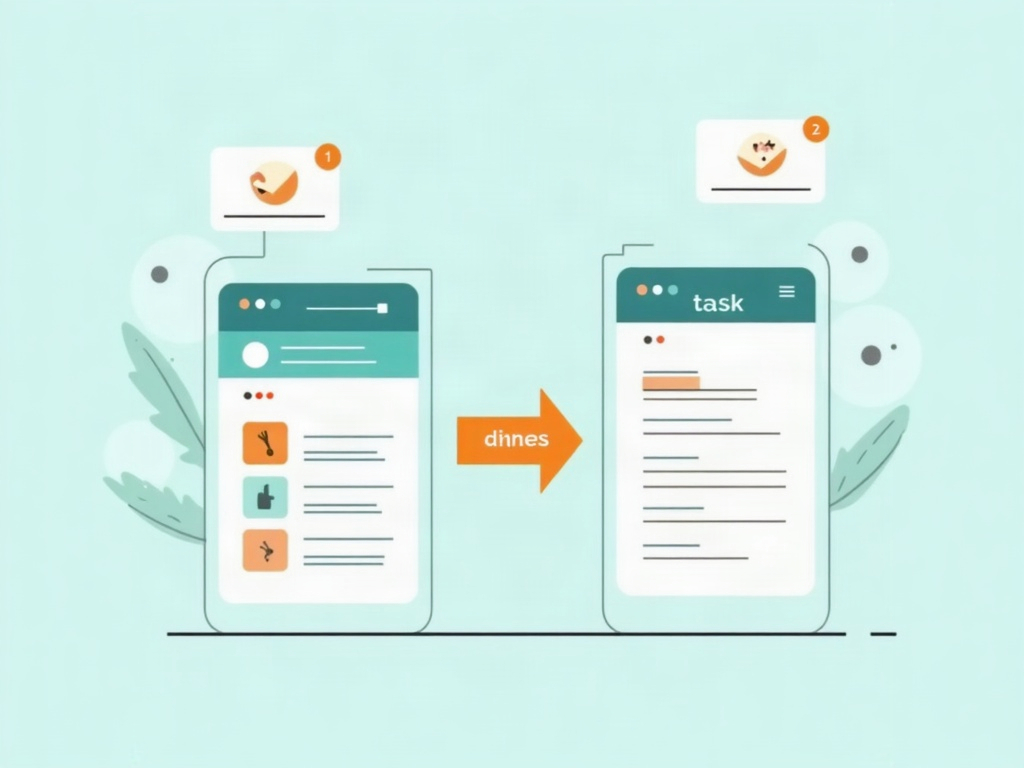
Use it as a filter for what deserves a card
The most useful way to think about the two-minute rule isn’t “do small things fast” — it’s a gate on your board. Every time something lands on you, you get one quick decision: is this a two-minute job, or is it real work? Two-minute jobs get done on the spot and never touch the board. Everything else earns a card.
That gate matters more than it looks. A board’s whole value is that a glance tells you the true state of your work. The moment it fills up with trivial, already-half-done errands, that signal gets noisy — you can’t tell the launch from the “grab milk” at a distance anymore. Reserving the board for things that genuinely need tracking is what keeps it honest, and it’s a big part of why boards drift into the chaos that leaves owners ready to declare backlog bankruptcy and start over. Filter at the door and you rarely get there.
The big exception: don’t let it shred your focus
Here’s where a lot of people get burned. Taken literally, “always do the two-minute task right now” is a recipe for never doing anything bigger. If you drop into reflexive do-it-now mode every time a quick task appears, you’ll spend your entire day ping-ponging between tiny chores and never give a real project the uninterrupted stretch it needs.
The fix is to notice where you are when the task shows up. The two-minute rule is brilliant while you’re already triaging — clearing your inbox, running a board review, between meetings. It’s poison in the middle of deep, focused work. A two-minute task that interrupts a two-hour project doesn’t cost two minutes; it costs the two minutes plus the long climb back into concentration. That hidden toll is exactly the cost of context switching that leaves people busy all day with little shipped.
So when you’re heads-down, invert the rule: let two-minute tasks pool rather than handle them one by one. Jot them somewhere frictionless and keep working. Then knock the whole pile out in one pass when you surface — which is really just a cousin of learning to batch your five-minute jobs instead of letting them nibble your day to pieces.

Point it at your inbox and your messages
The two-minute rule really shines on the stuff that doesn’t belong on a board at all — email, chat, the “hey, quick thing” that lands mid-afternoon. When you’re processing messages, run each one through the same gate. Can you reply, forward, approve, or delete it in under two minutes? Do it and clear it. Will it take longer, or does it kick off a real chain of work? Then it becomes a card, with an outcome and a next step, and it leaves your inbox so it stops nagging you.
This one habit does something quietly powerful: it stops your inbox from becoming a shadow to-do list. Most inbox dread isn’t the volume — it’s the forty half-decisions you keep re-reading and re-deferring. Decide once. Two minutes, do it now; longer, make a card. Nothing gets to sit in limbo collecting guilt.
Build it into a quick daily triage
A rule you have to remember is a rule you’ll forget, so give it a home. The easiest place is a short daily pass where you look at everything that’s come in and sort it fast: do it now (under two minutes), make a card (real work, needs tracking), or drop it (didn’t actually need doing). Five or ten minutes of this and your board holds only genuine work while the trivia is already handled.
If you want an anchor for it, bolt it onto a routine you already run — the start of your day, or an end-of-day board ritual works beautifully. The point is consistency: when triage is a scheduled moment rather than a thing you do randomly whenever a task startles you, the two-minute rule stops competing with your focus and starts protecting it.
The takeaway
The two-minute rule is less about speed and more about judgment. Trivial, instant tasks don’t deserve the ceremony of a card — doing them is cheaper than tracking them, and it keeps your board reserved for work that genuinely needs a place to live. The one discipline that makes it work instead of backfiring: use it while you’re triaging, never in the middle of deep focus, and let the quick stuff pool when you’re concentrating.
Next time something tiny lands on you, ask the one-second question — faster to do than to log? If yes, just do it. If no, give it a card, an outcome, and a column on your board, and get back to the work that actually moved the needle.