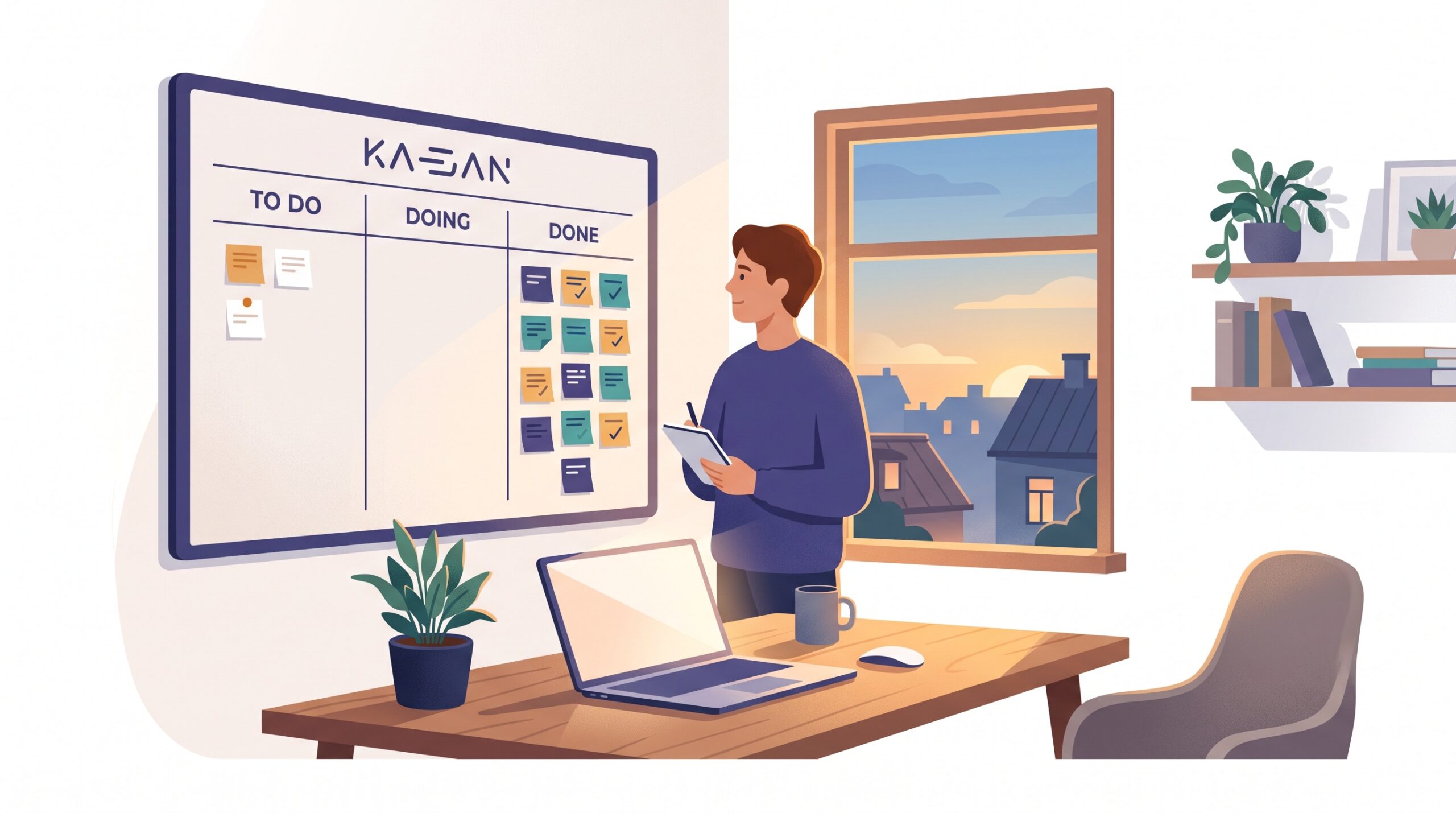
Think about how most workdays actually end. Not with a tidy full stop, but with a slow fade: you glance at the clock, realize you’re out of time, fire off one last reply, and shut the laptop mid-thought. Three tasks are half-done, two more are rattling around in your head, and something feels forgotten. So the job follows you home — you’re chopping vegetables and suddenly remembering the invoice you didn’t send. That nagging hum isn’t a sign you’re disorganized; it’s the predictable result of stopping work without ever properly closing it.
An end-of-day board ritual fixes that. It’s a short, repeatable routine — five minutes, maybe less — where you spend a moment with your board before you log off, so the day ends on purpose instead of just running out. You put every loose thread somewhere you trust, decide where tomorrow starts, and give your brain permission to switch off. Here’s how to build one that sticks.
Why your brain won’t just log off
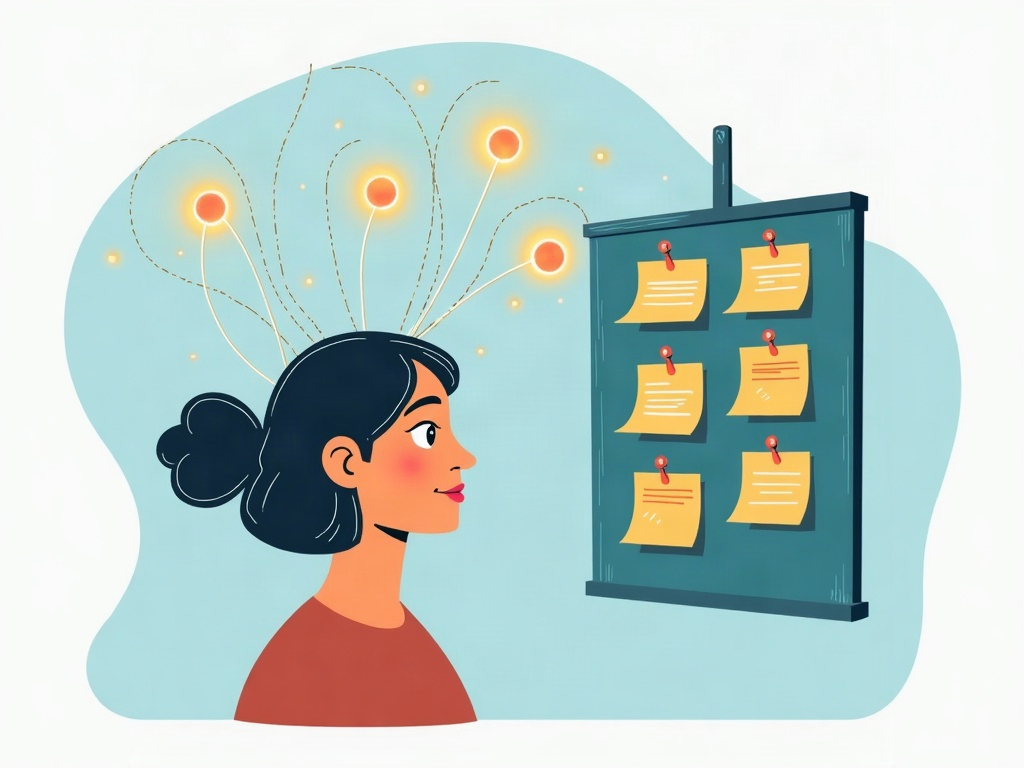
There’s a well-documented quirk in how we think: unfinished tasks stay noisier in our minds than finished ones. An open loop — a task you started but didn’t close, a message you meant to send — keeps quietly resurfacing, because part of your brain is holding it open so you don’t forget. The trouble is it holds them all open at once, with no idea which ones actually matter. The result is that low background rumination that makes it impossible to be fully present after hours.
The trick isn’t to finish everything — you never will. It’s to get every open loop out of your head and onto something reliable. Once a task is captured on a board you genuinely trust to show it to you again at the right moment, your brain relaxes its grip. It no longer has to be the storage system. That’s the whole mechanism the ritual is built on: trusted capture, then release.
What the ritual actually is
Don’t overcomplicate this. The end-of-day board ritual is simply a fixed, lightweight pass over your board at the same point every day — when you sense the workday winding down. It is not a planning session and definitely not an excuse to start one more task. It’s a closing routine: the work equivalent of wiping down the counter and turning off the lights before you leave the kitchen.
Because it’s short and always the same, it becomes automatic. And because it’s tied to your board rather than a separate app, there’s nothing extra to maintain — you’re just tidying the system you already use all day. Five minutes is the target; if it regularly runs longer, it’s drifting into planning, and you should pull it back.
The five-minute shutdown sequence
Here’s a reliable order that covers everything without turning into a project of its own:
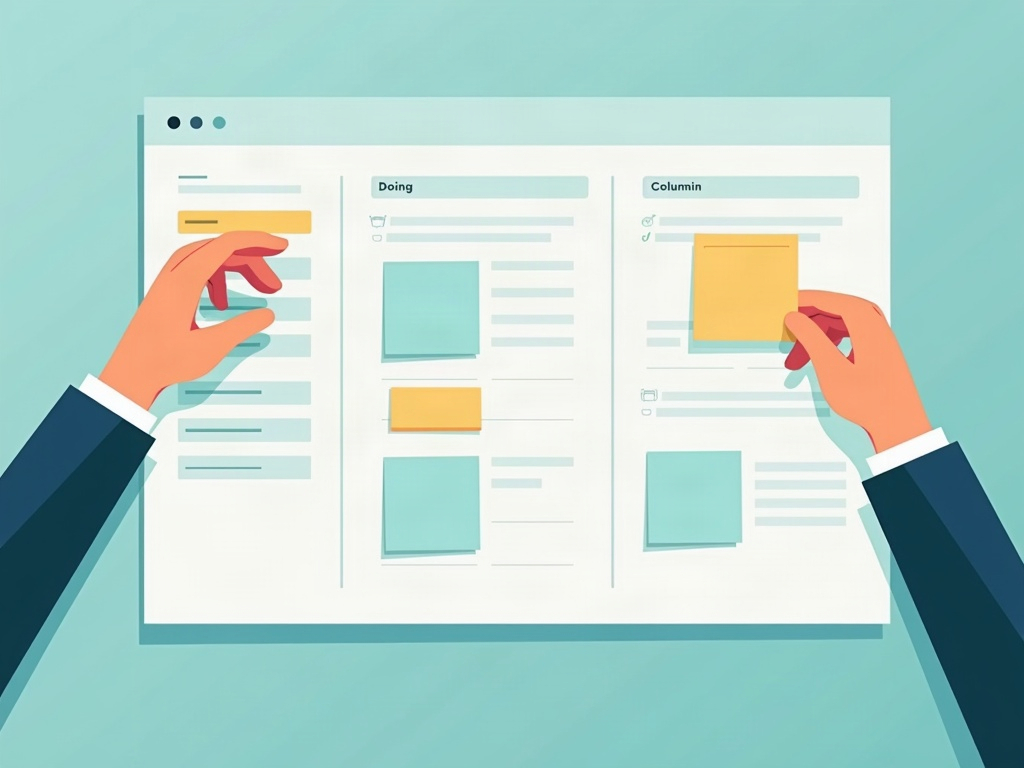
- Move what’s actually done. Walk your Doing column and drag anything finished into Done. This is the moment you get to see what you accomplished, which is easy to lose on a busy day.
- Update what’s in flight. For each card still in progress, add a one-line note on where you left off. A quick “stopped at the pricing section” costs ten seconds now and saves ten minutes of re-reading tomorrow.
- Empty your head onto the board. Capture every loose thought — the invoice, the follow-up call, the thing you promised a client — as a card. Don’t organize them yet; just get them out of your head and into the backlog where they’re safe.
- Flag anything stuck. If a card is waiting on someone else, mark it so, so it’s obvious tomorrow rather than silently stalling for three days.
- Glance at tomorrow. A quick scan of what’s coming — not a plan, just a look — so nothing time-sensitive ambushes you in the morning.
That’s it. Five moves, each one small. Done daily, they keep your board honest enough that your weekly review stays quick, too — if you run one, the 15-minute weekly board review builds naturally on top of this daily habit.
Set tomorrow’s first move tonight
The single highest-value thing you can do at day’s end is decide where tomorrow starts. Morning willpower is precious, and spending it deciding what to do is a waste. So before you close up, pick one card — the first real thing you’ll touch tomorrow — and make it unmistakable: pull it to the top of your Today lane, or flag it clearly.
When you sit down the next morning, there’s no deliberating and no slow drift into email. The decision is already made; you just start. This pairs well with giving your days a shape — if you assign each day one type of work, choosing tomorrow’s first card takes about three seconds.
Leaving work at work
For anyone working from home — and for owners and freelancers especially — the hardest boundary isn’t physical, it’s mental. When your office is your kitchen table, “leaving” work is really about deciding to stop thinking about it. The end-of-day ritual is what makes that decision possible. The act of closing out the board is a signal, a small ceremony that tells your brain: the day is handled, you can stand down now.
This matters more than it sounds. Without a clean stop, work bleeds into the evening as low-grade worry — which is exactly how people burn out while technically “resting.” Protecting that boundary is part of keeping a sustainable pace you can hold for years, not weeks. A board that holds the day is what lets you put it down.

Making the ritual stick
A routine only works if it survives busy days, so build it to be nearly effort-free. Anchor it to a trigger you can’t miss — a recurring reminder, the end of your last meeting, or simply the moment you think “I’m nearly done.” Keep it genuinely short; the fastest way to kill the habit is to let it swell into a half-hour planning marathon. And hold one firm rule: the ritual is for closing work, never starting it. If a captured card tempts you to “just quickly” do it, write it down and walk away.
If your board has grown too heavy to scan in a few minutes, the ritual will feel like a chore and you’ll abandon it — so get the board back to a trustworthy size first, even if that means you need to clear out an overwhelming backlog before the daily habit can breathe.
The clear head on the other side
Give this a week and the difference is hard to miss. You stop carrying a cloud of half-finished obligations into your evenings, and you start mornings with momentum instead of a cold-start scramble. You also get a small, honest moment each day to notice what you actually got done — which, on hard days, is worth the five minutes by itself.
So tonight, before you shut the laptop, resist the urge to just stop. Take five minutes: move what’s done, capture what’s loose, pick tomorrow’s first card, and close the board on purpose. A simple kanban board you tidy at day’s end isn’t just a to-do system — it’s what finally lets you leave work at work with a clear head.