Here’s a frustration most busy people know well. You keep a tidy kanban board, you know exactly what needs doing, your cards are sitting in priority order waiting for you — and then the day just evaporates. Meetings, messages, a few small fires, and suddenly it’s five o’clock with the same cards sitting in the same columns. The board was never the problem. The problem is that a board tells you what to do, but it says nothing at all about when you’ll actually do it. Time blocking is the habit that fills in that missing half.
Time blocking simply means reserving a specific chunk of your calendar for a specific piece of work — treating “write the client proposal” the same way you’d treat a dentist appointment, with a real start time and a protected slot. Pair it with the board you already keep, and your intentions stop being a hopeful list and start being commitments that have somewhere to live. Here’s how to make the two work together.
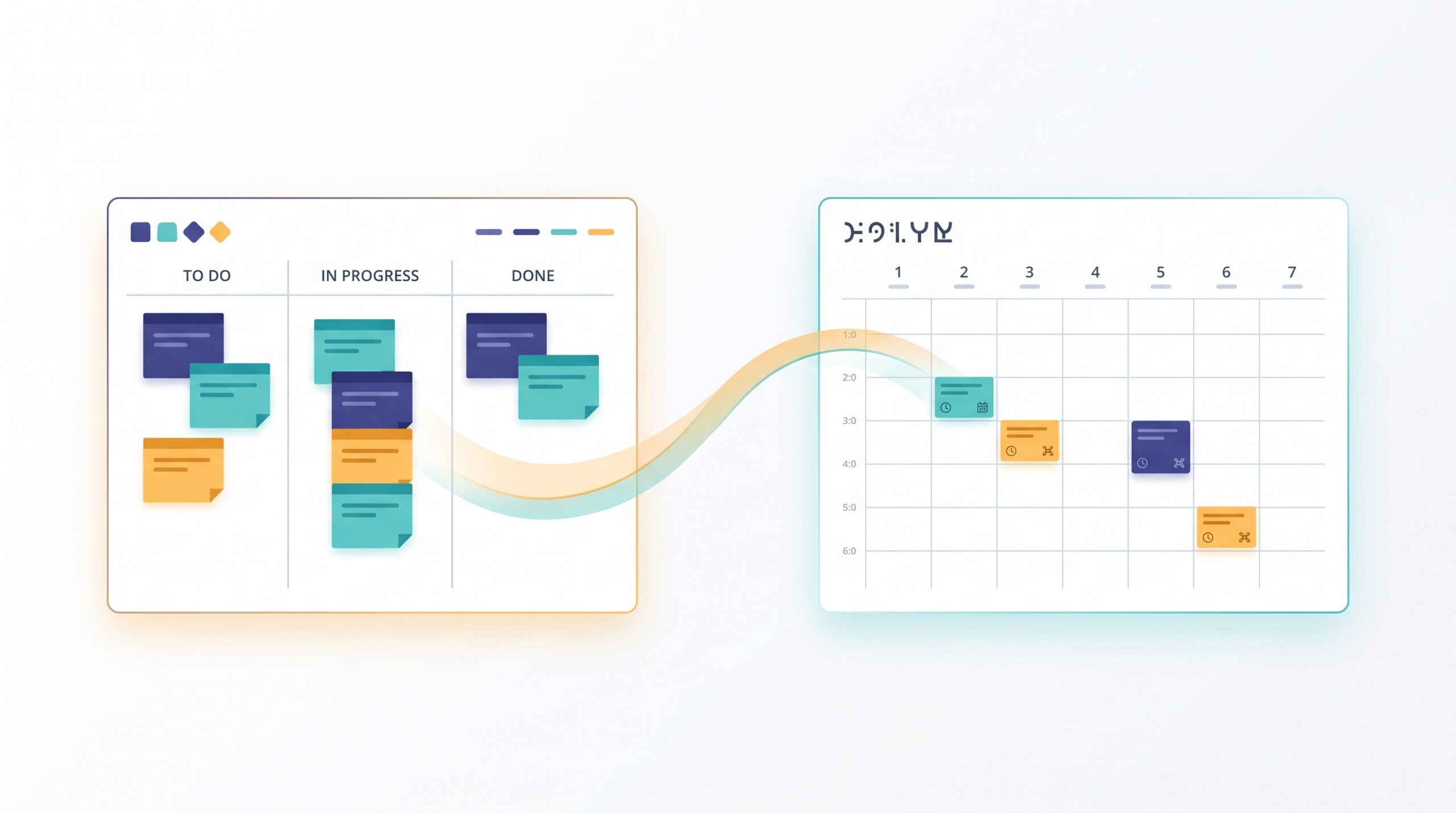
Your board answers “what,” your calendar answers “when”
These are two different jobs, and most of us only do the first one. The board is brilliant at capturing everything, showing status at a glance, and keeping priorities honest. But a prioritized list, no matter how clean, still assumes the work will somehow happen in the gaps. It usually doesn’t — because open time is the most contested resource you have, and anything without a reserved slot loses by default to whatever is louder and more immediate.
A calendar is the opposite. It’s lousy at holding a hundred someday ideas, but it’s unbeatable at protecting a single hour. When you move a card from your board onto your calendar, you’re translating “this matters” into “this is happening at 10 a.m. Thursday.” That translation is the whole trick. The board keeps the full picture; the calendar forces you to be honest about how little time there actually is.

What a time block actually is
Don’t overthink it. A time block is one card, one slot. You look at the top of your board, pick the card you genuinely intend to move forward, and drop it into an open window on your calendar big enough to make real progress. That’s it. You’re not building an elaborate color-coded masterpiece of your perfect day — you’re just answering a simple question for your top few cards: when, specifically?
The magic is in the specificity. “I’ll get to the proposal this week” is a wish. “The proposal has Thursday 9–10:30 reserved” is a plan you can keep or deliberately change, but can no longer accidentally forget. And because the card still lives on the board, nothing falls through the cracks — you’re not duplicating a system, you’re giving a handful of the most important cards a confirmed time to exist.
How to block your day from the board
A reliable routine takes about five minutes and goes like this:
- Pull the top cards. Look at what’s genuinely next on your board — not everything, just the two or three things that would make the day a success. If you’re ever unsure which cards earn a slot, that’s a prioritization question, and a quick pass with a method like MoSCoW or a simple value-versus-effort sort settles it fast.
- Guess the duration, roughly. You don’t need precision. Is this a 30-minute card, a one-hour card, or a half-day card? A rough estimate beats none, and you’ll calibrate over a week or two.
- Drop it into a real slot. Find actual open time on your calendar and place the card there. If it won’t fit, that’s useful information: either the day is already full or the card is too big and needs splitting.
- Match the work to your energy. Put the hard, think-heavy card in your sharpest hours and the low-focus admin in your natural slump. You already know when you’re at your best — schedule accordingly.
When the block arrives, open the card, do the work, and move it along the board as usual. The board and calendar reinforce each other: the calendar got you to the desk, the board tells you exactly what to touch.
Block by the kind of work, not just the task
Not every card deserves its own appointment. A pile of five-minute jobs — replying to a vendor, approving an invoice, booking a call — shouldn’t each get a slot; they should share one. Group them and schedule a single “admin” block, which is really just batching similar work so you pay the cost of switching gears once instead of a dozen times.
You can take the same idea up a level and give whole days a shape. If Mondays are for client work and Wednesdays are for creative projects, your blocking decisions get easier because the category is already decided — which is the quiet payoff of running theme days where each day handles one type of work. The board feeds the blocks, and the weekly shape tells you roughly which column today’s blocks should come from.

Leave air in the day
The most common way time blocking fails is paving over every single hour. A calendar packed wall-to-wall looks productive and shatters the first time a meeting runs long or a client calls. Real days have interruptions, so plan for them: block maybe 60 to 70 percent of your working hours and leave the rest genuinely open. Those gaps aren’t wasted — they’re where the unexpected lands without derailing everything else.
Under-filling also keeps the habit honest. If you consistently schedule more than you can finish, the calendar starts lying to you the same way an overstuffed board does, and you’ll quietly stop trusting it. Protecting slack is also how you protect yourself — a realistically blocked week is a cornerstone of keeping a sustainable pace instead of burning out. Ambition belongs on the board, where it can wait patiently. The calendar should only ever hold what’s actually achievable.

A rhythm that sticks
Make it two small habits rather than one big chore. Once a week — Sunday evening or first thing Monday — glance at your board and rough out the major blocks for the week: the big projects that need protected time before the week fills up around them. Then each afternoon, spend five minutes setting tomorrow’s blocks from the current top of your board while the context is fresh. Deciding the night before means you start the morning doing, not deliberating.
Two rules keep it alive. First, protect the blocks like meetings — if you’d never casually skip a call with a client, don’t casually skip the block you set with yourself. Second, when a block gets blown up by something urgent (it will), don’t abandon the system — just drag the card to the next open slot. The point was never a perfect day; it was making sure your most important work has a time, not just a place in line.
From a list of intentions to a plan that happens
Your board already does the hard thinking — it knows what matters and in what order. Time blocking is the short step that turns that knowledge into action: you pull the top few cards, give each a real slot, batch the small stuff, leave room to breathe, and treat those blocks as appointments you keep. Do it for a week and you’ll notice the difference immediately, because the cards that used to drift from day to day finally have a time to get done. Keep the board as your single source of truth for what, let your calendar own the when, and a simple kanban board stops being a to-do list you admire and becomes a plan that actually moves.