Kanban vs Scrum is not really a fight between a better method and a worse one — they answer two different questions. Scrum asks, “What can we commit to finish in the next couple of weeks?” Kanban asks, “How do we keep a steady stream of work flowing without overloading anyone?” Pick the one that matches how work actually reaches your team, and either can transform a chaotic week into a calm one. Pick the wrong one, and you will spend your energy fighting the method instead of doing the work. Here is how to tell them apart and choose well.

The one-paragraph answer
Choose Scrum when your work arrives as projects you can plan in batches and you benefit from a predictable delivery rhythm — a product team shipping features, an agency running defined engagements. Choose Kanban when work arrives continuously and unpredictably, priorities shift often, and you need to stay responsive — a support desk, an operations team, a freelancer juggling many clients. If you are genuinely unsure, start with Kanban; it asks less of you up front and you can add structure later.
What Scrum actually is
Scrum organizes work into sprints — fixed blocks of time, usually one to two weeks. At the start of each sprint the team plans a batch of work it commits to completing, then protects that batch from interruption so the team can focus. Scrum comes with defined roles (someone owns the priorities, someone protects the process) and a set rhythm of meetings: a short daily check-in, a planning session at the start, a review to show what got done, and a retrospective to improve how the team works.
The magic of Scrum is the rhythm. Every couple of weeks you plan, you build, you show real results, and you reflect — over and over. That cadence makes progress visible to everyone, builds a habit of finishing things, and gives stakeholders a reliable heartbeat to plan around. The cost is that it asks for discipline: the meetings are not optional, and the commitment only works if the sprint is genuinely protected from constant reprioritizing.

What Kanban actually is
Kanban does not use sprints or fixed commitments. Instead it makes your workflow visible as a board of columns — say, To Do → Doing → Done — and moves cards across it as work progresses. Its single most important rule is the work-in-progress (WIP) limit: a cap on how many cards can sit in a column at once. When a column is full, no new work enters until something leaves. That one constraint is what stops a team from starting ten things and finishing none.
Kanban is a pull system, not a push system: people take on new work only when they have capacity, rather than having it piled onto them. That small shift — letting the team pull the next card instead of pushing work at them — is what makes a board run itself instead of running the team ragged. Because there are no sprint boundaries, priorities can change at any moment; you simply reorder what is waiting. That makes Kanban wonderfully responsive, which is also its risk: without the natural planning checkpoints Scrum builds in, a Kanban team has to be deliberate about pausing to plan and improve.
The differences that actually matter
Forget the vocabulary for a second. Here is where the two genuinely diverge in day-to-day life:
- Cadence: Scrum works in fixed sprints with a plan-build-review rhythm. Kanban is a continuous flow with no set start and stop.
- Handling change: Scrum protects the current sprint from new requests; you slot changes into the next one. Kanban lets you reprioritize the queue anytime, which suits interrupt-driven work.
- Roles and meetings: Scrum defines specific roles and a required set of ceremonies. Kanban prescribes no roles and only the meetings you find useful.
- How you limit overload: Scrum limits work by what the team commits to per sprint. Kanban limits it directly with WIP caps on the board.
- Best fit: Scrum suits planned, project-shaped work. Kanban suits a steady, unpredictable stream.
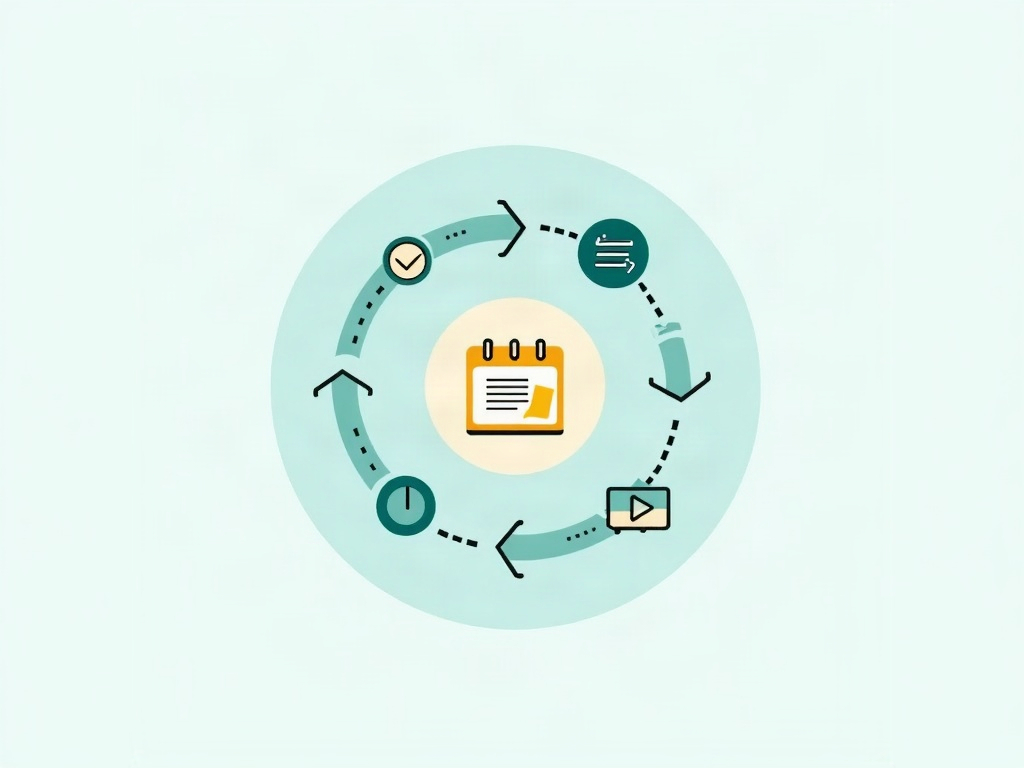
Notice that both methods are really solving the same underlying problem — too much work started at once — they just use different tools to do it. Scrum uses a time-boxed commitment; Kanban uses an explicit limit on the board.
How to choose for your team
Ask yourself three plain questions. First: how does work reach you? If it arrives as plannable projects, lean Scrum. If it arrives as a constant trickle of tickets and requests you cannot schedule, lean Kanban. Second: how often do priorities change mid-week? If someone is constantly saying “actually, do this first,” Scrum’s protected sprints will fight you and Kanban’s reorderable queue will fit you. Third: how much process can your team stomach? Scrum’s rhythm pays off but demands the meetings and the roles; a small or informal team often finds Kanban’s lighter footprint far easier to adopt and keep.
Whichever you pick, one habit serves both: be clear about when a piece of work is actually ready to start. Scrum handles that in planning; Kanban teams get the same protection from a simple definition of ready that keeps half-baked items out of the flow. And in either method, the work waiting to be done still needs tending — a well-kept queue is what keeps your backlog from turning into a graveyard of things nobody will ever pull.
You do not have to pick a side
Here is the honest truth most methodology debates skip: plenty of great teams blend the two. The popular hybrid, sometimes called Scrumban, keeps Kanban’s visual board and WIP limits while borrowing Scrum’s most useful habits — a regular planning check-in and a periodic retrospective — without the full ceremony load. If you love Scrum’s rhythm of reflection but hate rigid sprint commitments, or you love Kanban’s flow but miss having a moment to step back, take the parts that help and leave the rest.

The goal was never to be a “Scrum team” or a “Kanban team.” The goal is a team that finishes what it starts, stays calm under a heavy load, and gets a little better each month. Start with whichever method matches how your work arrives, put it on a simple visual board so everyone can see the flow, and adjust from there. The board is what makes the method real — a shared kanban board turns either approach from a theory into something your team can actually see and run.