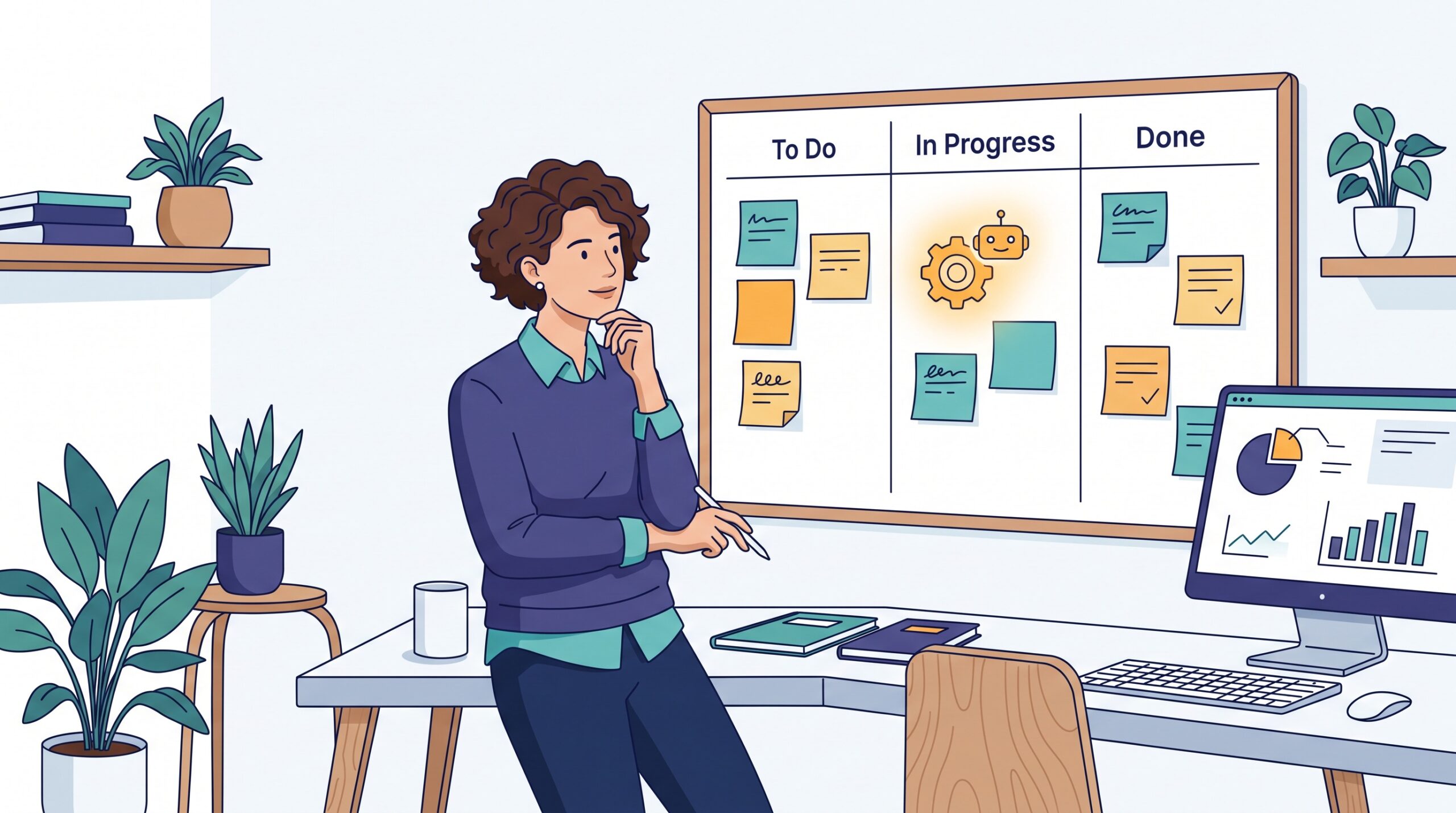
Open almost any tool you run your business on this year and something new is staring back at you: a button offering to automate the next step for you. Zapier now drops AI agents straight into your workflows, Asana and Trello nudge you to let software move cards and send updates on your behalf, and every app seems to have sprouted a little robot promising to take a job off your plate. The pitch is irresistible when you are busy. But here is the uncomfortable truth every small-team owner learns eventually: automating the wrong step doesn’t save you time. It quietly hands you a new job — cleaning up after the bot.
So before you flip that switch, it is worth having a simple test. Not a fear of automation, and not a rush toward it, but a calm way to decide what actually belongs to a machine and what still belongs in human hands.
Why the Wrong Automation Costs More Than It Saves
Automation is not free just because it runs on its own. Every automated step has a hidden bill: the time to set it up, the attention to notice when it breaks, and the mess to untangle when it does the wrong thing at scale. A human who makes a mistake usually catches it on the next card. A bot repeats the same mistake a hundred times before anyone looks up.
That is why the goal is never “automate as much as possible.” The goal is to automate the handful of steps where a machine is genuinely better than you, and to leave the rest alone. Getting that split right is the whole game.
The Five-Question Test
Run any step you are tempted to automate through these five questions. The more “yes” answers you get, the safer the bet.
1. Is it repetitive? Do you do this exact step over and over, the same way each time? Sending the same onboarding email, moving a card when a form comes in, tagging a request by type — these repeat constantly. A step you do once a quarter almost never earns the setup cost.
2. Is it rule-based, not judgment-based? Can you write down the logic as “if this, then that” without needing taste, tact, or context? “If an invoice is 30 days overdue, flag it” is a rule. “Decide how firmly to chase this particular long-standing client” is judgment. Bots are brilliant at the first and clumsy at the second.
3. Is it stable? Has the step stayed the same for a while, or are you still changing how you do it every week? Automating a process you are actively redesigning means rebuilding the automation every few days. Wait until it settles.
4. Is the cost of a mistake low? If the automation gets it wrong, is that an annoyance or a disaster? Auto-sorting internal cards is low-risk. Auto-sending money, auto-replying to a distressed customer, or auto-deleting anything deserves a much higher bar — and usually a human in the loop.
5. Does it happen often enough to matter? A step that fires fifty times a day is worth automating even if setup takes an hour. A step that happens twice a month rarely pays back the effort, no matter how tedious it feels in the moment.
Stabilize the Process Before You Automate It
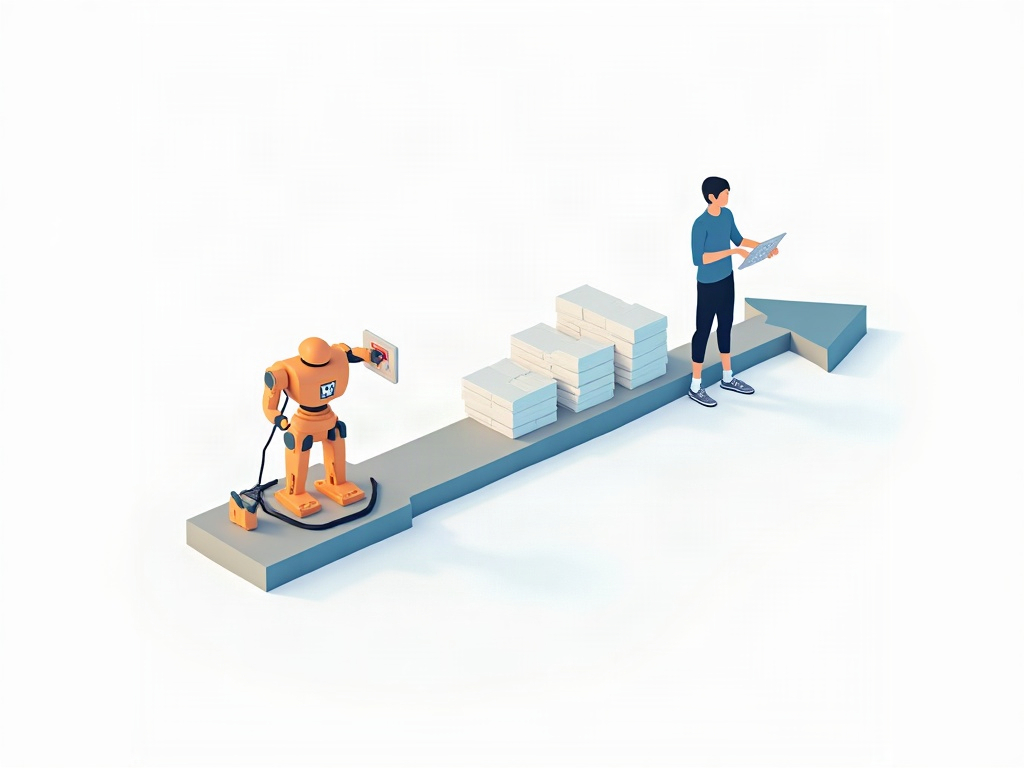
Here is the mistake almost everyone makes: they try to automate a process they haven’t actually pinned down yet. If the steps live only in your head and change with your mood, there is nothing solid for a bot to attach to.
This is exactly where a visible board earns its keep. Run the process by hand on a kanban board for a few weeks first. Watch how cards actually move, where they stall, and which steps are truly the same every time. The steps that stay identical card after card are your automation candidates — everything else is still evolving. Recurring work is often the clearest example: if you already handle it as a predictable pattern the way you would when you manage repeating tasks on a board, you have basically written the automation’s instructions for it.

Keep a Human Checkpoint
Automating a step does not have to mean letting it run unwatched into the world. The most reliable setups keep a light human checkpoint right where the risk is highest. Let the bot do the grinding — gather the information, draft the message, sort the incoming card — and then let a person give it a two-second glance before it goes live.
On a board, this is as simple as an automated step depositing its work into a “Ready to review” column instead of straight into “Done.” You get most of the speed of automation and almost none of the runaway risk. As your trust in a particular automation grows and it proves itself over dozens of clean runs, you can widen the checkpoint or remove it. But you earn that trust; you don’t assume it on day one.
Where AI Agents Change the Math (a Little)
The new wave of AI agents does shift things slightly. Older automation could only follow rigid rules, which meant question two — “is it rule-based?” — was a hard wall. AI can now handle fuzzier steps: summarizing a messy request, drafting a reply in your tone, sorting things that don’t fit neat categories. That genuinely expands what’s automatable.
But it does not repeal the test — it raises the stakes on it. An AI agent is more capable and more confidently wrong, because it will happily produce a plausible answer even when it has no idea. So the low-cost-of-mistake question and the human-checkpoint habit matter more with AI, not less. And a quieter risk creeps in: agents scattered across a dozen tools become their own kind of clutter. If you are already fighting that, corralling it the way you would when you tame AI tool sprawl on a board keeps the helpers from becoming a mess of their own.
Start Small, Watch, Then Expand
You don’t need an automation strategy. You need one good automation, watched closely, that clearly saves you time and doesn’t create cleanup. Pick the single most repetitive, rule-based, low-risk step on your board — often something as ordinary as routing incoming requests, the same territory as a simple intake lane — and automate just that. Live with it for a couple of weeks. If it holds up, take the next candidate. If it misbehaves, you have only one thing to fix.
Automation is a tool, not a trophy. The teams that get the most from it aren’t the ones who automate the most — they’re the ones who automate the right things and keep a clear-eyed view of everything else. Run each tempting step through the five questions, stabilize it on a simple board before you hand it over, and keep a human near anything that matters. Do that, and the little robots become genuinely useful helpers instead of one more thing to manage.