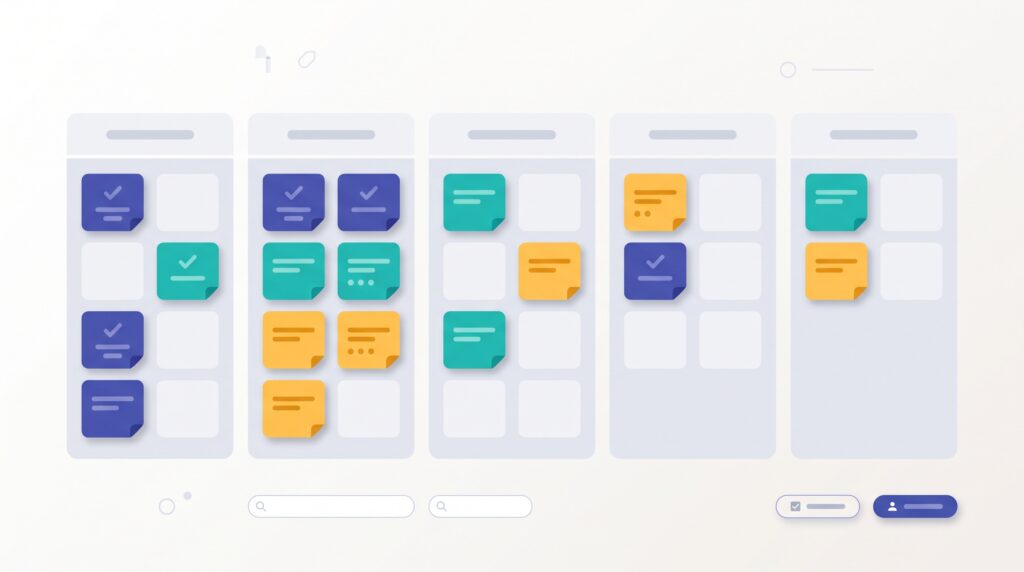
The Client Onboarding Board: Start Every New Client Without Dropping the Ball
The first two weeks with a new client set the tone for the whole relationship. Here is how to run client onboarding on a simple kanban board so nothing slips.

The first two weeks with a new client set the tone for the whole relationship. Here is how to run client onboarding on a simple kanban board so nothing slips.

Requests reach a small team from everywhere at once: a hallway ask, a text, three separate email threads, a note on a sticky pad. Most of them never make it onto the board, and the ones that slip through are the ones that come back as an angry follow-up. An intake lane fixes that with one small change: give every incoming request a single front door.

Q4 is the quarter most goals quietly die in. Here is how to put your year-end priorities on a simple kanban board so they become visible, prioritized work instead of a wish list nobody opens.

Half the AI tools your team relies on never got approved, budgeted, or written down. That is not a discipline problem, it is a visibility problem. Here is how one simple board brings AI tool sprawl into the open so you can decide what stays.

Small teams rarely lose good hires because the candidates were weak. They lose them to slow, invisible pipelines. Here is how a kanban board keeps every applicant moving so the right person does not slip away.
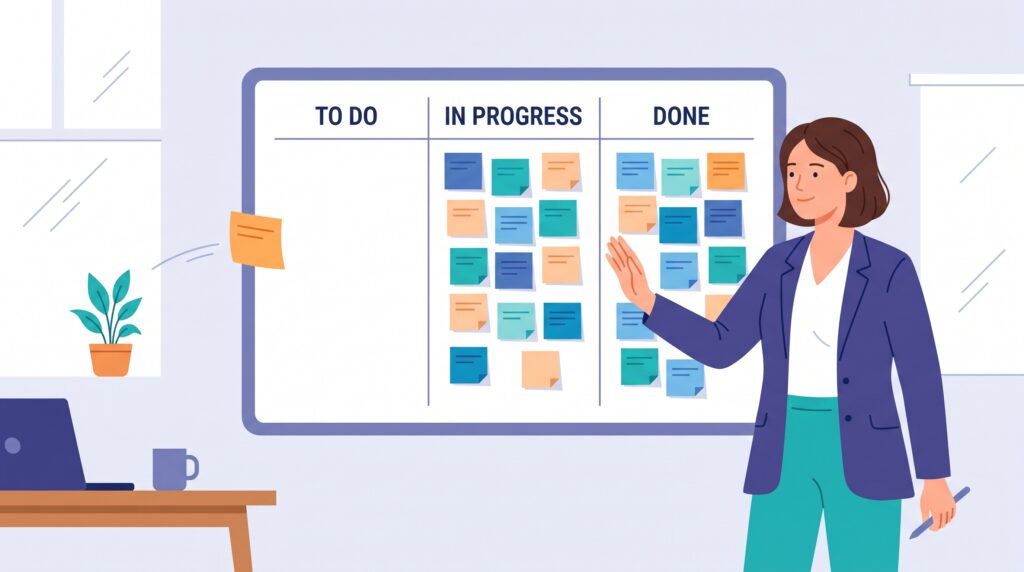
Every yes to new work is a quiet no to something already in progress. Here’s how to protect your team’s capacity, say no without being the difficult one, and let your board make the case for you.

A backlog isn’t a to-do list — it’s a stack of choices about what matters most. Here’s a simple, repeatable way to order your kanban backlog so your team always pulls the highest-value work next, without endless debate.

Most small-business marketing dies not from bad ideas but from ideas that never make it out the door. A kanban board turns your scattered content plans into a pipeline you can actually see and finish.

Most small businesses don’t fall behind in a crash. They drift, one busy week at a time. A 30-minute Friday reset is the cheapest insurance against that drift.

Your business website works fine, so you stop looking at it. Then one day a plugin update you skipped for four months takes the site down mid-morning. Website maintenance isn’t a project you finish; it’s a rhythm you keep. A simple kanban board turns that fuzzy, easy-to-ignore upkeep into a handful of recurring cards you can actually see and act on.