Your daily standup was supposed to take fifteen minutes. Some mornings it does. But often it drifts to twenty-five, pulls six people out of focused work, forces everyone into the same time slot no matter their time zone, and ends with the quiet realization that most of what was said aloud was already sitting right there on the board. For a small team or a remote one, that is an expensive way to share information you could simply read.
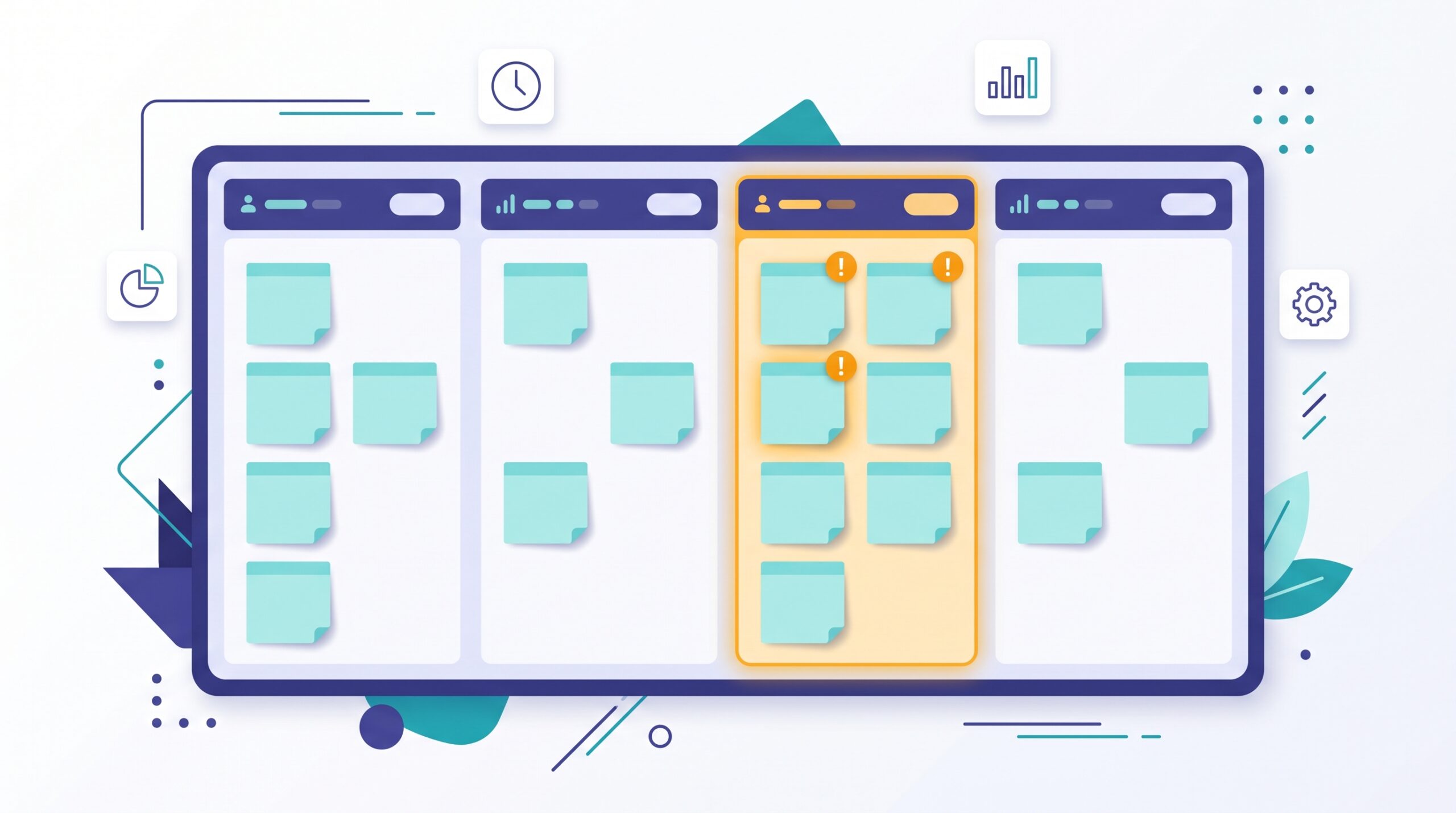
Here is the good news: you probably do not need to cancel the ritual, only rebuild it. A well-run kanban board can carry most of the load a live standup carries today, and a light async habit can cover the rest. Let’s walk through how.
Why the daily standup quietly gets expensive
The standup is a good idea that scales badly. The theory is a quick sync, everyone standing, no chairs, no rabbit holes. The reality is a recurring calendar block that interrupts the deepest part of the morning, forces a synchronous slot on people who may be five hours apart, and spends most of its time on status updates that never needed a meeting.
The real cost is not the fifteen minutes. It is the context switch on either side of it, the waiting for latecomers, and the pressure it puts on a distributed team to all be awake at once. Multiply that by five people, five days a week, and the math stops being friendly.
What a standup actually answers
Strip the meeting to its core and it answers three questions for each person: What did I do since yesterday? What am I working on next? Is anything blocking me?
Look closely and the first two are already visible on a healthy board. A card that moved from “In Progress” to “Done” answers the first. A card sitting in “In Progress” or pulled into “Up Next” answers the second. You do not need someone to read those aloud, you need the board to be current enough to trust. That leaves the third question, blockers, as the one that genuinely benefits from a nudge and a human response.

How to run an async standup
An async standup is less a meeting and more a set of small, dependable habits. Five pieces make it work.
First, keep the board honest. Everyone updates their own cards at least once a day, moving them across columns as reality changes. A stale board is the one thing that breaks this whole approach, so this norm is non-negotiable. Second, give blockers a loud, dedicated signal, either a “Blocked” column or a bright tag, so the one thing that truly needs attention is impossible to miss.
Third, replace the live meeting with a short written check-in. That can be a single daily thread in your team channel or, even better, a comment directly on any blocked card explaining what is stuck and what would unstick it. Fourth, make blockers owned, not just flagged. A blocker with a name attached and a clear ask gets solved. Fifth, set WIP limits so no column overflows. When each person carries only a card or two at a time, the board stays readable at a glance, which is the entire point.
What you gain
The first thing you reclaim is focus. Mornings stop being fenced off around a meeting, and deep work gets its best hours back. The second is reach: an async ritual works across time zones and schedules, so a teammate in another country contributes on their own clock instead of dialing into someone else’s midnight.
You also get a written trail. When updates and blockers live as comments on cards, anyone can scroll back and see what happened and why, no memory or meeting notes required. And the board quietly becomes your single source of truth, the one place everyone looks instead of five inboxes and a fading recollection of what was said out loud.
What to keep a live sync for
Let’s be honest, because pretending async fixes everything is how teams end up feeling disconnected. Async replaces status reading. It does not replace real collaboration. A knotty blocker that needs three people talking, planning the next cycle of work, unpicking a design decision, or just staying human with each other, those still call for a live conversation.
The trick is to stop paying the daily tax for something you need weekly, and to stop dressing up status as connection. Keep a shorter live sync when there is genuine discussion to have, and let it be about the hard, interesting parts, not a round-robin of updates the board already shows.
How to make the switch in two weeks
You do not have to overhaul everything at once. Start with five concrete moves. Make the board the single source of truth and tell everyone that if it is not on the board, it is not happening. Add a clear “Blocked” signal, whether a column or a tag. Set a daily async check-in window, for example “post your blockers by 11am your time.” Agree on a few norms out loud: update your cards daily, keep blockers owned, respect the WIP limits.
Then try it for two full weeks before you judge it. Cancel or shorten the live standup, run the async version, and at the end have one honest retro about what worked and what you missed. Most teams find they keep the async habit and bring back a single weekly sync for the conversations that actually need voices in a room.
Actionable takeaways
Cancel the ritual, not the discipline. Let the board answer “what did I do” and “what’s next,” and spend your human attention on blockers and real discussion. Keep the board current every day, make blockers loud and owned, hold WIP limits so the board stays readable, and reserve live time for collaboration rather than status.
None of this works on a cluttered board, though. The whole approach rests on a board that is clean, current, and instantly readable, which is exactly what a simple tool like KanbanBlocks is built to give you. Get the board right, and the meeting mostly takes care of itself.