In 1918, a struggling steel executive named Charles Schwab asked a productivity consultant, Ivy Lee, to help his managers get more done. Lee spent fifteen minutes with each manager, explained a simple routine, and told Schwab to try it for a few months and then pay him whatever he thought it was worth. The story goes that Schwab sent back a cheque for $25,000 — roughly half a million dollars today — for one short, almost embarrassingly simple idea.
More than a century later, that idea still outperforms most of the apps, frameworks, and glossy planners that have come and gone since. If your days feel busy but strangely unproductive — lots of motion, not much moving forward — the Ivy Lee Method is worth fifteen minutes of your evening. Here’s how it works, and how to run it on a kanban board so it actually sticks.
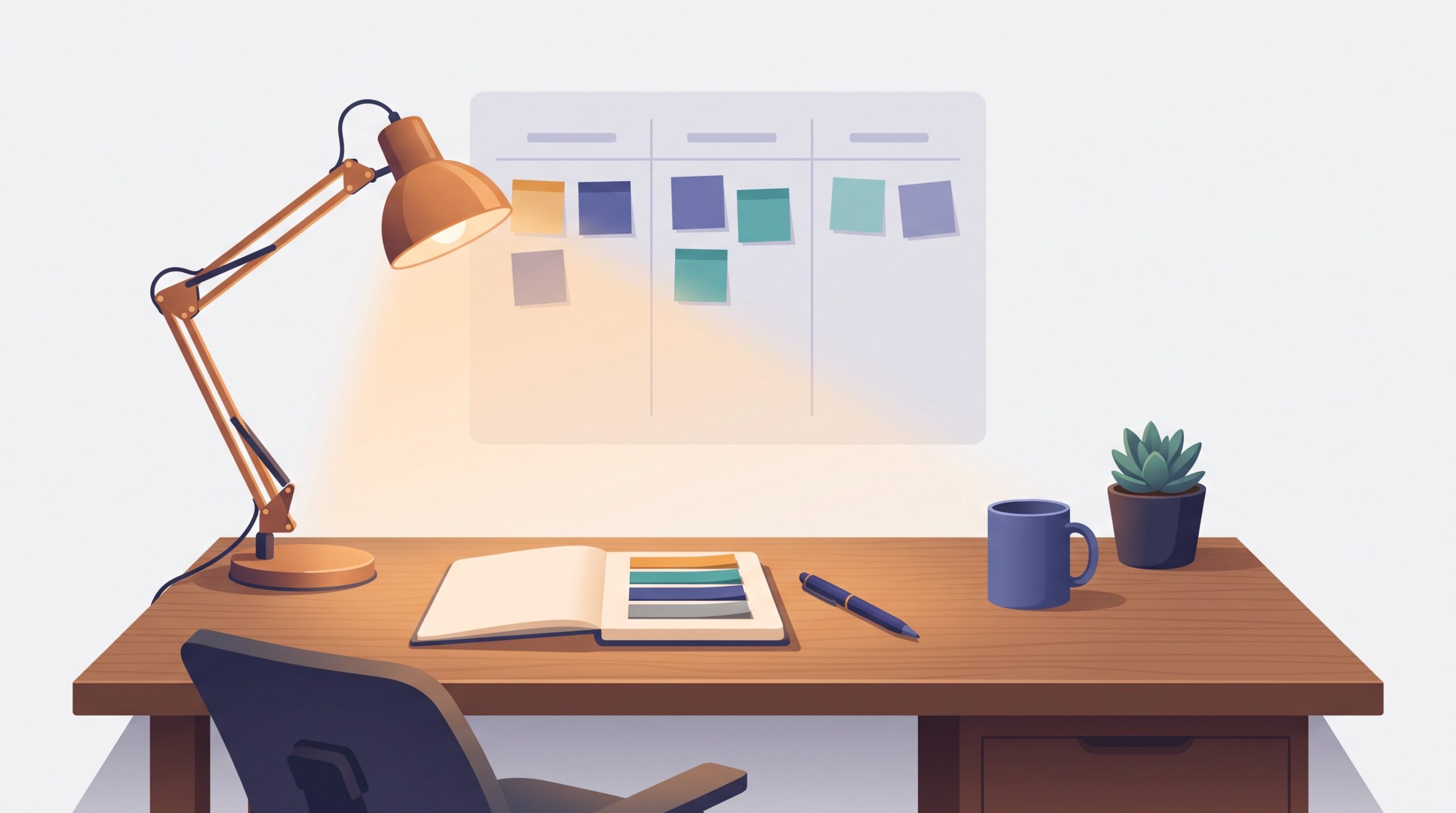
The whole method in five steps
There’s no software to learn and no system to configure. The entire method is this:
- At the end of each workday, write down the six most important things you need to accomplish tomorrow. No more than six.
- Rank those six items in order of true importance.
- Tomorrow, start at the top. Work on the first task until it’s finished before touching the second.
- Move down the list the same way. If you don’t finish everything, don’t stress.
- Move any unfinished items to tomorrow’s list of six, and repeat every working day.
That’s it. The genius isn’t in any single step — it’s in what the constraints quietly force you to do.
Why such a simple routine works so well
Three things are doing the heavy lifting here, and each one fixes a problem most of us struggle with daily.
The limit of six forces real decisions. A normal to-do list has no ceiling, so everything goes on it and nothing is truly prioritized. Capping the day at six means you have to decide — before the day starts — what actually matters. The hard part of productivity was never doing the work; it’s choosing the right work. The number six does that choosing for you.
Ranking kills the “what should I do next?” tax. Every time you finish a task and scan a flat list wondering what to pick up, you pay a small toll in willpower and focus. Often you pick the easy thing, not the important thing. A pre-ranked list removes the decision entirely: you just slide down to the next line. You’ve already done the thinking the night before, when you were calm, instead of in the messy middle of a busy morning.
Single-tasking beats the juggling act. “Work on the first task until it’s finished” is a polite way of banning multitasking. Switching between jobs carries a hidden cost — each switch leaves a little residue of the last task clogging your attention. By insisting on one task at a time, the method keeps you in the deeper, more effective mode of work for longer stretches.
Running the Ivy Lee Method on a kanban board
The method was invented for pen and paper, but a kanban board makes it even better, because the board gives the invisible rules something visible to live in.
Set up a small Today lane on the left of your board. Each evening, pull exactly six cards into it and stack them top-to-bottom in priority order — the top card is tomorrow’s most important work. Then enforce the single-task rule with a hard limit: only one card is allowed in your In Progress column at any moment. You physically cannot start the third task until the first is done and moved to Done.
This is where a board quietly outperforms a paper list. The six-item limit and the one-at-a-time rule stop being promises you make to yourself and become rules the board won’t let you break. If you’ve experimented with pairing short focus sprints with your board, the Ivy Lee Method layers on top of it neatly: the ranked column tells you what to work on, and the sprints give you a rhythm for how to work on it.
The mistakes that quietly break it
People who try the method and give up usually tripped over one of these:
- Listing more than six. “Just a couple extra” defeats the entire purpose. If it won’t fit in six, it isn’t a priority for tomorrow — it’s a someday item that belongs in your backlog, not on today’s list.
- Ranking by what’s easy, not what’s important. The temptation is to front-load quick wins so the list looks busy. Resist it. The top slot should hurt a little; that’s usually the task you’ve been avoiding and the one that matters most.
- Breaking the one-at-a-time rule. The second a “quick” second task sneaks in alongside the first, the magic evaporates. Finish, then move on.
- Making the tasks too big. “Launch the new website” is not a day’s task; it’s a project. Each of your six should be something you can genuinely finish in a focused block. If one can’t be, break it down and put only tomorrow’s piece on the list.
What to do with the leftovers
Some days you’ll finish all six and feel like a productivity superhero. Many days you won’t — and that’s completely fine. The method expects it. Whatever you didn’t finish simply becomes the start of tomorrow’s list, which means your most important work keeps rising to the top until it’s done. Nothing important can quietly slip off the edge.
There is one honest catch worth naming: if the same task keeps rolling over, day after day, the method is telling you something. Either it’s bigger than you think and needs breaking down, or it’s not actually as important as its ranking claims, or something about it is making you flinch. A card that’s been in your Today lane for a week is a useful little alarm — listen to it.
Who it’s for (and who it isn’t)
The Ivy Lee Method shines for owners, freelancers, and team leads whose days are a swirl of competing demands and who struggle to protect time for the work that actually grows the business. If your problem is “I’m always busy but the big stuff never gets done,” this is close to a cure.
It’s a weaker fit if your day is mostly reactive — a support desk, say, where the work arrives unpredictably and can’t be planned the night before. Even then, a hybrid works: reserve two or three Ivy Lee slots for your important proactive work and leave the rest of the day open for whatever lands. And it pairs well with a couple of habits we’ve covered before: a short end-of-day board ritual is the perfect moment to write tomorrow’s six, and if your calendar is the real battleground, you can go a step further and practice turning those ranked cards into actual calendar appointments.
Try it tomorrow
You don’t need to overhaul anything. Tonight, before you close your laptop, write down the six most important things for tomorrow and put them in order. In the morning, start at the top and don’t move on until the first is done. Do it for a week and notice how the days feel — less frantic, more pointed, with the important work finally getting the first and best hours instead of the leftovers.
If you want the list to be something you can actually see and defend, give it a home: a simple Today lane on a kanban board, six cards deep, with a strict one-card-in-progress rule. A hundred years on, Ivy Lee’s little routine still earns its keep — and it costs you nothing but fifteen honest minutes at the end of the day.