Most kanban boards don’t start out drowning in deadlines. They get there one well-meaning date at a time. You stamp a due date on a card because it feels responsible. Then another, because that one’s important too. A few weeks later, half your cards wear a little date badge, every one of them is “due soon,” and you’ve quietly trained yourself to ignore all of them. The board that was supposed to bring calm now hums with a low-grade panic.
Here’s the uncomfortable truth: a due date is only useful if it’s rare enough to mean something. When everything has a deadline, nothing does. So the skill isn’t adding dates — it’s being ruthless about which cards actually earn one, and then treating those few like the real promises they are.
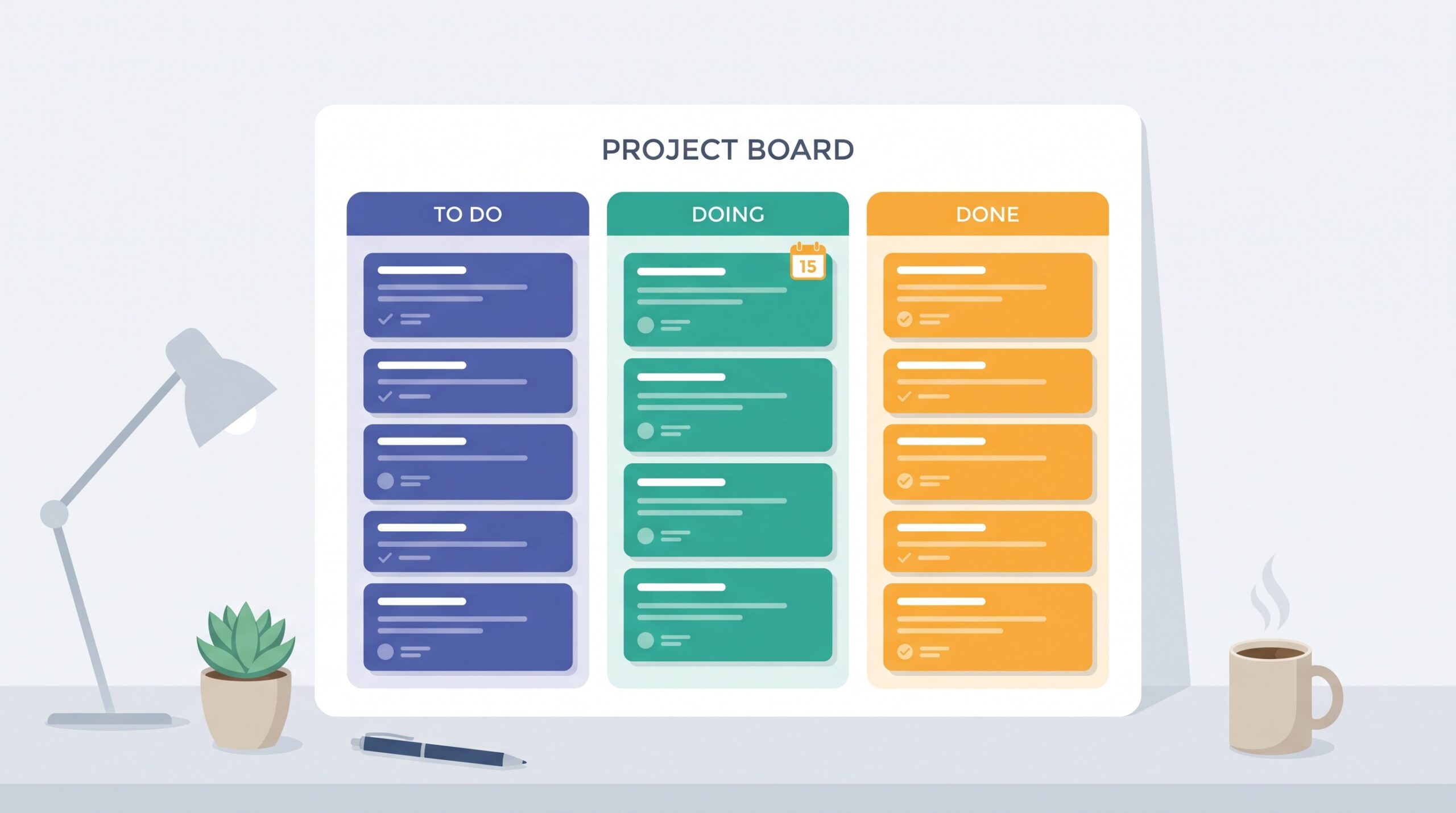
Most Cards Don’t Need a Date at All
The first instinct to unlearn is that a good card is a dated card. It isn’t. The whole point of a flow-based board is that work moves through it in priority order — you pull the next most important thing when you have capacity, and things get done because they keep moving, not because a date is breathing down their neck.
For the large majority of your work, that flow is the plan. The card near the top of your To Do column is “due” in the only sense that matters: it’s next. Slapping an arbitrary date on it adds noise without adding information. Reserve due dates for the small slice of work where a specific calendar day genuinely matters to someone outside your board — a client deliverable, a filing deadline, an event you can’t move. Everything else just needs to be in the right order.
Tell a Real Deadline From an Invented One

Before you honor any date, run it through one question: what actually happens if this is missed? A real deadline has a real consequence — a penalty, a disappointed client, a missed event, money left on the table. An invented deadline just has a feeling attached to it. “I’d like this done by Friday” is a preference wearing a deadline costume.
This matters because your brain can’t sprint for everything at once. Every fake deadline you take seriously spends urgency you’ll need for the real ones. When you catch yourself inventing a date, be honest and label it a target instead of a commitment — something you’re aiming at, not something you’re promising. True fixed-date work, where the day is non-negotiable, deserves its own treatment; it’s one of the distinct classes of service worth handling differently from everyday flow, precisely so the board shows at a glance which deadlines are iron and which are soft.
Set the Date by Working Backward

When a card does earn a real deadline, resist picking the date by gut feel. The most common planning mistake is choosing a due date based on when you’d like to be finished, then hoping the work cooperates. It never does — which is exactly why everything takes longer than you think.
Instead, start from the fixed date and walk backward. Break the deliverable into the cards it’ll actually take, estimate roughly how long each stretch of work needs, and lay them out from the deadline toward today. If the chain of work runs past the start line, you’ve just discovered — calmly, in advance — that the date isn’t realistic. That’s a gift. You can now renegotiate the scope or the date while it’s cheap, instead of discovering the gap the night before. If you’d rather lean on data than gut estimates, you can even forecast a delivery date from how fast your team already finishes work, which tends to be far more honest than optimism.
Make the Date a Promise, Not a Decoration
A due date is a commitment to another human being. The moment you start treating dates as aspirational — nice if it happens, no big deal if it doesn’t — you’ve taught everyone around you to discount them. And once a few of your dates prove meaningless, people stop trusting all of them, including the ones that are genuinely load-bearing.
So set fewer dates, and then protect the ones you set. If a card has a real deadline, it should get priority attention as that day approaches, not get buried under whatever shiny new request landed this morning. The cleanest way to keep this consistent is to write the rule down where everyone can see it — a simple explicit board policy like “dated cards get pulled ahead of undated ones within three days of their deadline.” That turns deadline-handling from a daily judgment call into an agreement the board enforces for you.
Watch for the Deadline Pile-Up
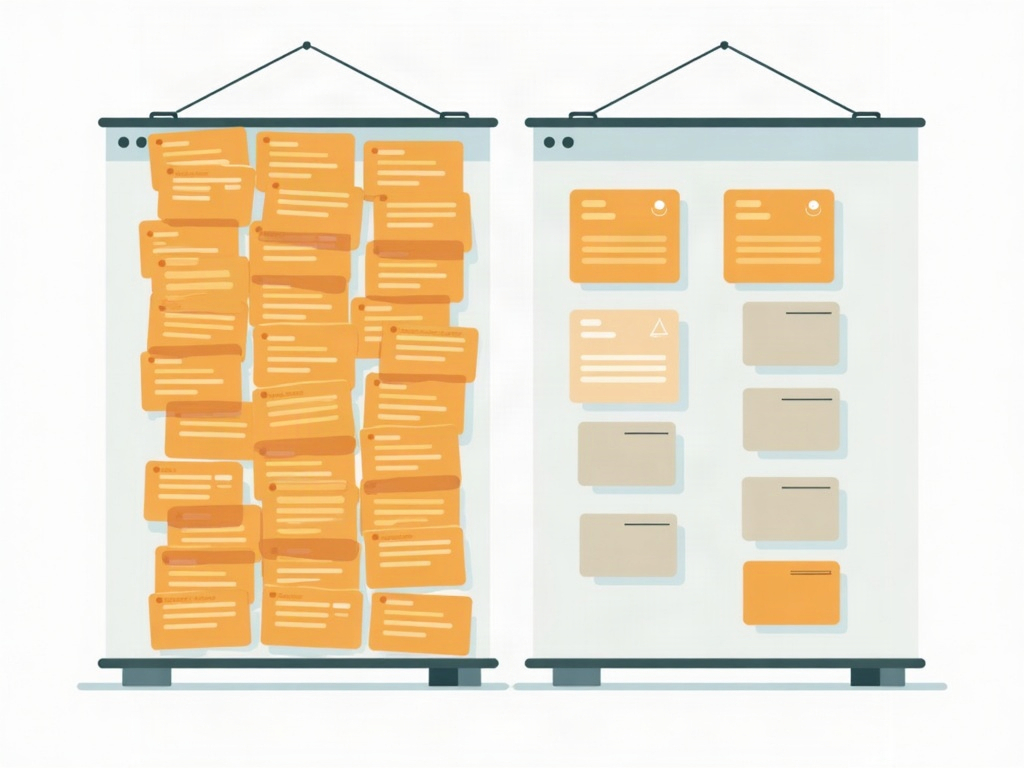
Scan your board now and then and simply count the dated cards. If a single week is stacked with deadlines, that’s not a scheduling problem you can solve with willpower — it’s a planning smell telling you that you’ve either committed to too much or front-loaded everything into the same window.
The fix isn’t a longer workday; it’s spreading the real commitments out and letting the undated work flow around them. A board carrying two or three genuine deadlines this week, with everything else moving in priority order, is a board you can actually trust. One carrying a dozen is one you’ve already begun to ignore. Fewer dates, honestly spaced, beats a wall of deadlines you’ve stopped believing — and it keeps you from quietly overloading your capacity, the same discipline behind a sensible limit on work in progress.
When a Date Is Going to Slip, Say So Early
Even with all of this, some dates will still slip. Work expands, surprises land, a dependency shows up late. The failure isn’t the slip — it’s the silence around it. The worst version of a missed deadline is the one the other person finds out about on the day it was due.
The best teams build a tiny habit: the instant a dated card looks at risk, they flag it — not on the deadline, but the moment the trajectory bends the wrong way. The at-risk card gets a visible marker and a quick, honest heads-up: “This is trending late; here’s the new realistic date and why.” Given a week’s warning, most clients and managers can adjust gracefully. Given zero warning, the same slip reads as a broken promise. The date was never the thing people cared about most — predictability was.
The Takeaway
Due dates aren’t the enemy of a calm board; too many of them are. Use them sparingly: reserve dates for work where a specific calendar day truly matters, tell real deadlines from invented ones, set them by working backward from the day instead of forward from a wish, treat the few you set as genuine promises, watch for pile-ups, and raise your hand early when something’s going to slip.
Do that, and the handful of dates on your board go back to meaning something — which is the whole reason to have them. Keep the rest flowing in priority order on a simple kanban board, and you’ll find you can hit the deadlines that count without living in dread of a calendar you stopped trusting.