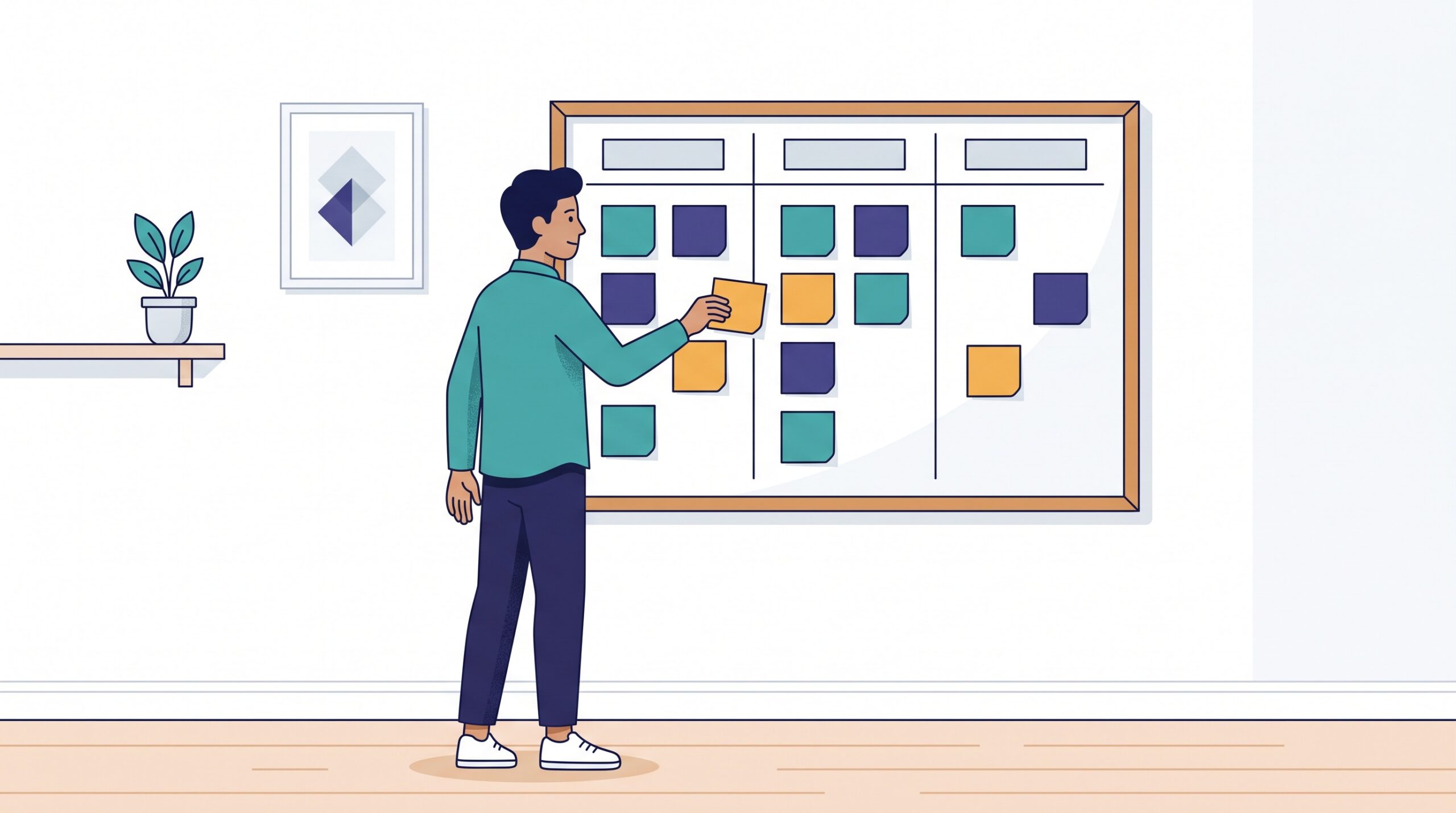
When people picture a kanban board, they picture a team: a wall of sticky notes, a few colleagues shuffling cards, a manager keeping score. So if it is just you – a freelancer, a solo owner, a one-person department inside a bigger company – it is easy to assume boards are not for you and a to-do list will do fine.
It will not. A to-do list is a great place to dump tasks and a terrible place to actually do them. It shows you everything at once, tells you nothing about what is moving, and quietly lets you start ten things and finish none. A personal kanban board fixes exactly those problems, and you can build one in about ten minutes. Here is how.
Why a board beats a to-do list when it is just you
A flat list has one job: remember things. That is useful, but it is only half of getting work done. The other half is deciding what to work on right now and protecting your attention while you do it – and a list is useless at both.
A board turns your work into something you can see move. Instead of a wall of checkboxes, you get columns that represent stages, and every task is a card that travels left to right as it progresses. The value is not the prettiness; it is that a board makes two invisible things visible: how much you are juggling at once, and what is genuinely in motion versus what is just sitting there. Once you can see those two things, better decisions come almost for free.
The three columns you actually need
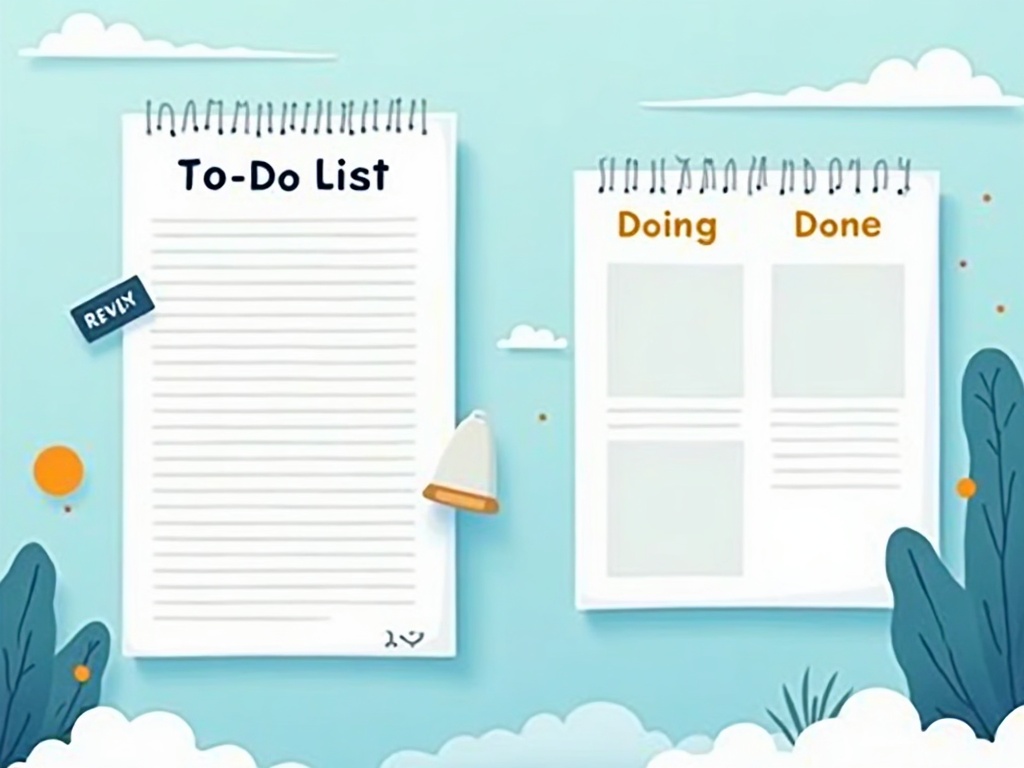
Do not overthink the setup. Start with exactly three columns: To Do, Doing, and Done. That is a complete, working personal kanban system, and most people never need much more.
To Do is your parking lot – everything you have committed to but have not started. Doing is what you are actively working on this very moment. Done is finished work you can stop thinking about. The magic is in that middle column. On a list, “in progress” is a fuzzy idea. On a board, Doing is a physical place with a limited amount of room, and that constraint is what changes your behavior.
Leave Done visible for at least the day rather than deleting cards the instant you finish. Watching that column fill up is quietly motivating, and at week’s end it is a genuine record of what you accomplished – the thing a to-do list erases the moment you tick the box.
Give yourself a work-in-progress limit of basically one
This is the single most important rule, and it is the one people skip. Put a cap on how many cards are allowed in your Doing column at the same time. For one person, that number should be small – one if you can manage it, two at the most.
It sounds almost too strict. It is not. The reason you feel scattered is rarely that you have too much to do; it is that you have too much in progress at once. Every half-finished task is a tab open in your head, costing you attention even when you are not touching it. A work-in-progress limit forces the healthiest habit there is: finish what you started before you allow yourself to start something new.
When a genuinely urgent thing lands while your Doing column is full, the limit makes you make a real decision instead of just piling on. You either finish the current card fast, or you consciously move it back to To Do to make room. Either way you are choosing, rather than drifting into juggling five things badly.

Add a This Week lane so you stop re-deciding all day
Once your To Do column has more than a dozen cards, it becomes its own kind of noise. Every time you finish something and glance at it, you re-run the same exhausting question: out of all this, what now? Doing that forty times a day is a quiet tax on your focus.
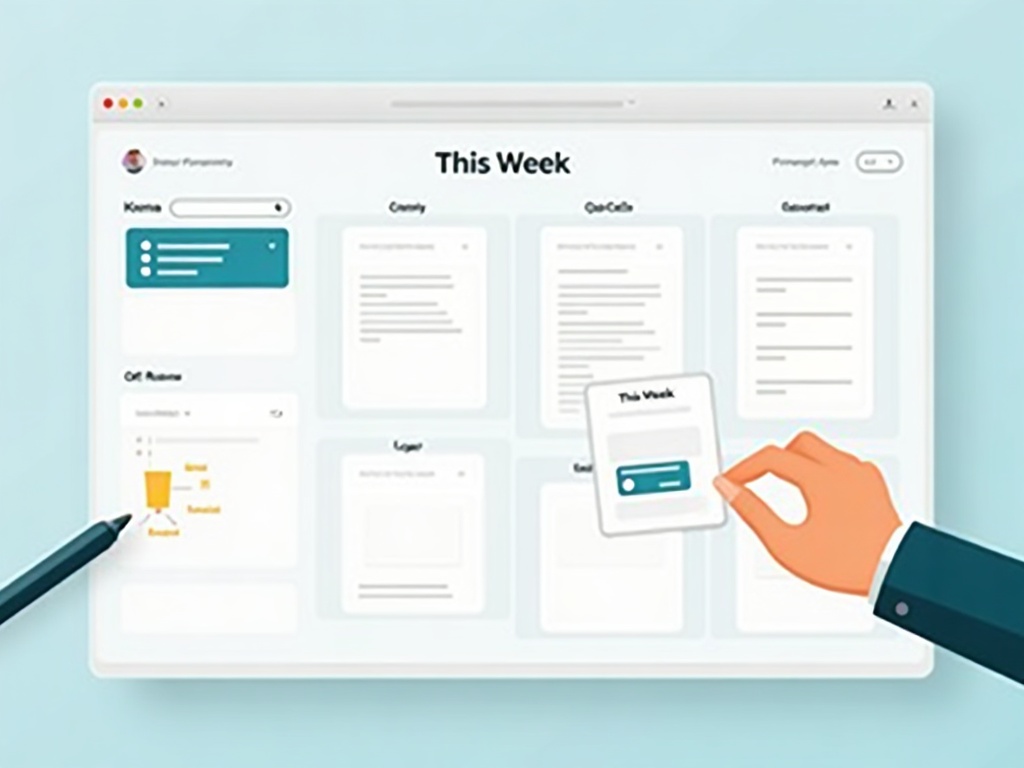
The fix is a small lane – call it This Week or Ready – that sits between To Do and Doing. Once, at the start of the week, you pull a handful of cards from the big To Do pile into This Week. That is your shortlist. For the rest of the week, when you finish a card, you do not survey everything you have ever meant to do – you just take the next card from This Week. You made the priority decision once, when you were calm, instead of forty times when you were tired.
A Waiting On column for work stuck with other people
Even as a team of one, plenty of your work depends on other people: a reply you need, a file a client owes you, an invoice awaiting payment. These tasks are not to-dos – there is nothing for you to do – but if they sit in your To Do column they clog it, and if they leave the board entirely they get forgotten.
Give them their own Waiting On column. When you hand something off or send a request, move that card there with a quick note of what you are waiting for and since when. Now your active columns only contain work you can actually act on, and nothing you handed off can quietly vanish. A ten-second scan of Waiting On during your weekly review tells you exactly who needs a nudge – which is how a solo operator stays on top of a dozen open threads without a single one slipping.
The five-minute habit that keeps it alive
A board only works if it reflects reality, and reality changes hourly. The good news is that keeping it honest takes almost no time – two small rituals do it.
Each morning, spend two minutes looking at the board before you dive in: clear yesterday’s Done, confirm what is in Doing is still the right thing, and pick your first card. Each Friday, spend five minutes on a slightly bigger pass: sweep Done into an archive, chase anything stale in Waiting On, and restock This Week for the days ahead. That is the entire maintenance cost. Skip it and the board slowly drifts from the truth until you stop trusting it; keep it and the board becomes the one place that always tells you where things really stand.

Start with three columns today
You do not need a team, a methodology, or a week of setup to get most of the benefit. Draw three columns – To Do, Doing, Done – move today’s tasks onto them, and cap your Doing column at one or two cards. That alone will do more for your focus than any longer list ever has. Add a This Week lane and a Waiting On column when the simple version starts to strain, not before.
The point of a personal board is not to look organized. It is to make you finish more by juggling less, and to give you, at any moment, an honest picture of where your work actually stands. A simple kanban board – even a one-person one – is one of the easiest ways to get exactly that.