The work is finished, the invoice is sent, and then… nothing. The money doesn’t arrive, but life moves on. A new project starts, three more invoices go out, and the one from six weeks ago quietly slides off the bottom of your inbox. You’re not disorganized — you’re busy. But that busyness is exactly why unpaid invoices are the easiest money in your business to lose track of. They don’t demand anything. They just sit there, waiting for someone to remember them.
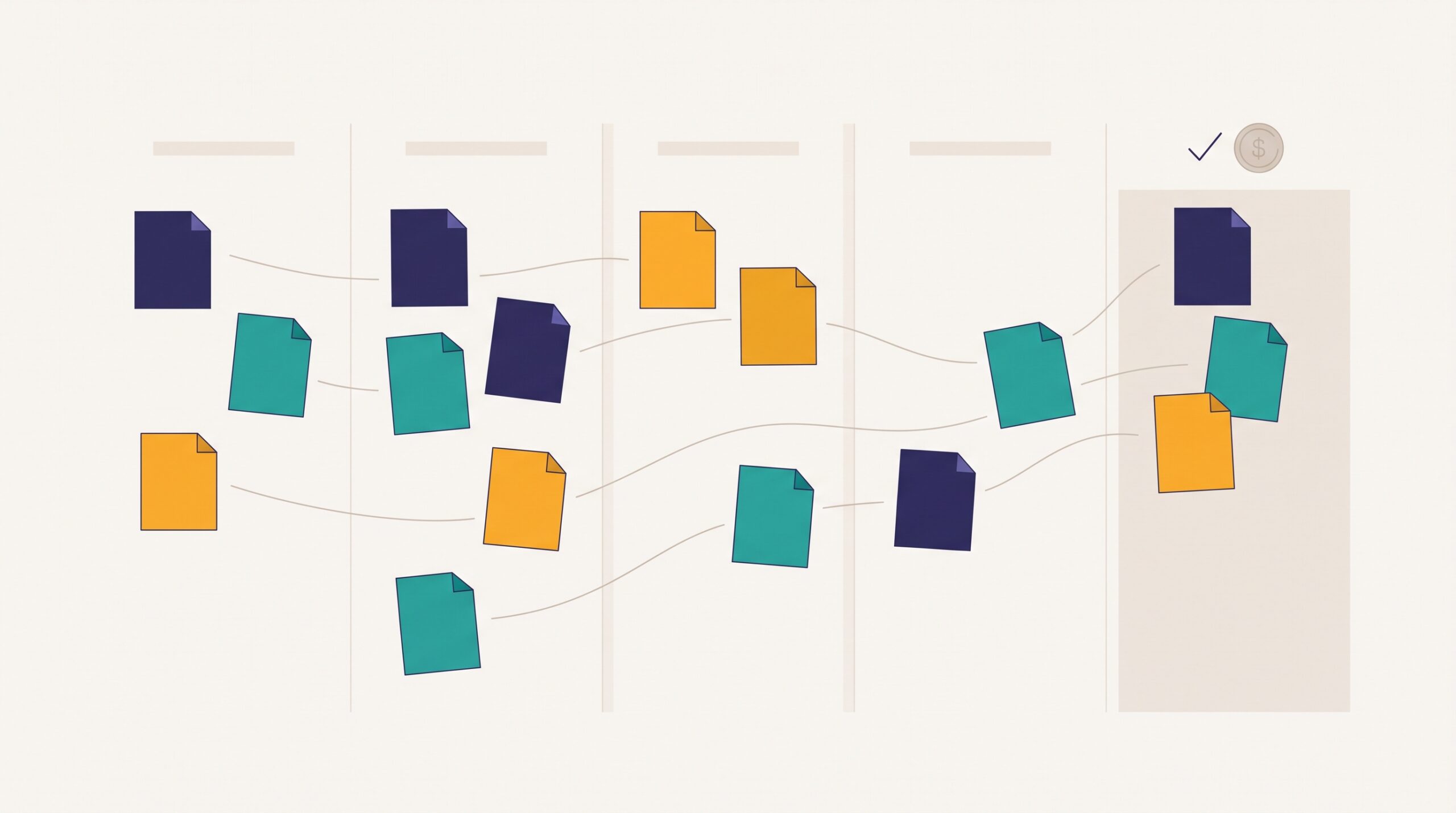
The fix isn’t a stern personality or expensive software. It’s visibility. When every outstanding invoice becomes a card you can see moving across a board, chasing payment stops being a thing you have to remember and becomes a thing your board reminds you to do. Here’s how to run your accounts receivable on a kanban board.
Why unpaid invoices hide in the first place
An inbox is a terrible place to track money. Emails arrive in the order they’re received, not in the order they matter, and a two-line “just checking in on invoice #1042” looks exactly like every other unread message. There’s no column that says this one is 30 days late and no signal that grows louder the longer a payment goes unmade.
So invoices don’t get ignored on purpose. They get ignored because nothing surfaces them. The client who forgot to pay isn’t being difficult — they’re busy too, and your polite invoice is buried in their inbox as well. The whole system relies on two distracted people both remembering the same piece of paper at the same time. A board fixes that by giving every invoice a home that stays in view until the money is in.
Map your payment process into columns
Before you touch a single card, sketch the real journey an invoice takes from finished work to money in the bank. For most small businesses it looks something like this:
Ready to Invoice → Sent → Due → Overdue → Final Notice → Paid. A “Ready to Invoice” column catches the sneakiest leak of all: work that’s done but never billed. “Sent” holds invoices inside their payment terms. “Due” flags the ones that have hit their date. “Overdue” and “Final Notice” escalate the follow-up. And “Paid” is the satisfying place every card is trying to reach.
Resist the urge to add ten columns. If you’ve read our take on running a sales pipeline as visible flow, the same discipline applies here: each column should represent a real change in what needs to happen next, not just a label. Five or six columns is plenty to see exactly where every dollar is stuck.

Make the aging visible
The single most useful thing a receivables board does is show you how long money has been outstanding. Accountants call it “aging,” and it’s the difference between “a few invoices are late” and “$8,000 has been sitting unpaid for over a month.” One of those facts changes how you spend your afternoon.
Put the invoice date and amount right on the card, and let the board show its age at a glance — colour it, tag it, or simply move it rightward as the days pile up. A fresh invoice reads as calm and teal; a card that’s crept into deep amber has been waiting too long. This is the same signal we described in what your aging cards are telling you, applied to cash instead of tasks. The oldest, reddest cards are your afternoon’s to-do list.
Turn follow-up into a cadence, not a confrontation
Most owners hate chasing invoices because they picture one uncomfortable phone call. But collections isn’t a confrontation — it’s a rhythm. A gentle, predictable series of nudges collects far more, and far more comfortably, than a single tense conversation weeks after the fact.
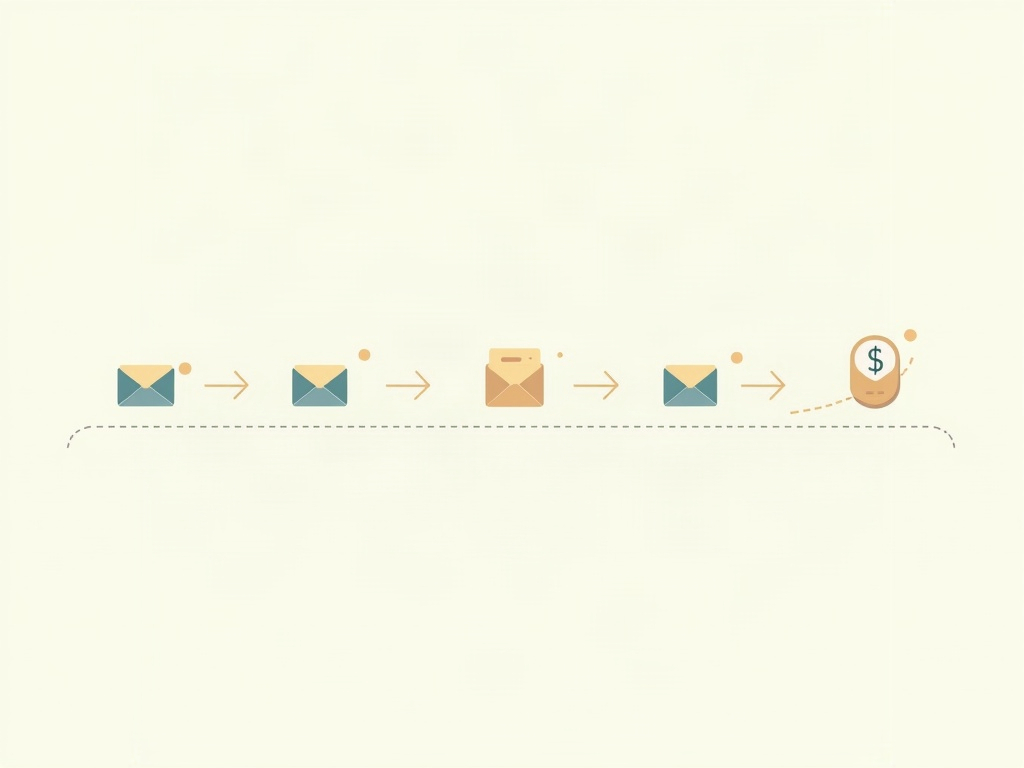
Decide your cadence once and let the board carry it: a friendly reminder a few days before the due date, a short note the day it’s due, a firmer follow-up at seven days overdue, and a clear final notice at fourteen or thirty. Write the templates ahead of time so sending one is a thirty-second job, not an agonizing draft. When a card lands in “Overdue,” you already know exactly what to send — the decision was made on a calm day, not in a moment of frustration.
Because the whole cadence lives on the board, it also survives you handing it off. Whoever does the bookkeeping can look at the “Overdue” column, see which reminder each card is due for, and act — no tribal knowledge required.
Spot the invoices that are truly stuck
Not every late invoice is a forgetful client. Some are genuinely blocked: a disputed line item, a missing purchase-order number, an approval sitting on someone’s desk, or a contact who’s left the company. These need a different response — a conversation, not another reminder — and they’ll quietly poison your numbers if you keep treating them like ordinary overdue invoices.
Mark them clearly. A “blocked” flag or a dedicated lane pulls these cards out of the automatic follow-up flow and puts a human question on them: what does this invoice need before it can move? It’s the same instinct behind making blocked cards visible before they stall your team — a problem you can see is a problem you can solve, and a disputed invoice you’ve surfaced is one you can actually resolve instead of nagging into silence.
Read the board as a cash-flow report
Once your receivables live on a board, it starts answering questions you used to dread. How much money is tied up in late invoices right now? Look at the height of the “Overdue” and “Final Notice” columns. Are things getting better or worse? Watch whether cards are flowing steadily into “Paid” or piling up on the left. Which client is always slow? You’ll spot the pattern the moment their cards keep aging in the same spot.
You don’t need a spreadsheet or a finance degree to get this — the shape of the board is the report. A healthy board is mostly empty on the right-hand side, with cards moving briskly to “Paid.” A board with a fat, reddening “Overdue” column is telling you, in plain sight, that your cash is trapped and it’s time to act. And when you do want the deeper story on how work moves, the same flow-reading habits that help with projects read cash just as well.

Keep it small and keep it moving
You can build this today with the tools you already have. Start with one board and the six columns above. Add a card for every invoice currently owed to you — yes, dig them out of the inbox — with the client, the amount, and the date. Then set aside fifteen minutes, once or twice a week, to walk the board from right to left: clear the paid ones, send the next reminder on the overdue ones, and flag anything that’s genuinely stuck.
That’s the whole system. No new subscription, no complicated automation, just every dollar you’re owed sitting where you can see it. The invoices you used to lose in your inbox now have a place that keeps them in view until they’re paid — and a simple kanban board is often all it takes to turn “I hope they pay” into a steady, visible flow of money coming in.