You have probably sat through a retrospective that went like this: everyone lists what annoyed them, someone writes it all on a whiteboard, there is a vague nod toward “we should communicate better,” and then nothing changes. Next month you have the same meeting about the same problems. After a few rounds of that, people quietly decide retros are a waste of thirty minutes and stop taking them seriously.
That is a shame, because a retrospective is the single most powerful habit a team can build. It is the only meeting whose entire purpose is to make the team a little better at its work. The problem is almost never the idea – it is the format. Most retros generate discussion and no decision. Here is how to run one in half an hour, anchored to your kanban board, that ends with exactly one thing you are actually going to change.
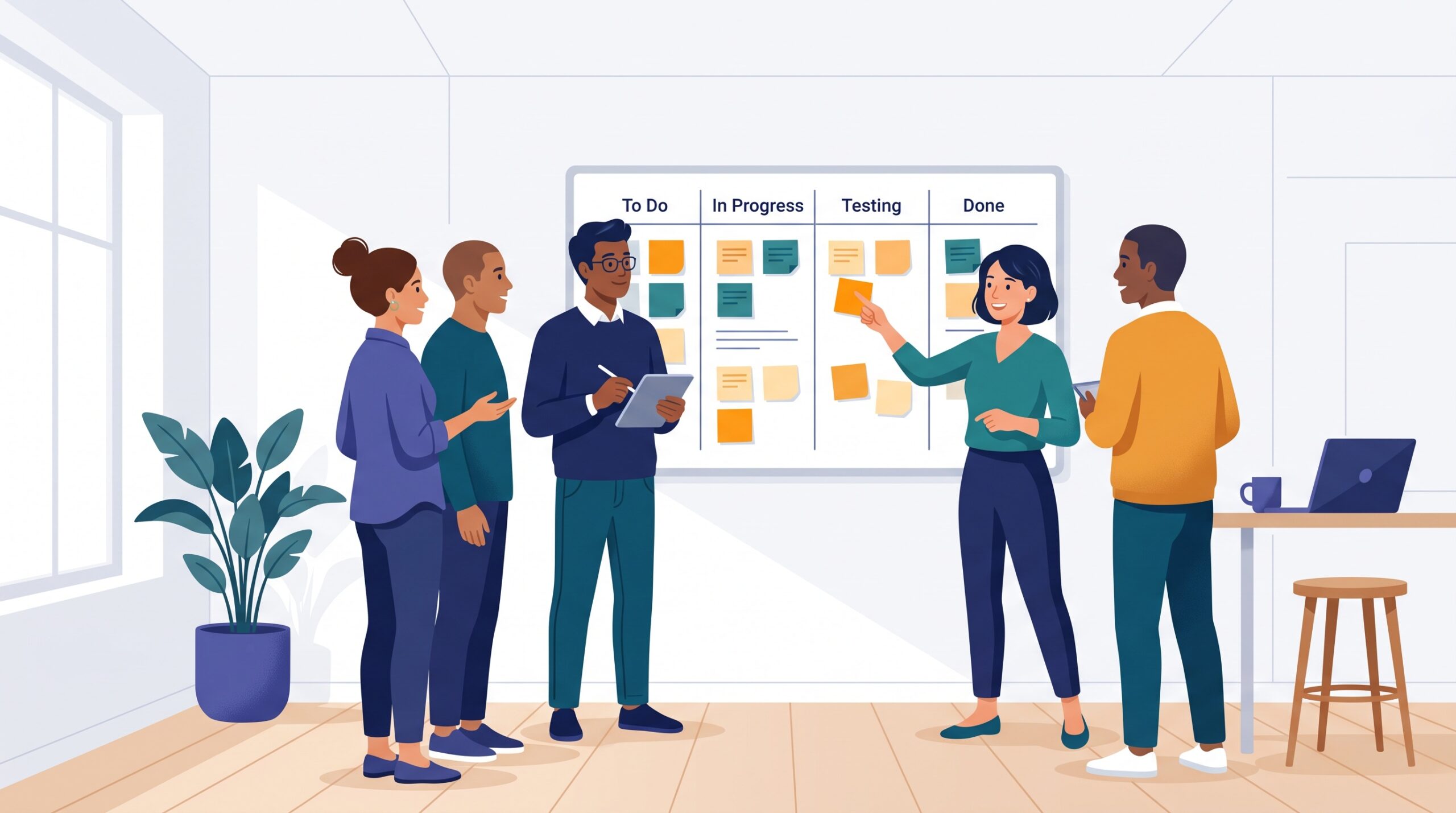
Why the board makes a better retro
The reason most retros drift into a gripe session is that they start from memory. “How did the last two weeks feel?” invites people to recall whatever is freshest or most irritating, which is rarely what mattered most. Your kanban board fixes this, because it is a record of what actually happened. The cards that piled up, the ones that sat blocked for a week, the column where everything slows down – that is your agenda, and it is made of evidence rather than mood.
So the first rule of a good board retro is simple: have the board open and look at it. Not a blank whiteboard, not a survey – the real board, with the real cards from the period you are reviewing. You are going to read the story it is telling you.
The 30-minute structure
Keep it tight. A retro that sprawls to an hour teaches people to dread it. Here is a format that fits comfortably in thirty minutes for a small team.
Minutes 0-5: Read the board. In silence, everyone looks at the board and the period’s finished and unfinished cards. Where did work get stuck? Which cards aged the longest? What blew up unexpectedly? People jot a note or two to themselves. Starting silent keeps the loudest voice from setting the agenda for everyone else.

Minutes 5-15: Surface, don’t solve. Go around and let each person name what they noticed, framed around the work: a card that sat blocked, a hand-off that kept bouncing back, a stretch where everything flowed nicely and why. Write each observation on a sticky note or a card. The discipline here is to collect without jumping to fixes – the instinct to solve the first problem out loud is what eats the clock.
Minutes 15-22: Cluster and pick one. Group the notes that are really the same issue. You will usually find two or three real themes hiding under a dozen complaints. Now do the ruthless part: pick one. Not the biggest, not the most satisfying to complain about – the one where a small change would make a real difference and the team actually controls the outcome.
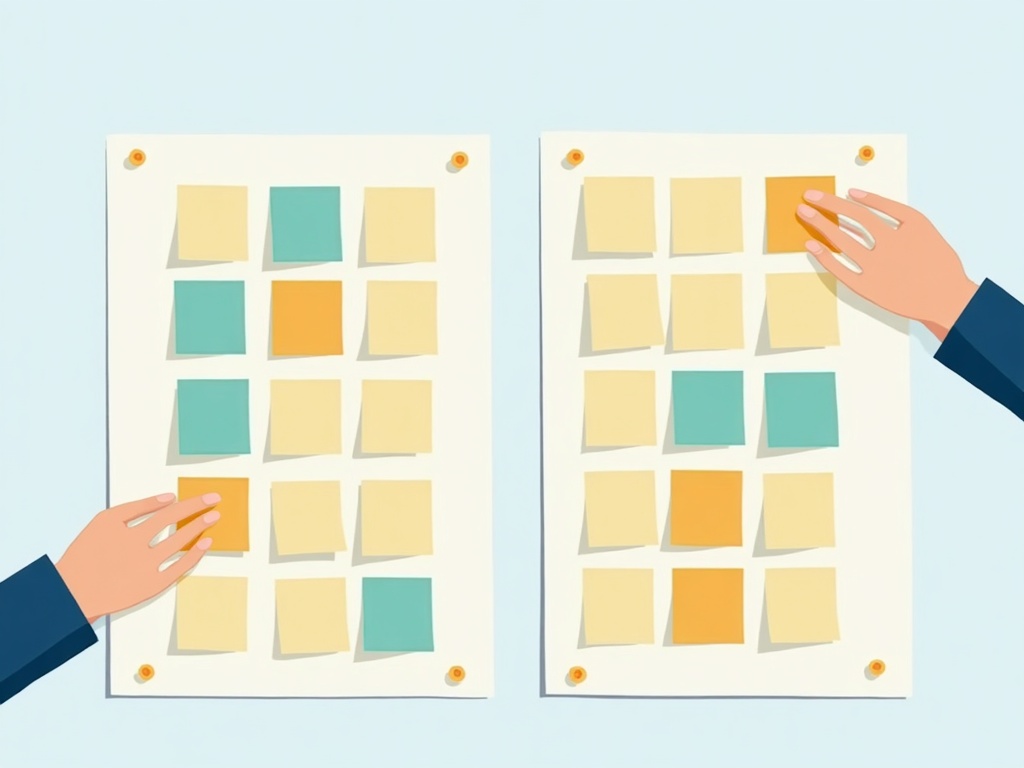
Minutes 22-30: Turn it into one experiment. Write a single concrete action with an owner and a check-in. “Communicate better” is not an action. “Add a ‘waiting on client’ column so blocked cards stop hiding in In Progress, and we look at it at Friday’s standup” is an action. One change, someone responsible, a date to see if it worked.
The rule that makes retros stick: one change at a time
The most common way retros fail is not too few ideas – it is too many. A team leaves buzzing with eight improvements, tries to do all of them, and lands none. Continuous improvement, the kaizen idea at the heart of kanban, works precisely because it is small and relentless: one modest change, made real, then evaluated, then the next.
So cap yourself at a single action item per retro. It feels almost too modest in the moment. But one change a fortnight is twenty-plus improvements a year that actually shipped – which beats a hundred that were only ever discussed. And because you chose just one, you can genuinely check next time whether it worked, instead of losing it in a long list nobody revisits.
Close the loop, or the whole thing collapses
Here is the step that separates teams that improve from teams that just meet: start the next retro by checking the last action. Did we add that column? Did blocked cards actually surface sooner? Yes, no, or partly – and then decide to keep it, adjust it, or drop it.

This one habit changes everything. When people see that last retro’s idea was actually tried and actually looked at, they start believing the meeting has teeth. Suggestions get sharper, because they might really happen. The retro stops being a place to vent and becomes the place where the team quietly rebuilds itself, one small fix at a time.
A good retrospective does not need to be long, emotional, or elaborate. It needs a real board to look at, the discipline to surface before solving, the nerve to pick just one thing, and the follow-through to check it next time. Thirty minutes, one change, closed loop. Run it that way for a few cycles and you will feel the difference not in the meeting, but on the board – in work that flows a little cleaner every fortnight. If you want the retro to be effortless to prepare, let your board do the remembering for you, and simply show up and read it.