Think back to your own first week at a job. Odds are it involved a thick onboarding document you skimmed once and never opened again, a firehose of names and acronyms, and the quiet dread of not knowing what you were actually supposed to be doing. Meanwhile, whoever was supposed to be training you got almost none of their own work done, because every twenty minutes brought another “quick question.”
Onboarding is one of those tasks small teams reliably do badly – not from lack of care, but from lack of a system. The good news is that if your team runs on a kanban board, you already own the best onboarding tool there is. A board is a live, honest picture of how the team really works: what is being done, in what order, by whom, and to what standard. You just have to point a new person at it deliberately instead of hoping they absorb it by osmosis.

The board is the org chart nobody wrote down
Every team has two versions of how it operates: the official one in the handbook, and the real one that lives in habit. New hires struggle because the handbook rarely matches reality. A kanban board collapses that gap, because it shows the real one. The columns are the actual steps work moves through. The cards are the actual work. The busiest column is where the team really spends its energy.
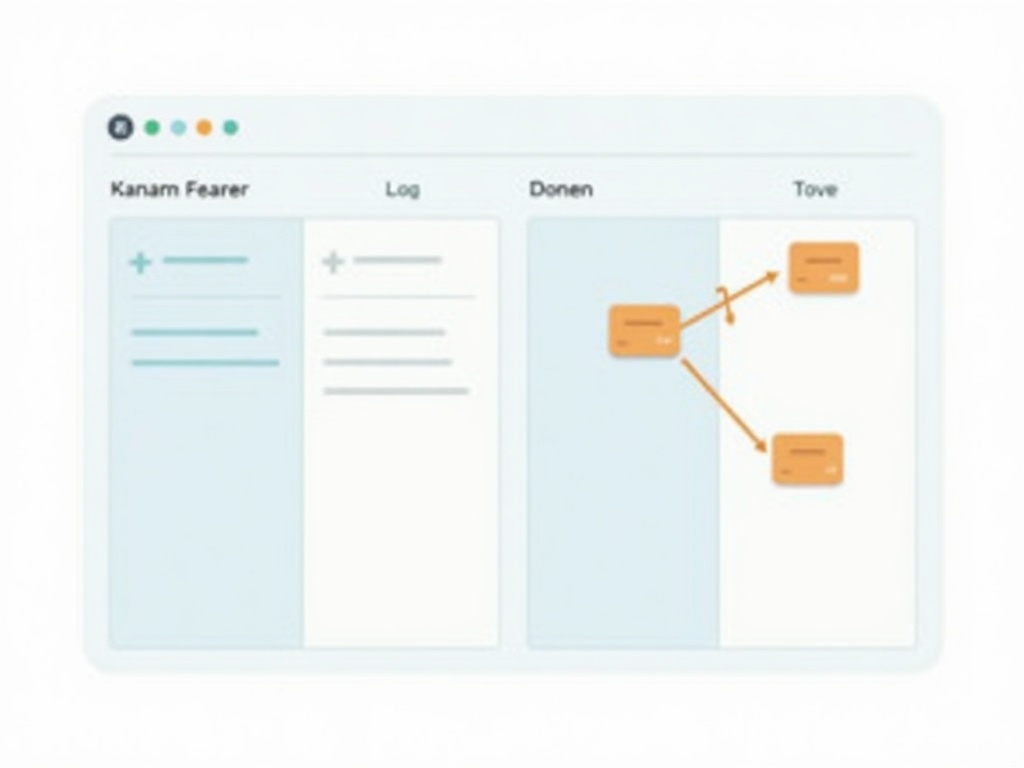
So on day one, before any documentation, sit the new person in front of the board and walk it left to right. “Ideas start here in the backlog. When we commit to something it moves here. This column is where it gets built, this is where it gets reviewed, and this is done.” In five minutes they understand the shape of the work better than a fifty-page wiki would teach them in a week.
Let them watch a card travel before they touch one
Understanding columns is one thing; understanding flow is another. Pick a live card – ideally something typical – and tell its story. Who created it, why, what had to happen for it to move from one column to the next, who picked it up, what “blocked” looked like when it stalled. Following a single card end to end teaches the rhythm of the team more vividly than any abstract explanation of process.
This is also the natural moment to explain your standards. Every mature board runs on a shared definition of done – the one-sentence agreement about what “finished” actually means. A new hire who learns that on day one stops guessing whether their work is complete and stops the awkward cycle of handing over things that bounce straight back.
Hand them a real card, small and safe
The fastest way to make someone feel useful is to give them something real to finish. Resist the urge to keep a new hire in read-only mode for two weeks. Instead, keep a small stash of genuinely easy, low-risk cards – a documentation fix, a small well-defined task, something with clear boundaries – and let them pull the first one within a day or two.
The point is not the output; it is the loop. By taking one card from committed to done, they experience your entire workflow in miniature: how to pick up work, where to ask questions, what review looks like, and how it feels to land something. One completed card teaches more than a day of shadowing, because now they have actually flowed a piece of work through your system with their own hands.
A quiet bonus: their fresh eyes will find the parts of your process that make no sense. Where a newcomer gets stuck is exactly where your workflow is confusing, and it is worth writing those snags down – they are a free audit of your own board.
Make the cards carry their own instructions
The heaviest onboarding cost is the constant interruptions, and most of them happen because the knowledge lives in someone’s head instead of on the board. This is where a little discipline about card design pays off enormously. When a card spells out what it is, what “done” means for it, and links to the relevant reference, a new hire can answer their own question by reading the card instead of tapping a colleague on the shoulder.

If your cards are currently just a title and a shrug, onboarding is a great reason to fix that. Our guide to what belongs on a kanban card covers this in depth, but the onboarding-specific version is simple: assume the person reading the card knows nothing about your team’s shorthand. A board full of self-explanatory cards is a board a newcomer can navigate alone – which is the whole goal.
Replace the hovering with a light rhythm
New hires need contact, but they do not need a manager breathing over their shoulder, and you do not have time to provide it. The answer is a predictable cadence rather than constant availability. If your team already runs an async standup on the board, a new person plugs straight into it: they post what they are working on, what is blocking them, and it is visible to everyone without a meeting.
Pair that with one named person as their first point of contact and a short daily check-in for the first week – five minutes at the board, looking at their card, answering the questions that piled up. Batching questions into a known slot protects everyone’s focus and still gives the new hire a reliable lifeline. It also spares them the anxiety of deciding whether a question is “worth” interrupting someone for.
Watch for independence, then step back
The board gives you a quiet signal for when onboarding is working: the new person starts pulling their own cards, finishing them at a steady clip, and asking fewer but sharper questions. That is your cue to widen the boundaries – hand them slightly bigger cards, pull back the daily check-in to a couple of times a week, and let them own a lane of work.

Done this way, onboarding stops being a dreaded interruption to real work and becomes part of the same visible system everything else runs on. The new hire learns by doing, on the actual board, with the actual work – and you get a contributing teammate in days rather than weeks. To recap: walk the board first, follow one card end to end, hand over a small real task early, make your cards self-explanatory, set a light check-in rhythm, and watch the board for the moment they no longer need you hovering. The best onboarding document is the one your team is already keeping up to date every single day – a board that quietly does the explaining, so you do not have to.