Look at your board and find the card that has not moved in three days. Not the one you are actively working on, the other one, the one sitting in In Progress that everyone has quietly agreed to stop looking at. It is waiting on a reply from a client, or a file from a designer, or a decision nobody has made. It is not being worked on. It is not done. It is just stuck, and every day it sits there it is costing you more than any card you are actually touching.
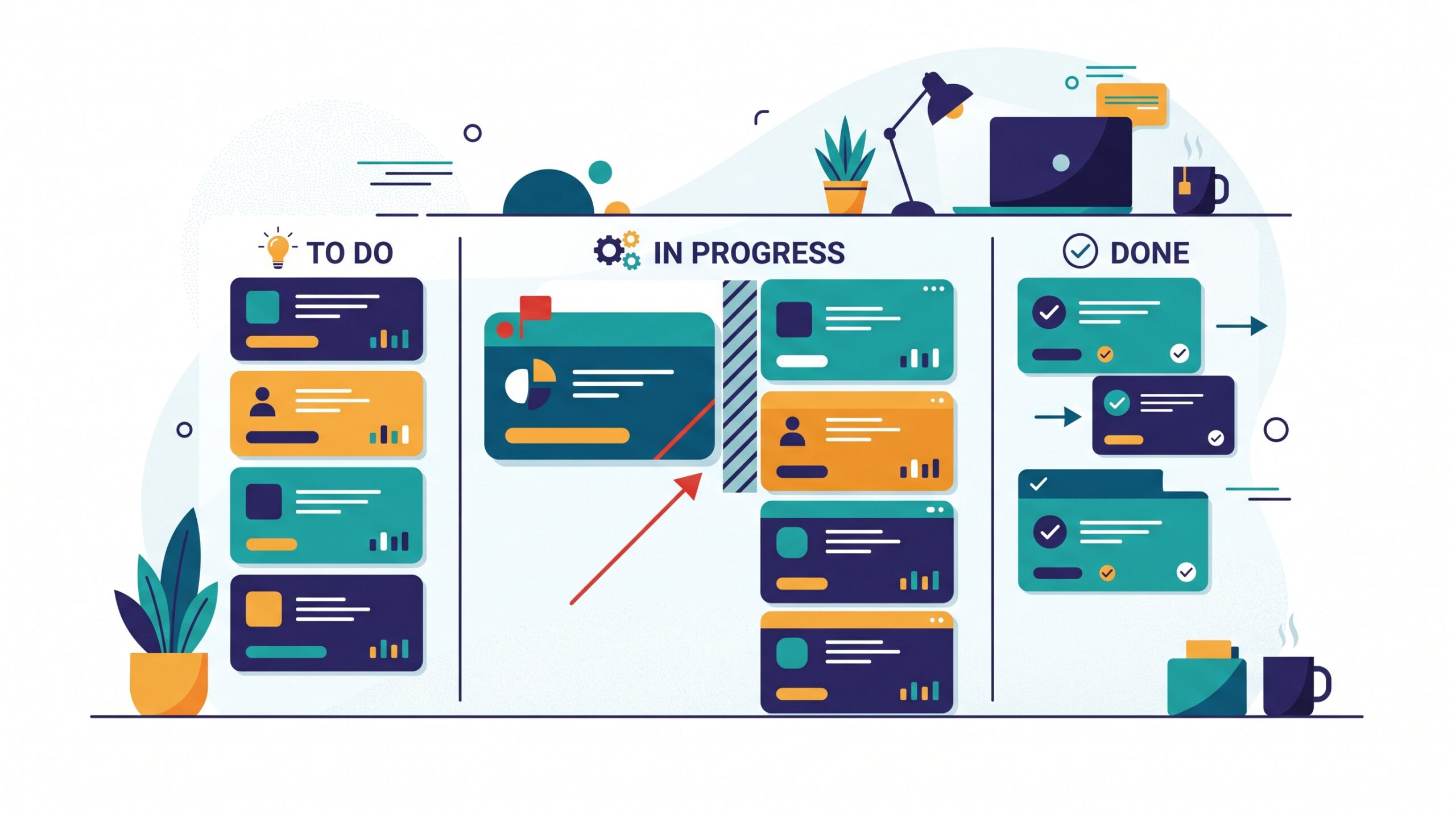
Blocked work is the silent killer of small-team flow. A task in progress is at least moving. A blocked task is frozen, but it still feels like progress because it lives in the In Progress column, so it hides in plain sight. The whole point of a kanban board is to make the state of your work honest and visible, and that includes the uncomfortable truth that some of it is going nowhere. This article is about surfacing those blockers on purpose and clearing them fast.
A blocked card is not a slow card
First, a distinction that matters. A card that is taking a long time because the work itself is big is not blocked. It is just large, and the fix for that is right-sizing it into smaller cards. A blocked card is different: the work has stopped for a reason outside the task itself. You are waiting on someone, something, or some decision, and until that resolves, no amount of effort moves the card forward.
Why does the difference matter? Because the responses are opposite. A slow card needs more focus or a smaller scope. A blocked card needs someone to go unblock it, which is usually a two-minute conversation, not two more hours of heads-down work. If you treat a blocker like slow progress and just keep waiting, it can sit for a week. Name it as a blocker, and the clock starts ticking on getting it cleared.
Make the blocker impossible to ignore
The single most useful habit is also the simplest: mark blocked cards so they visibly stand out. A red flag, a colored label, a “Blocked” tag, whatever your board supports. The mechanism matters less than the result, which is that a blocked card should look different from a healthy one the instant you glance at the board.

This sounds trivial, but it changes behavior. An unmarked blocked card blends in with the work in progress and gets mentally filed as “in hand.” A flagged one is a small alarm. It draws the eye, it invites the question “what is that waiting on,” and it makes the blocker a shared problem instead of one person’s private stall. You cannot clear what you cannot see, and a board full of identical-looking cards is hiding its most expensive item.
Write down what is blocking, who owns it, and since when
A flag tells you a card is stuck. It does not tell you how to unstick it. So when you mark a card blocked, add three small pieces of information, either on the card or in a quick note.

First, what it is waiting on: “needs sign-off on copy,” “waiting for API keys from vendor,” “blocked on client feedback.” Be specific, because “blocked” alone is useless a day later when nobody remembers why. Second, who can clear it: name the person or party who actually holds the thing you are waiting for. A blocker with no owner is a blocker nobody chases. Third, since when: note the date it became blocked. That timestamp is what turns a vague “it’s been a while” into a concrete “this has been stuck for four days,” which is exactly the pressure needed to get it moving.
Those three details take fifteen seconds to jot and they are the difference between a blocker that resolves today and one that quietly rots for a week.
Clear blockers first, before you start anything new
Here is the discipline that ties it together. When you or your team sit down to decide what to work on, the blocked cards come first, before you pull anything new from the backlog. Not the newest, shiniest task. The stuck ones.

The logic is simple. A blocked card is work you have already invested in that is producing zero return until it moves. Starting a brand-new task while an old one sits blocked just means you now have two things in progress and one of them is still frozen. If your team does any kind of standup, async or otherwise, run it blocker-first: scan the board for flags, and for each one ask the only question that matters, “what will it take to clear this today, and who is doing it?” Clearing a blocker is almost always cheaper and faster than the work itself. It is usually a message, a nudge, a decision. Spend that five minutes before you let anyone open something new.
Watch for the blocker that keeps coming back
Clearing blockers one at a time keeps you moving. Noticing which ones repeat is how you actually get faster. Because the same blocker showing up again and again is not bad luck. It is a broken part of your process waving at you.

Keep a light eye on your flagged cards over a few weeks. If “waiting on client feedback” is the reason three cards stalled this month, the problem is not those three cards, it is that you have no agreed turnaround for feedback, and fixing that once removes a whole category of future blockers. If work keeps getting stuck waiting on one particular person, that person is a bottleneck and needs either help or a way to delegate. The individual blocker is a symptom. The pattern is the diagnosis, and the pattern is only visible if you were marking blockers consistently in the first place. That is the quiet payoff of flagging every one: over time, your board tells you where your process actually leaks.
A few takeaways to try this week
You do not need a heavy process to handle blocked work well. You need to stop letting stuck cards hide. This week:
- Scan your board for any card that has not moved and honestly ask whether it is slow or genuinely blocked.
- Mark every blocked card so it visibly stands out from healthy work.
- On each blocker, note what it is waiting on, who can clear it, and the date it got stuck.
- Clear blockers first, before pulling anything new from the backlog.
- Glance at your blockers over the month and fix the one that keeps coming back at the source.
Do that, and the most expensive cards on your board stop being invisible. On a simple kanban board, a flag and a one-line note are all it takes to turn a silent stall into a problem someone can actually solve.