Somewhere along the way, a lot of small teams picked up a habit that was never really meant for them: estimating every task in story points. You know the ritual. Someone pulls up planning poker, everyone picks a Fibonacci number off a little deck, the two outliers argue about whether this is a 3 or a 5, and twenty minutes later you have a number nobody fully trusts. For a team of three or four people who all know exactly what they’re building, that’s a lot of ceremony for very little payoff.
Story points aren’t a scam. They solve a real problem — just not the problem most small teams actually have. If you’re a founder, a team lead, or a freelancer juggling a handful of clients, there’s a good chance you can drop the scoring entirely and plan more calmly than you do now. Here’s why, and what to do instead.
What story points were actually invented for
Story points exist to answer one awkward question at scale: “roughly how much can this team get through in the next couple of weeks?” In a big organization with rotating staff, shifting priorities, and a manager who needs to promise something to someone upstairs, you can’t just eyeball it. So teams score each task by relative size, add up how many points they complete per sprint (velocity), and use that running average to forecast. It’s a clever trick for turning fuzzy human effort into a number you can plan around.
The key word is relative. A point was never meant to equal an hour. It’s a way of saying “this card is about twice the size of that one,” so that a big, churning team can forecast without pretending to know exact durations. That machinery earns its keep when you have dozens of people and a stakeholder demanding dates.
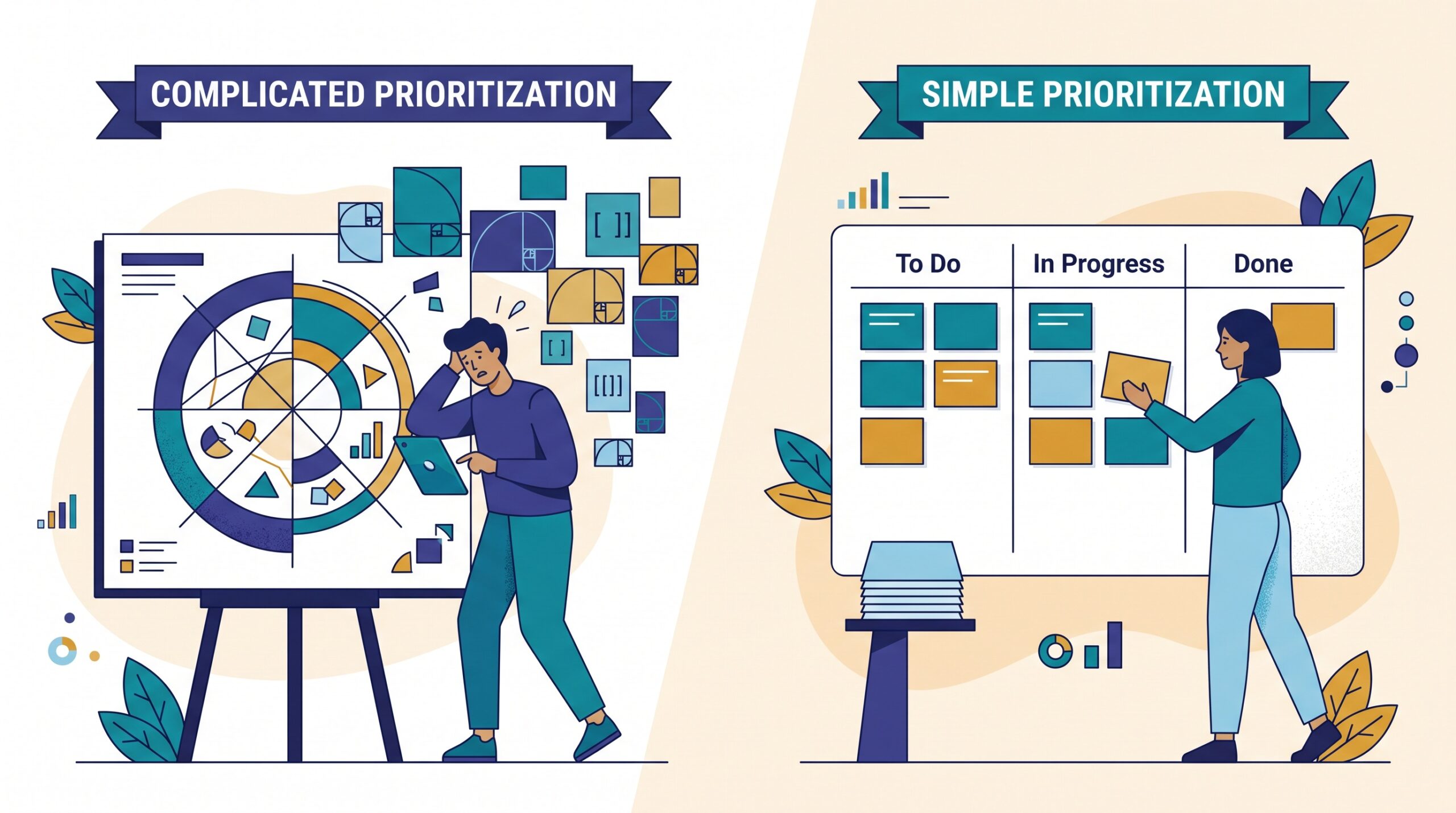
Why they break down on a small team
Shrink the team and the economics flip. On a team of three, the overhead of estimating often costs more than the forecast is worth. A few things tend to go wrong:
The debate outweighs the insight. When everyone already understands the work, the twenty minutes spent reconciling a 3 and a 5 buys you almost nothing. You could have just started the task.
Velocity gets noisy. Velocity is only meaningful as an average over many data points. With a tiny team, one person taking a sick day or one gnarly task can swing a sprint’s total so hard that the “average” is more superstition than signal.
Points quietly become hours. Almost every small team eventually starts whispering “well, a 5 is about a day, right?” The moment that happens, you’ve thrown away the one advantage of relative sizing and reinvented time estimates — the exact thing points were supposed to spare you from.
None of this means planning is pointless. It means the scoring is the part you can safely cut.
The simpler alternative: right-size every card
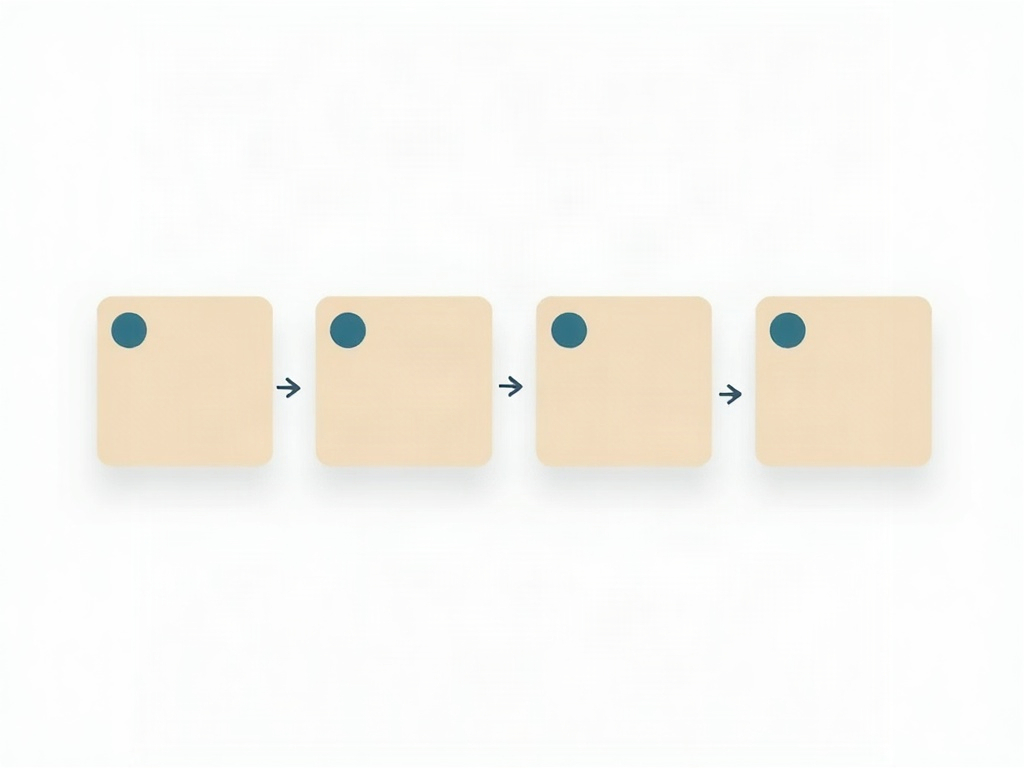
Here’s the move that replaces most of what story points gave you: make your cards roughly the same size. Instead of asking “how many points is this?”, ask “can one person finish this in a day or two?” If the answer is no, split the card until the pieces pass that test.
This is the quiet skill that makes a board predictable. A card that reads “redesign the onboarding flow” is a project, not a task — it hides unknowns and stalls in progress for a week. Broken into “draft the three onboarding screens,” “wire up the welcome email,” and “test the signup path,” each piece is small, finishable, and easy to see moving. You’re doing the same thinking you’d do to assign points, but you spend it on breaking work down instead of labeling it.
Count cards, don’t score them
Once your cards are about the same size, something handy happens: you can forecast by counting. Watch how many cards your team moves to Done in a typical week. That number — call it your throughput — is a perfectly good planning tool. If you finish around eight cards a week and a client’s request breaks into roughly sixteen same-sized cards, you’re looking at about two weeks. No point totals, no velocity spreadsheet, just a count you can read straight off the board.
It’s not magic, and it’s not precise to the hour. But neither were story points. The difference is that throughput costs you nothing to collect — the board already records it every time a card reaches Done. You get a forecast as a free byproduct of working, instead of paying for one with a weekly estimation meeting.

When estimates still earn their keep
Dropping story points isn’t a rule for every situation. There are a few moments when a bit of sizing genuinely helps, and it’s worth naming them so you don’t swing too far the other way.
The first is when you have to commit to an outside deadline — a client contract, an event, a launch with real money attached. There, a rough estimate (even just “small, medium, large,” or a gut-check in days) gives you something to negotiate with. The second is when a task feels genuinely uncertain. If nobody can tell whether a card is a half-day or a half-week, that disagreement is a signal: the work isn’t understood well enough yet, and a quick sizing conversation is really a design conversation in disguise. Have it, then split the card.
Notice that in both cases you’re estimating occasionally, for a reason — not scoring everything by reflex every single week.
How to run planning without points
So what does a planning session look like with the deck put away? Shorter, mostly. Keep your backlog ordered so the most important work sits at the top. When it’s time to plan the week, pull cards from the top, right-sizing anything too big as you go, until the week looks about as full as last week’s throughput suggests it can be. Then stop. That’s the whole meeting: order, pull, split, stop.

You’ll find the conversation shifts from “is this a 3 or a 5?” to “is this card small enough, and is it really the next most important thing?” — which are the two questions that actually move your work forward. The scoring was always a proxy for those; now you’re asking them directly.
The takeaway
Story points are a fine tool for a large team that needs to forecast at scale and defend dates to stakeholders. For a small team, they often add ritual without adding clarity. Right-size your cards so they’re finishable in a day or two, count how many you complete each week, and estimate only when an outside deadline or a genuine unknown demands it. You’ll spend less time arguing about numbers and more time finishing work — and a simple kanban board, kept tidy and ordered, gives you all the forecasting you need without a single point.