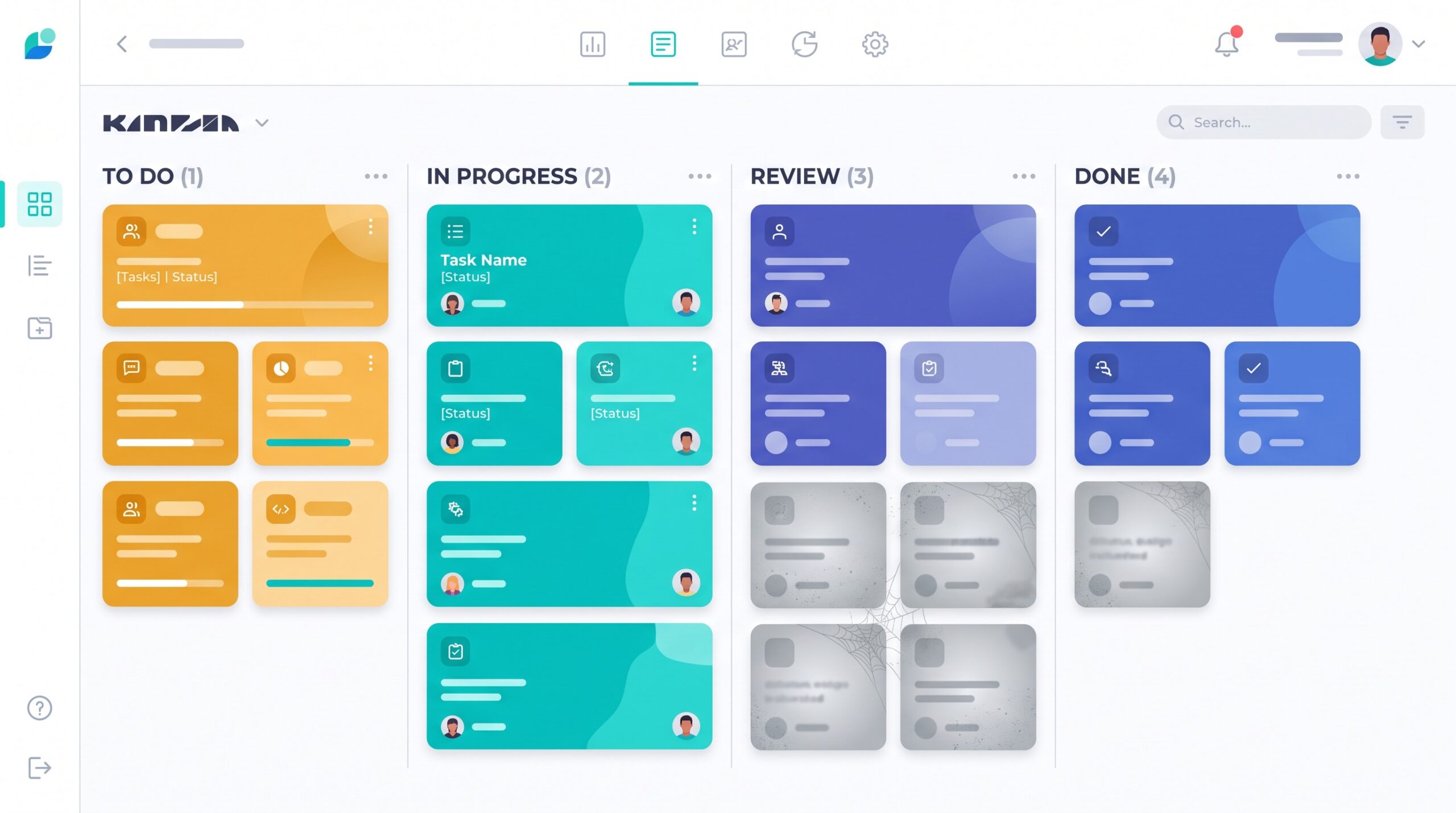
Look at your board right now and you will probably find a few. A card that landed in “In Progress” a month ago and never left. A “quick task” from a project that quietly died. An idea someone dropped in during a busy week that nobody has touched since. They are not blocked, exactly. They are not urgent. They are just… there. Sitting. Slowly turning into furniture.
These are stale cards, and they are more dangerous than they look. A board is supposed to tell you the truth about your work at a glance. Every card that has stopped moving but still sits in an active column is a small lie – it makes the board look busier, fuller, and more on-track than reality. Enough of them, and you stop trusting the board at all. The good news: clearing them out is one of the fastest, most satisfying pieces of maintenance you can do.
Why work rots in the first place
Cards rarely go stale because someone decided to abandon them. They go stale by accident. A task turns out to be bigger than the card suggested, so it gets “started” and then avoided. A card depends on someone who went quiet, and once the reminder faded, so did the card. Priorities shifted and the work was silently deprioritized – but nobody moved the card to reflect that.
The common thread is that stalling is passive. Nobody has to do anything for a card to rot; they just have to stop. That is exactly why stale cards need an active, deliberate sweep to catch. They will never clean themselves up.
Learn to see the age of a card
You cannot clear what you cannot see, and the sneaky thing about stale work is that it looks identical to fresh work at a glance. So the first step is to make card age visible. Most boards, KanbanBlocks included, can show you how long a card has sat in its current column – and some can quietly flag or shade a card once it crosses a threshold you set.

Pick a threshold that fits your pace. For a fast-moving team, anything untouched for a week might deserve a look; for slower, longer projects, two or three weeks is more honest. The exact number matters less than having one. Once your oldest cards visibly stand out, the sweep almost does itself: your eye goes straight to the work that has been quietly stuck.
The three-verdict rule
When you find a stale card, resist the urge to just stare at it guiltily and move on – that is how it got stale in the first place. Instead, give every stale card exactly one of three verdicts, and act on it before you move to the next.
Revive it. The work still matters and you are going to move it now – so give it a real next step, an owner, and a date. Not “look into this,” but “draft the outline by Thursday.” A stale card revived without a concrete next action will simply go stale again.
Kill it. Be honest: a lot of stale cards are stale because they no longer matter. The project changed, the client went another way, the idea was never that good. Archive or delete it without ceremony. Closing a card that will never be done is not failure – it is telling the truth.
Split it. Often a card stalled because it was secretly enormous – “redesign the onboarding” is not a task, it is a project. Break it into the smallest real first step and a few follow-ons. Small cards move; big vague ones sit.
The one question that cuts through the guilt
People keep stale cards around out of guilt. It feels like giving up to delete something you once committed to. So when you are stuck on a verdict, ask one blunt question: if this card didn’t already exist, would I add it to the board today?
If the answer is an easy yes, revive it properly. If you hesitate, you have your answer – it is not really live work, it is a museum of good intentions. Clearing it frees up attention for the things that genuinely deserve it. A shorter, honest board beats a long, aspirational one every single time.
Make the sweep a habit, not a heroic cleanup
The reason boards get overrun with dead cards is that people only clean them in a panic, usually when the clutter has become unbearable. That turns a five-minute task into a dreaded afternoon. The fix is to make staleness review small and regular. Once a week, spend five minutes scanning for anything that hasn’t moved, and give each one a verdict on the spot.
If you run a team, fold it into a ritual you already have. A quick end-of-week board walk – “what hasn’t moved, and why?” – surfaces stalled work while it is still fresh enough to save, and it gently signals that letting a card sit silently is not the norm. The point is not to shame anyone; it is to keep the board honest without anyone having to remember to.

A board you can actually trust
The whole promise of a board is that you can glance at it and know where things really stand. Stale cards break that promise quietly, one forgotten task at a time, until the board becomes a place work goes to be ignored rather than done. Clearing them is how you keep the promise intact.
So this week, find the cards that have stopped moving. Give each one a verdict – revive, kill, or split – and don’t let a single one off with a shrug. Then set a five-minute weekly sweep so the rot never builds up again. You will end up with fewer cards, more movement, and a board that finally tells you the truth. A simple kanban board only works when every card on it still means something – so make sure yours do.