Somewhere on your kanban board right now is a card you created in March, nudged forward in June, and have quietly stopped looking at since. There’s a Done column with a year’s worth of victories piled up in it, a backlog that’s grown a little feral, and a few columns that made sense in spring but don’t match how you actually work anymore. None of that is a failure. It’s just what a working board looks like after twelve busy months.
The end of the year is the one moment on the calendar that gives you permission to stop and tidy all of it. Not a frantic overhaul — a calm, deliberate reset. Done well, it takes an hour or two and hands you something genuinely valuable: a clean board, a clear head, and a running start into the new year. Here’s a simple five-step reset to close out 2026 and open 2027 organized.

Why year-end is the right time to reset
You can tidy a board any week, and the 15-minute weekly review is exactly how you keep it healthy the rest of the year. But the turn of the year is different. Work naturally slows over the holidays, so you’re not resetting a moving target. Everyone mentally files the old year away and starts fresh — your board might as well match. And it’s the one time it feels natural to look back across the whole year rather than just the last sprint.
Think of it like closing the books. You wouldn’t carry a tangle of half-reconciled accounts into a new fiscal year. Your work-in-progress deserves the same clean handoff.
Step 1: Archive what you finished — and actually notice it
Start with the most rewarding part. Open your Done column and look at everything you shipped this year. For most people this is a genuine surprise — the brain remembers the open loops and forgets the closed ones, so a full Done column is quiet proof you did far more than it felt like.
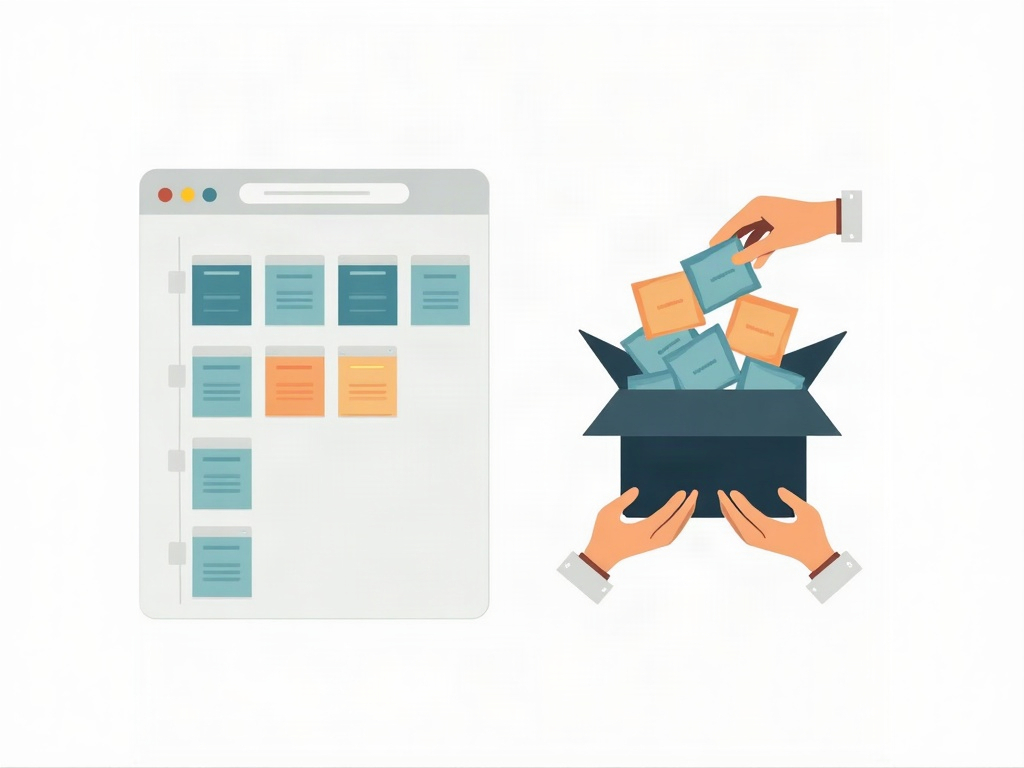
Read through it, let yourself register the wins, then archive the lot. Archiving (rather than deleting) keeps the record if you ever need to look back, while clearing the visual clutter so next year’s work has room to breathe. If you’re unsure what to keep versus clear, we walked through the judgment call in when to clean out your Done column — year-end is simply the natural time to do it in bulk.
Step 2: Be honest about what didn’t get done
Now the harder column: the work that stalled. Every board collects cards that crept forward and then froze — a project that lost its sponsor, an idea that lost its urgency, a task that’s been “almost done” since autumn.
Go through each one and ask a blunt question: is this still real? Not “could I imagine doing this someday,” but “does this still matter enough to earn space on my board in the new year?” Be generous with the delete button. A card you’ve ignored for three months is not a commitment — it’s a small, recurring source of guilt. Letting it go is a gift to next-year you.
Step 3: Decide what genuinely carries into 2027
Whatever survives that honesty test is your real carry-over. Pull those cards together and look at them as a group. This is usually a much shorter list than people expect, and that’s the point — a handful of things that truly deserve to continue, not the accumulated sediment of a whole year.
If your backlog has swollen into the hundreds and even this feels overwhelming, don’t try to triage it card by card. Sometimes the right move is a clean sweep, which we made the case for in declaring backlog bankruptcy. A fresh year is the ideal cover for it: nobody mourns a backlog cleared on December 31.
Step 4: Rebuild the board for how you actually work now
With the board mostly empty, you can see its bones — and fix them. Look at your columns. Do they still match your real workflow, or are they a relic of how you worked in January? Maybe you need a Blocked column you never had, or you can merge two review stages that always moved together. Trim labels down to the few colors you actually use, so they mean something again.
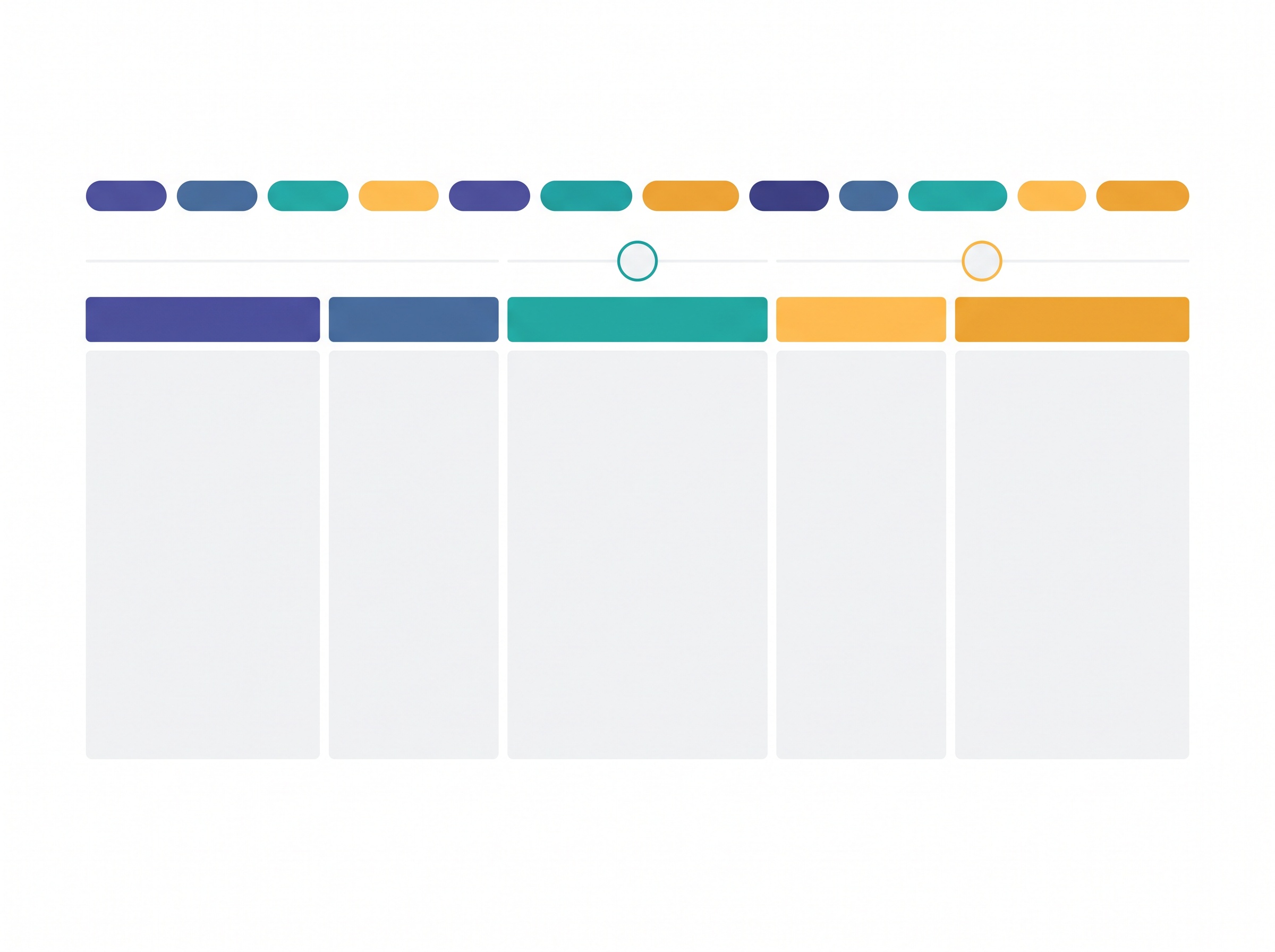
This is also the moment to reset your work-in-progress limits — the cap on how many cards sit in a column at once. If last year taught you that three active projects is your honest ceiling, set the limit to three and let the board hold that boundary for you. A reset board with no limits will simply refill to chaos by February.
Step 5: Set a light plan for January
Resist the urge to immediately stuff the fresh board with everything you want to accomplish in the new year. An empty board on January 2nd is not a problem to solve; it’s room to think.

Instead, add just a handful of cards for the first week or two — the things that genuinely need to move first. If some of those tie back to bigger ambitions for the year, link them to your goals rather than listing the goals as to-dos; we covered how in goal-driven kanban. Starting light means your first days back are about momentum, not triage. You’ll fill the board soon enough — let it earn its weight.
A clean board is a quiet kind of confidence
The real payoff of a year-end reset isn’t the tidiness, satisfying as that is. It’s walking into the new year knowing exactly where everything stands — nothing lurking, nothing forgotten, nothing quietly rotting in a column you’ve trained yourself not to look at. That clarity is worth far more than the hour it costs.
So before the year closes, give yourself that hour. Celebrate the Done column, forgive the stalled cards, keep only what’s real, rebuild the board around how you work now, and leave January room to breathe. A simple kanban board makes every one of those steps a matter of dragging a few cards — and come the new year, you’ll be glad you started clean.