Picture a normal Tuesday. You start on something that needs real concentration, get four good minutes in, then an email pulls you into a quick reply. You surface, try to find your place again, and a meeting invite lands. You take a call, write an invoice, half-plan a project, answer two more messages, and glance at the clock to find it is somehow five o’clock. You were busy all day. You moved almost nothing across the board. The strange, deflating truth of days like that is that the problem is rarely laziness or a bad list — it is that the day was asked to be every kind of day at once.
Every time you jump from deep work to admin to a conversation and back, your brain pays a toll to change gears. That toll is small on any single switch and brutal in aggregate, and it is exactly why your brain is wired to lose focus when the work keeps changing shape. Theme days are a simple, almost old-fashioned answer: instead of mixing every kind of work into every day, you give each day a single job.
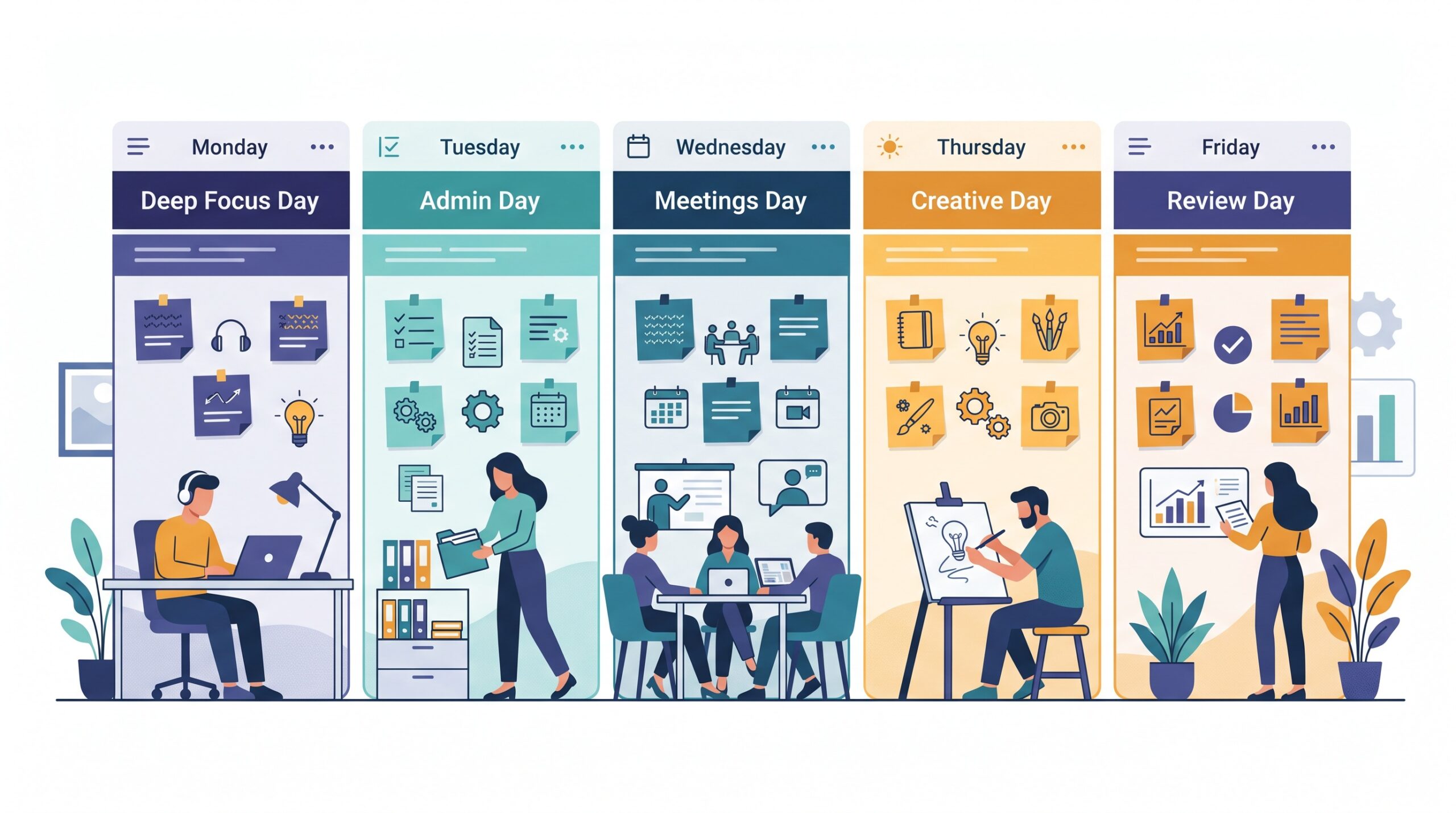
The hidden tax of the mixed-up day
Different kinds of work want different states of mind. Deep, creative, problem-solving work needs a long quiet runway and a warmed-up brain. Admin — invoicing, email, scheduling, little approvals — wants almost the opposite: short bursts, low stakes, easy to pick up and put down. Conversations and meetings need you social and present. These are not just different tasks; they are different gears entirely.
When you force all three into the same afternoon, you spend a surprising share of your energy just shifting between them. Each switch means dropping the context you had loaded and spinning up a new one, and the deep work suffers most because it never gets the long runway it needs. This is the same insight behind batching similar work together — grouping like tasks so you change gears less often. Theme days simply take that idea and zoom it out from the hour to the whole day.

What a theme day actually is
A theme day is a day with a declared purpose. Monday might be your planning-and-admin day. Tuesday and Wednesday might be deep-work days, reserved for the real projects. Thursday might be your meetings-and-calls day, where you cluster every conversation that would otherwise splatter across the week. Friday might be a wrap-up, review, and loose-ends day. The exact map does not matter; the commitment does. On a theme day, the theme gets the first and best hours, and off-theme work waits unless it genuinely cannot.
The point is not rigid rule-following — it is protecting the conditions each kind of work needs. A deep-work day is really a promise to yourself that you will not schedule a meeting into the middle of it and shatter the morning. A meetings day is a promise that you will not feel guilty doing shallow, social work all afternoon, because that is precisely what the day is for. Theming turns “I should focus more” from a vague wish into a decision you already made on Sunday.
How to pick your themes
Start by listing the handful of genuinely different modes your work falls into. For most small-business owners and team leads it is some version of: deep or creative work, admin and operations, meetings and communication, and planning or review. You rarely need more than four or five, and you do not need every day to be themed — even protecting one or two days a week makes an outsized difference.
Then match themes to your natural energy. If your head is clearest in the morning and early week, put deep-work days on Tuesday and Wednesday, not Friday afternoon when you are running on fumes. Push the low-demand admin to the days and times when you would be useless at anything harder anyway. And be realistic about volume: if meetings genuinely fill half your week, do not pretend one meetings day will hold them — give that reality its own space instead of letting it leak into every day. The best theme map is the one that matches how your weeks actually behave, not the one that looks tidiest on paper.
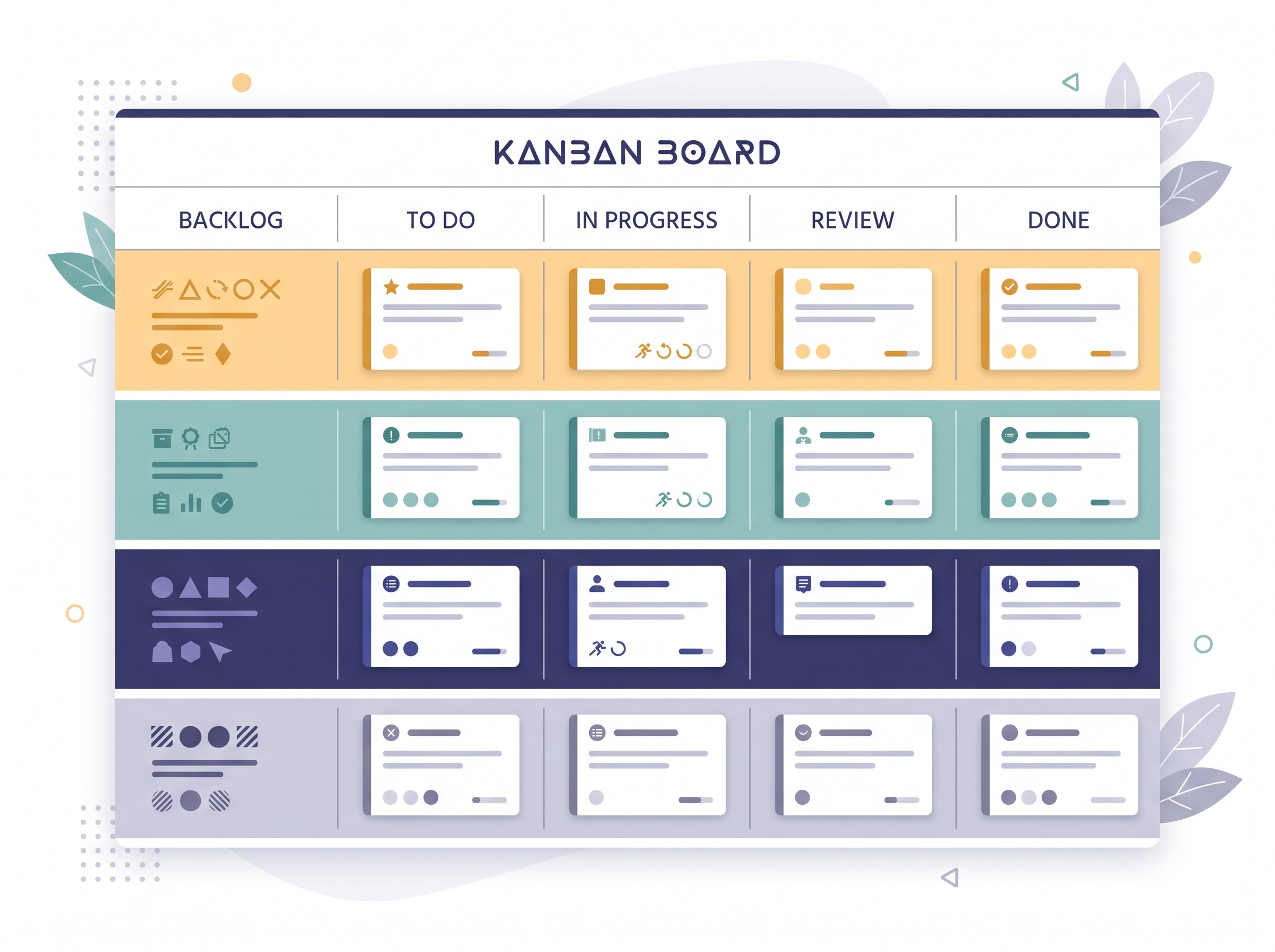
Running theme days on your kanban board
A board makes theme days concrete instead of aspirational. The simplest approach is to label or color-code each card by its type — deep work, admin, meeting, review — so that at a glance you can pull the cards that match today’s theme and leave the rest parked. On a deep-work day you work the deep-work cards; the admin cards are right there, visibly waiting, and that visibility is the whole trick. You are not ignoring them or losing them; you are deferring them to their day, on purpose.
If your board supports horizontal lanes, give each theme its own swimlane so the board physically groups work the way your week does. Either way, let the board carry the plan so your memory does not have to. A quick weekly planning pass — the same muscle behind choosing one keystone task for each day — is where you decide which cards belong to which themed day, so that when the day arrives you are executing a decision rather than making one on the fly.
Protecting the theme when urgent work hits
No week survives fully intact, and a theme day you defend like a fortress will just make you brittle. The goal is a strong default, not a cage. When something genuinely urgent lands on a deep-work day, handle it — that is what judgment is for. The discipline is in the word genuinely: most of what feels urgent is really just someone else’s convenience, and it can wait a day without the sky falling.
Give yourself a small release valve so the theme stays intact. Keep a short window each day — even thirty minutes — for off-theme fires, so a single interruption does not blow up the whole purpose of the day. Handle the true emergency, then return to the theme. This is the same calm-under-pressure move as handling interruptions without blowing up your board: absorb the real ones, deflect the fake ones, and protect the shape of the day for everything else.

Start with one theme day, one week
You do not need to redesign your entire week to feel the benefit, and you should not try to. Pick the one kind of work that suffers most from constant interruption — usually the deep, important work that never seems to get a clean run — and give it a single protected day this week. Block it on your calendar, tell the people who need to know, pull only the matching cards, and see how the day feels.
Most people are surprised by two things. The protected work finally moves, because it got the long quiet stretch it always needed. And the batched-up admin and meetings go faster than expected, because doing twenty small things in one pass is far quicker than doing them one at a time between everything else. Theme days are not about squeezing more hours out of your week; they are about asking each day to do one thing well instead of five things badly. Give your days a shape, let your board hold the plan, and the whiplash that used to define your week quietly goes away.