It always starts the same hopeful way. Someone sets up a kanban board, fills it with cards, and for about a week it’s wonderful. Everyone can see the work. Nothing’s falling through the cracks. Then, slowly, the cards stop moving. A task finishes but nobody drags it to Done. New work shows up in chat instead of on the board. Within a month, the board is a museum of where things stood three weeks ago, and people have quietly gone back to sticky notes and memory.
If that’s happened to you, you’re in good company — it’s the single most common way kanban fails. The encouraging part is that boards almost never die because kanban doesn’t work. They die from a short list of fixable reasons. Here they are, with the habits that keep a board alive.
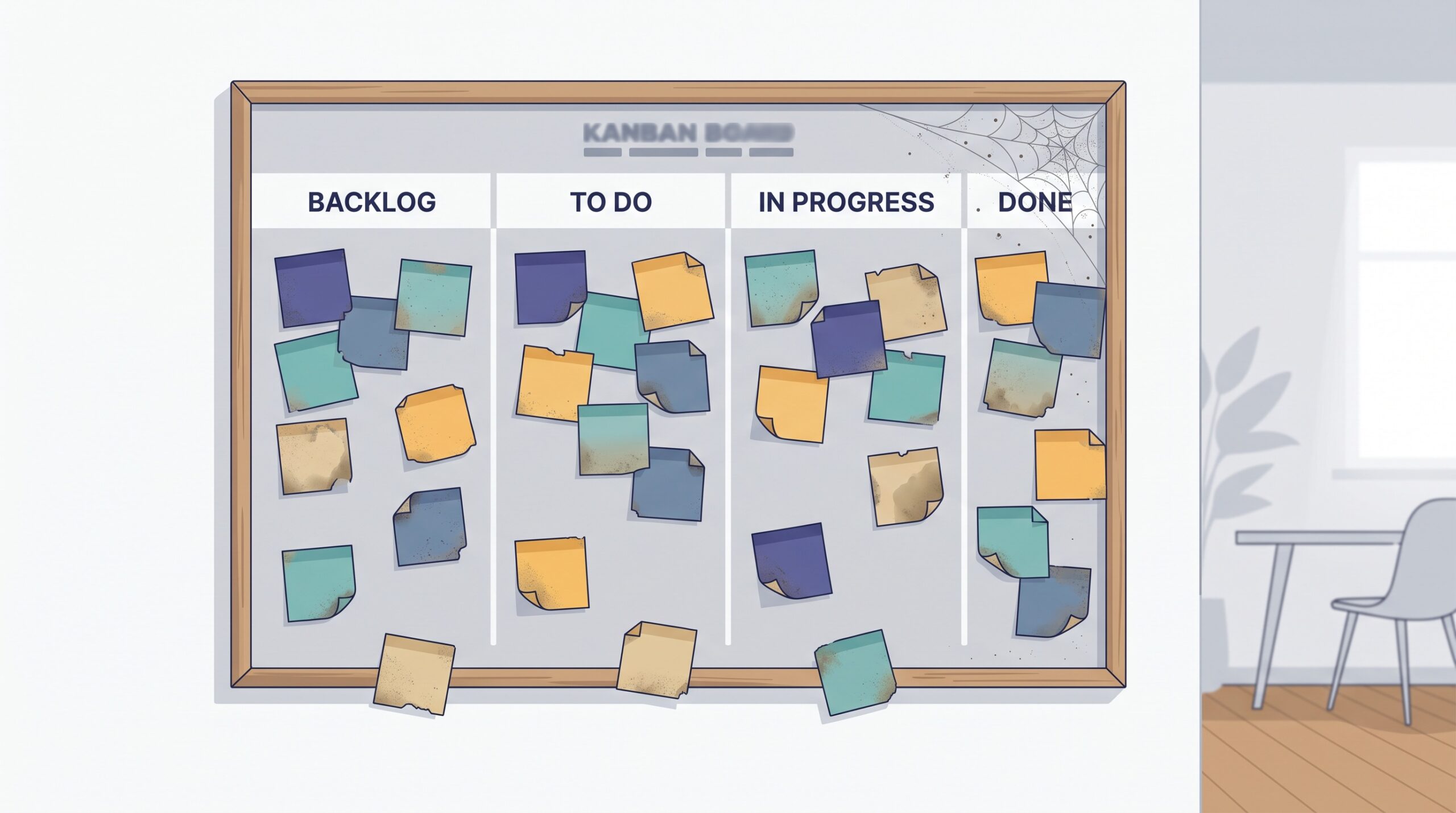
Reason 1: The board was too complicated to begin with
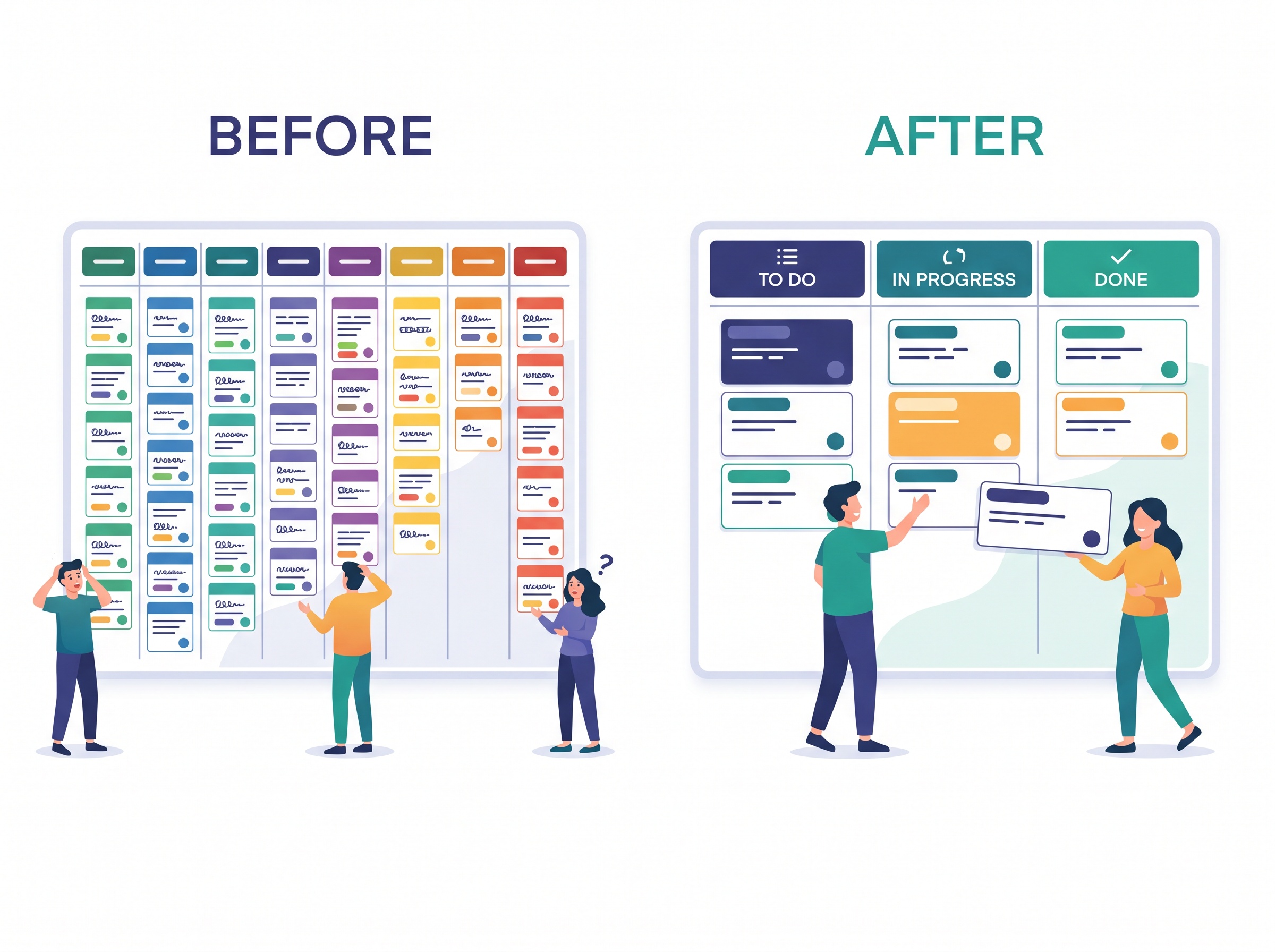
The most common killer is overbuilding on day one. Fourteen columns, a dozen colored labels, swimlanes for every client, custom fields nobody fills in. It looks impressive and it’s exhausting to maintain. Every extra column is another decision someone has to make about every card, and every unfilled field is a small nagging failure.
The fix: start embarrassingly simple. Three columns — To Do, Doing, Done — are enough to be useful on the first day. You can always add a column later when you feel a genuine, repeated pain that the extra column would solve. A board you’ll actually update beats a beautifully designed one you won’t.
Reason 2: Nobody owns keeping it current
A board is a shared space, and shared spaces with no owner become nobody’s responsibility. If updating the board is “everyone’s job,” it quietly becomes no one’s. The cards drift out of date, and once a board is even a little bit wrong, people stop trusting it — and a board people don’t trust is already dead.
The fix: make someone lightly responsible for the board’s health — a team lead, a project owner, or a rotating role. Not to do everyone’s updates for them, but to notice when the board and reality have drifted apart and nudge it back. Five minutes of ownership a day prevents the slow rot.
Reason 3: There’s no moment when people actually touch it
Boards don’t update themselves. If there’s no routine that brings people back to the board, it falls out of the daily flow and is forgotten. The work keeps happening; the record of it just stops.
The fix: attach the board to a tiny, recurring ritual. The classic is a short daily standup — even thirty seconds, even async — where the rule is simple: update your cards before you talk. Walking the board together, right to left, moving cards as you go, turns maintenance into a shared habit instead of a chore someone has to remember alone. The ritual is what keeps the board breathing.

Reason 4: The real work lives somewhere else
This is the quiet one. If decisions get made in chat, tasks arrive by email, and the actual status lives in someone’s head, then the board is just a second place you have to copy things into — pure overhead. People abandon it not because it’s useless, but because it’s duplicate effort.
The fix: make the board the single source of truth, and gently route work through it. When a task comes in by email or chat, the answer becomes “great — put it on the board.” When someone asks for status, you point at the board instead of writing a paragraph. Once the board is where the answers actually are, keeping it current stops being extra work and starts being the work.
Reason 5: Finished and stuck work never gets cleared
Two kinds of clutter slowly choke a board. Done cards that pile up until the board feels overwhelming, and blocked cards that sit silently, making the board look busy while nothing actually moves. Both erode the sense that the board reflects reality.
The fix: build in light housekeeping. Clear or archive the Done column on a regular cadence so the board stays readable. Give blocked work a visible home so stuck cards get noticed and unstuck instead of quietly rotting. A board that’s regularly tidied stays trustworthy, and trust is the whole game.

The real secret: keep it simple enough to keep
Notice the thread running through every fix: simplicity and a small habit. The teams whose boards survive aren’t more disciplined than everyone else — they just didn’t give themselves a board that demanded heroic discipline. They kept the columns few, gave the board an owner, tied it to a daily moment, made it the real home of the work, and tidied it as they went.
If your last board died, don’t conclude that kanban isn’t for you. Start a new one with three columns, one owner, and one daily habit, and resist every urge to add complexity until the simple version is sticking. A board you actually keep alive — even a plain one — will do more for your team than the most elaborate board you’ll ever abandon.